In pharmaceutical cleanrooms, weld integrity in stainless steel tubing isn’t optional—it’s a regulatory and operational imperative. As a certified stainless steel tube manufacturer and pipe stainless steel supplier, Hongteng Fengda ensures compliance with ASTM standard steel pipe requirements through precision orbital welding, 100% non-destructive testing (NDT), and ISO 14644-aligned cleanroom fabrication protocols. Serving global project managers, quality control teams, and procurement professionals, we deliver traceable, electropolished tubes—backed by EN/ASTM/JIS-certified structural steel expertise—including angle stainless steel Europe supply and Z-beam for warehouse integration. Trust reliability, from weld seam to delivery.
Why Weld Integrity Is Non-Negotiable in Pharma Cleanroom Tubing
Pharmaceutical cleanrooms demand zero tolerance for particulate generation, microbial ingress, or fluid pathway contamination. Stainless steel tubing—especially for purified water (PW), water for injection (WFI), and clean steam distribution—must maintain absolute surface continuity at every weld joint. A micro-crack, incomplete fusion, or oxide-rich heat-affected zone (HAZ) can become a breeding ground for biofilm or a source of metallic leachables.
Regulatory frameworks such as FDA 21 CFR Part 211, EU GMP Annex 1, and ISPE Good Practice Guides mandate that all wetted surfaces meet Ra ≤ 0.8 µm after electropolishing—and that welds pass visual, dimensional, and metallurgical validation. This isn’t just about aesthetics: it’s about validating that the weld root is fully penetrated, free of porosity, and chemically homogeneous with the base metal.
For structural steel manufacturers like Hongteng Fengda, this means integrating cleanroom-grade welding protocols into our broader material assurance system—even when supplying complementary components like SS440 Patterned steel plate for equipment flooring or anti-slip walkways near sterile processing zones.
How We Guarantee Weld Integrity: From Process Control to Traceability
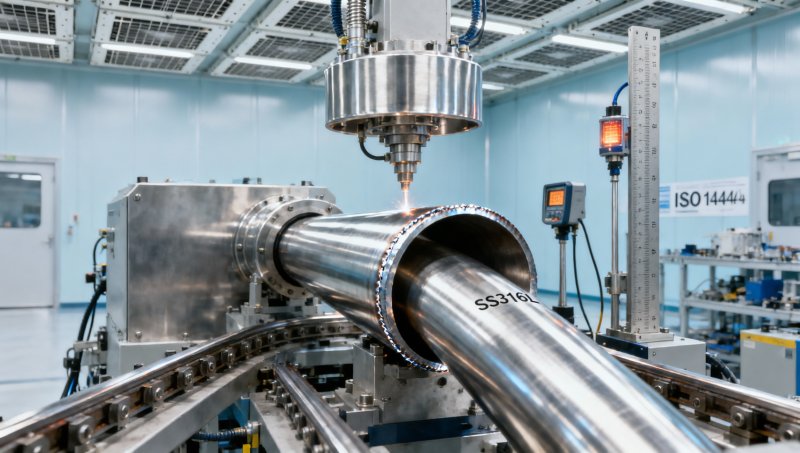
Hongteng Fengda applies a four-stage weld assurance framework aligned with ASME B31.3 and ASTM A269/A270. Each stage includes quantifiable checkpoints—not just pass/fail criteria:
- Pre-Weld Qualification: All orbital welding procedures undergo PQR (Procedure Qualification Record) validation using actual production-grade SS316L tubing (1/2″–4″ OD), with interpass temperature monitored at ±2°C and purge gas oxygen content held below 50 ppm.
- In-Process Monitoring: Real-time arc voltage, travel speed, and filler wire feed rate are logged per joint; deviations >3% trigger automatic weld rejection.
- Post-Weld Verification: Every weld receives 100% automated visual inspection (via high-resolution borescopes), followed by either liquid penetrant testing (PT) or phased-array ultrasonic testing (PAUT)—both certified to ISO 17635:2016 Level B.
- Material Traceability: Each tube batch carries a QR-coded Mill Test Report (MTR) linking raw material heat number, weld log ID, NDT results, and final electropolish Ra value (typically 0.3–0.5 µm).
Key Weld Parameter Controls vs. Industry Baseline
The table below compares Hongteng Fengda’s standard weld controls against typical OEM thresholds for pharma-grade tubing suppliers:
These tighter tolerances directly reduce rework rates (from industry-average 8–12% to <2%) and eliminate costly field repairs during commissioning—a critical factor for project managers operating under fixed timelines.
Beyond Tubing: Integrating Structural Components for Full Cleanroom Compliance
While tubing integrity dominates pharma discussions, supporting infrastructure must meet equivalent standards. Floor plates adjacent to sterile process lines—especially where wheeled trolleys or mobile equipment operate—require both slip resistance and corrosion resistance. That’s where products like SS440 Patterned steel plate play a strategic role.
Our SS440 grade delivers a minimum花纹 height of 0.2× substrate thickness (e.g., ≥0.4 mm on 2.0 mm plate), tested per ASTM E303 for coefficient of friction (CoF ≥ 0.6 dry, ≥0.4 wet). Unlike carbon steel alternatives, SS440 maintains its anti-skid profile after repeated cleaning with caustic or oxidizing agents—critical for maintaining ISO 14644 Class 5–8 environments.
With thickness options from 2–8 mm, widths up to 1800 mm, and certifications covering ASTM, EN, JIS, and GB/TC, this product bridges structural load-bearing needs (e.g., mezzanine floors, equipment support bases) and hygienic design principles—without requiring secondary coatings or overlays.
What Procurement & Engineering Teams Should Verify Before Sourcing
When evaluating stainless steel tube manufacturers for cleanroom applications, technical and procurement teams must go beyond catalog specs. Here are five non-negotiable verification points:
- Weld Procedure Specification (WPS) alignment: Confirm the supplier’s WPS is qualified for your exact tube schedule (e.g., ASTM A270 TP316L, 1.5 mm wall), not just generic “stainless steel”.
- NDT method traceability: Ask for sample PAUT reports showing flaw sizing resolution (must detect ≥0.3 mm planar indications at full wall thickness).
- Electropolish validation data: Require Ra measurements taken at weld crown, HAZ, and base metal—each reported separately in the MTR.
- Cleanroom fabrication audit history: Verify ISO 14644-1 Class 7 or better assembly environment with documented particle count logs (≥0.5 µm particles ≤352,000/m³).
- Structural component compatibility: Ensure complementary items (e.g., angle stainless steel Europe supply, Z-beam supports, or SS440 Patterned steel plate) share the same mill heat traceability and pass identical corrosion testing (ASTM A262 Practice A).
Hongteng Fengda provides pre-shipment validation packages—including digital weld logs, third-party NDT certificates (SGS/BV), and electrochemical corrosion test reports—for all pharma-critical orders. Lead time averages 2–4 weeks for standard configurations, with expedited 7–10 day options available for urgent commissioning windows.
Why Global Pharma Projects Choose Hongteng Fengda
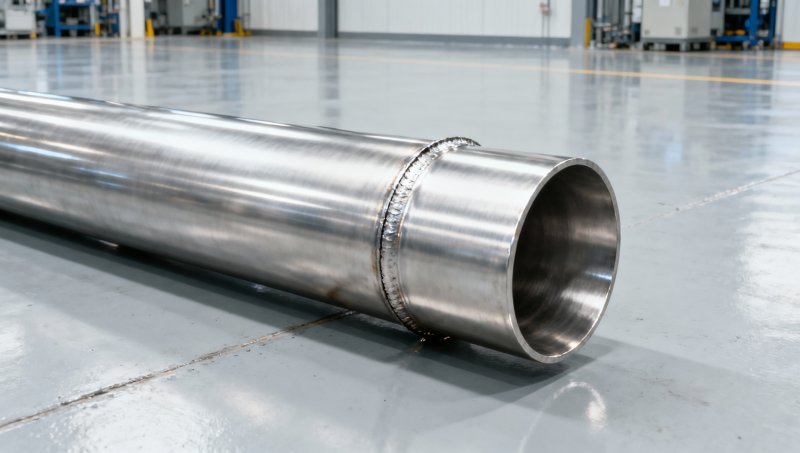
We don’t position ourselves as a generic steel supplier—we’re a compliance-enabling partner for mission-critical infrastructure. Our value lies in three integrated capabilities:
- Standards-Convergent Engineering: All structural steel products—from angle steel to cold-formed profiles—comply simultaneously with ASTM, EN, JIS, and GB standards, eliminating dual-certification delays for multinational projects.
- End-to-End Material Traceability: From Q235B hot-rolled coil to finished SS440 patterned plate or electropolished tubing, every lot carries auditable chemical composition, mechanical test data, and process history.
- Project-Ready Delivery Discipline: With 98.7% on-time shipment rate across 42 countries (2023–2024), we support just-in-sequence delivery for cleanroom modular builds—reducing warehousing costs and minimizing on-site handling risks.
Whether you’re specifying tubing for a new biologics facility in Ireland, sourcing anti-slip flooring for a sterile fill line in Singapore, or evaluating Z-beam integration for HVAC duct support in a Class C cleanroom—contact us to request:
- Custom weld procedure qualification for your specific tube geometry
- Sample MTRs with full Ra/NDT/electrochemical data
- Lead time confirmation for your required dimensions and certification scope
- Technical review of structural interface details (e.g., tube-to-angle connections)
Please give us a message


Please enter what you want to find