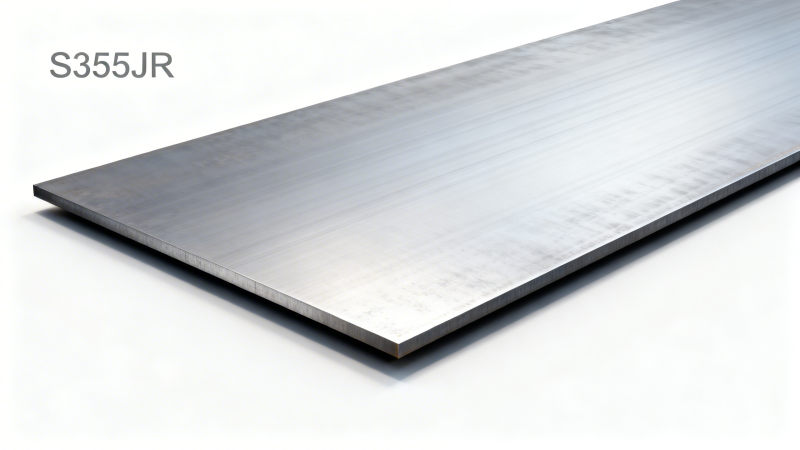
In wind turbine tower fabrication, material performance under cyclic loading is critical for safety, longevity, and cost efficiency. S355JR Steel Plate—widely specified alongside S235JR steel plate, Q235 steel plate, A36 steel plate, and corten steel plate—offers an optimal balance of yield strength, weldability, and fatigue resistance. As a trusted structural steel manufacturer & exporter from China, Hongteng Fengda supplies certified industrial steel plate and galvanized wire for construction, ensuring compliance with EN, ASTM, and GB standards. This article examines how S355JR performs under real-world cyclic stress—key insight for engineers, procurement teams, project managers, and quality/safety personnel evaluating material selection.
Why Cyclic Loading Matters in Wind Tower Design
Wind turbine towers endure millions of load cycles over 20–25 years of service—each gust, yaw motion, and operational vibration induces alternating stress. Fatigue failure initiates at microscopic flaws and propagates under repeated tensile-compressive stress, often without visible warning. For towers reaching 120–160 m in height, even minor deviations in material behavior can escalate into costly inspections, unplanned downtime, or structural remediation.
S355JR’s minimum yield strength of 355 MPa (EN 10025-2) provides sufficient reserve against static loads, but its true value lies in fatigue performance: a typical endurance limit of 120–160 MPa under R = 0.1 (tensile ratio), verified via standardized four-point bending tests per EN 10204 3.1 certification. This range aligns closely with design stress amplitudes observed in mid-height tower sections—where bending moments peak and weld detail sensitivity is highest.
Unlike higher-strength grades such as S460ML, S355JR maintains superior weldability without mandatory preheating below 5°C, reducing field welding time by 20–30% and minimizing hydrogen-induced cracking risk. Its carbon equivalent (CEV ≤ 0.42) ensures consistent heat-affected zone (HAZ) toughness across batch production—a non-negotiable requirement for OEM tower fabricators operating under ISO 3834-2 certified welding procedures.
How S355JR Compares to Common Alternatives
Selecting the right structural steel isn’t about maximizing strength—it’s about balancing fatigue life, manufacturability, and total cost of ownership. Below is a direct comparison of S355JR against three widely used alternatives in tower fabrication:
While Corten A offers atmospheric corrosion resistance, its lower ductility (A5 ≥ 18%) and inconsistent fatigue data across thicknesses (>25 mm) make it less predictable in welded tower cylinders. A36 remains viable for low-wind regions—but requires thicker sections to match S355JR’s stiffness, increasing weight and transport costs by up to 15%. Q235B meets basic strength needs but lacks standardized fatigue testing protocols under EN or IEC 61400-1, creating compliance uncertainty for EU and UK projects.
Where Corrosion Resistance Adds Value Beyond the Base Material
In coastal or high-humidity environments, base steel protection becomes a system-level concern—not just a coating decision. That’s why many tower integrators now pair S355JR structural plates with advanced barrier solutions. For example, AZ50 Galvalume Steel Coil is increasingly used for secondary components like ladder rungs, platform cladding, and internal bracing due to its 55% Al–43.5% Zn–1.5% Si alloy coating. With corrosion resistance 3–5× greater than standard galvanized steel (per ASTM B602 salt-spray testing), AZ50 extends service life without compromising formability or weld integrity.
Its aluminum-rich layer forms a self-healing oxide film that resists chloride ion penetration—critical for offshore and near-shore installations. Coating mass options from 30–185 g/m² allow precise matching to environmental severity (e.g., 120 g/m² for Zone C5-I per ISO 12944), while tensile strength (270–500 MPa) supports cold-forming of complex brackets and stiffeners without edge cracking.
Procurement Considerations for Global Buyers
For procurement teams sourcing S355JR plates internationally, five factors directly impact project viability:
- Mill Test Certificates (MTC): Demand EN 10204 3.1 or 3.2 documentation—including tensile test results, Charpy V-notch impact values at –20°C (≥27 J), and chemical composition traceability per heat number.
- Thickness Tolerance Compliance: Verify adherence to EN 10029 Class A (±0.8 mm for 10–25 mm plates) to avoid fit-up issues during cylinder rolling and welding.
- Surface Quality Requirements: Specify EN 10163-2 Class C for hot-rolled plates used in externally visible tower sections—limiting scale pits, scratches, and rolling marks that compromise coating adhesion.
- Logistics Readiness: Confirm coil-to-plate conversion capacity: Hongteng Fengda maintains 3–5 working days for slitting, leveling, and cutting S355JR plates up to 40 mm thick, supporting just-in-time delivery windows of 7–15 days for FOB Qingdao or Shanghai.
- OEM Certification Alignment: Ensure mill certifications include third-party audits (e.g., DNV, TÜV, BV) covering welding procedure qualification (WPQR) support—reducing requalification effort on-site.
Why Partner with Hongteng Fengda for Structural Steel Supply
As a structural steel manufacturer & exporter from China, Hongteng Fengda delivers more than mill-certified plates—we provide procurement certainty. Our integrated production includes dedicated S355JR hot-rolling lines, automated ultrasonic testing (UT) for plates ≥12 mm, and EN 10204 3.2 MTC generation within 24 hours of shipment release.
We serve over 42 countries with standardized lead times: 4–6 weeks for standard S355JR plates (6–40 mm × 1500–3000 mm × 6–12 m), and 3–5 weeks for custom-cut and surface-finished variants. Every order includes free dimensional verification reports, pre-shipment photos, and technical support for weld procedure review—helping your engineering team validate compliance before first cut.
Whether you need S355JR plates for tower shell fabrication, AZ50 Galvalume Steel Coil for auxiliary components, or OEM-designed cold-formed stiffeners, our team supports your full specification cycle—from RFQ to sample approval, certification handover, and logistics coordination.
Contact us today to request: (1) S355JR mechanical property test reports for your required thickness range, (2) comparative lead time quotes for EN/ASTM/GB-compliant batches, (3) custom packaging and marking options for site-ready delivery, or (4) technical consultation on weld joint detailing per EN 1993-1-1 Annex C.
Please give us a message


Please enter what you want to find