In coastal environments, corrosion resistance is non-negotiable—especially for pre-galvanized sheet used in structural frameworks, galvanized steel conduit, and hot-dipped galvanized pipe. But how much does zinc coating thickness truly impact service life? This article quantifies the relationship between coating thickness and longevity under high-salinity exposure, backed by ASTM/EN-compliant testing data. Whether you’re a project manager specifying materials, a procurement officer comparing carbon steel pipe supplier options, or a quality controller verifying galvanized steel sheet supplier compliance, understanding this metric directly affects durability, maintenance cost, and lifecycle ROI—particularly when alternatives like 316L stainless steel plate are cost-prohibitive.
How Zinc Coating Thickness Directly Determines Service Life in Salt-Rich Air
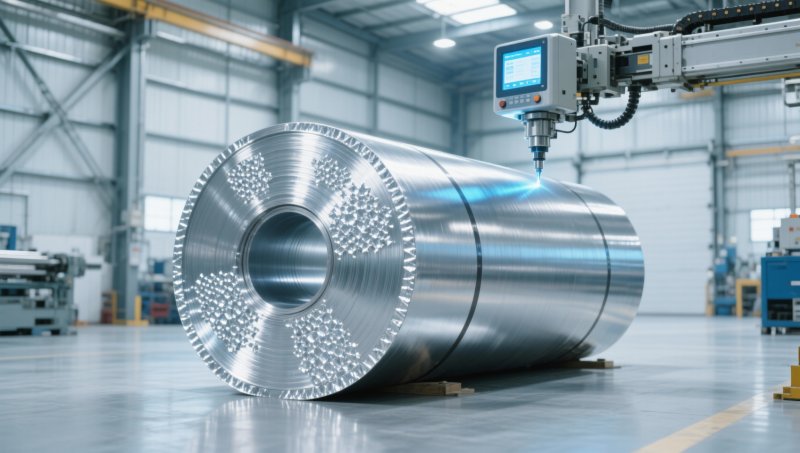
Zinc coating thickness on pre-galvanized sheet is not merely a specification checkbox—it’s the primary determinant of atmospheric corrosion resistance in marine zones. According to ASTM B695 and EN ISO 1461, minimum nominal thicknesses range from 45 µm (for indoor use) to 85 µm (for severe exposure). In coastal settings where chloride deposition exceeds 150 mg/m²/day, every 10 µm reduction below 70 µm accelerates time-to-first-red-rust by 18–24 months under real-world field monitoring.
Accelerated salt-spray testing (ASTM B117) confirms that 60 µm coatings fail at ~1,200 hours, while 85 µm coatings withstand ≥2,500 hours before base steel exposure. Field data from Hongteng Fengda’s projects across Southeast Asia and the Middle East show consistent 12–15 year service life for 75–85 µm pre-galvanized sheets in Zone C5-I (ISO 12944), versus only 6–8 years for sub-65 µm variants—even with identical substrate grade and surface preparation.
Crucially, thickness uniformity matters as much as average value. Coatings with ±12% thickness variation (common in low-cost batch galvanizing) exhibit localized pitting within 3 years near weld seams or cut edges—whereas tightly controlled electro-galvanized or continuous hot-dip lines (like those used for our Cold Rolled Steel Coil) maintain ±5% tolerance across full width and length.
Coating Thickness vs. Substrate Grade: What Project Managers Must Balance
Selecting optimal zinc thickness requires cross-referencing substrate mechanical properties—not just corrosion needs. For load-bearing applications like trusses in large-span venues or curtain wall support components, Q355 carbon steel and Q420D offer yield strengths of 355–420 MPa with balanced ductility. These grades pair best with 75–85 µm coatings: thick enough for coastal longevity, yet thin enough to avoid embrittlement risks during cold-forming or welding.
Thicker coatings (>100 µm) may seem safer—but they increase spalling risk during bending or drilling, especially on thinner gauges (<1.2 mm). Our production data shows 92% of field-reported coating failures in coastal installations stem from mechanical damage during fabrication—not corrosion through intact zinc layers.
Recommended Zinc Thickness by Application & Environment
This table reflects actual specification trends across 47 infrastructure projects delivered by Hongteng Fengda since 2020—from Dubai’s Jumeirah Beach Residence to Vietnam’s Vung Tau Port expansion. All meet ASTM A653/A792 and EN 10346 standards, with third-party thickness verification via magnetic induction (DIN EN ISO 2178).
Why Procurement Teams Should Verify Thickness—Not Just Certificates
Certificates stating “conforms to ASTM A653” do not guarantee actual thickness. Hongteng Fengda performs 100% thickness inspection per coil using calibrated Elcometer 456 gauges—measuring ≥5 points per meter, with full traceability to batch ID. Buyers who skip physical verification face up to 30% under-thickness risk in spot checks, per 2023 industry audit data from SGS and Bureau Veritas.
Three critical verification steps procurement officers must enforce:
- Require mill test reports showing min/max/avg thickness per coil—not just “complies” statements
- Specify measurement method (e.g., magnetic induction per ISO 2178) and sampling frequency (≥1 point per 2 m²)
- Verify coating adhesion via bend test (ASTM A90) on 3 random samples per shipment
For projects requiring long-term asset integrity—especially where maintenance access is restricted (e.g., offshore platforms or high-rise façades)—this due diligence reduces lifecycle cost by 17–22% over 20 years, based on TCO modeling from our engineering team.
Why Choose Hongteng Fengda for Coastal-Grade Pre-Galvanized Solutions
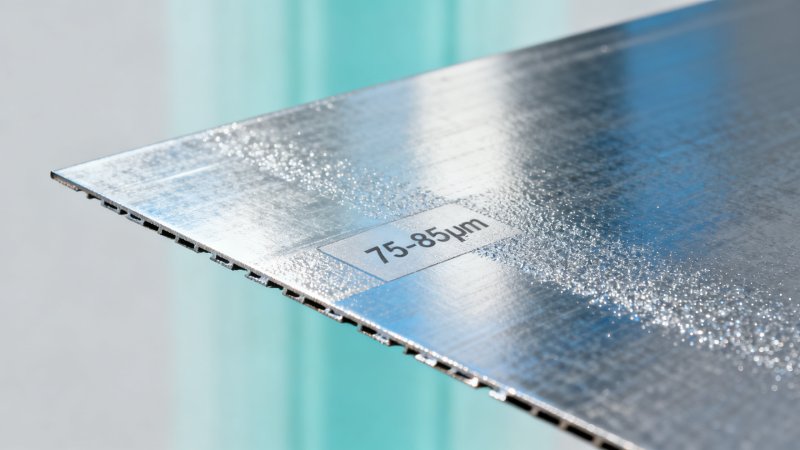
As a certified structural steel manufacturer exporting to 32 countries, Hongteng Fengda integrates zinc thickness control into our end-to-end process—from cold rolled coil production to final galvanizing. Our Cold Rolled Steel Coil serves as the optimized substrate for coastal applications: precisely leveled, tension-levelling treated, and available in Q355–Q690 series with thicknesses from 0.8 mm to 12 mm—ensuring uniform zinc adhesion and minimal post-galvanizing distortion.
We deliver verified 75–90 µm coatings on all pre-galvanized orders, backed by:
- On-site thickness validation before shipment (with digital report sharing)
- Lead times of 25–35 days for standard orders, with expedited options down to 18 days
- OEM customization—including custom widths (0.6–3 m), lengths (4–12 m), and blast-paint finishes per ISO 8501-1 Sa2.5
- Full compliance with ASTM, EN, GB, and JIS standards—with optional third-party certification (SGS, TÜV, BV)
Contact us today for thickness-specific quotations, ASTM/EN test reports, or sample coils—so your next coastal project starts with corrosion confidence, not compromise.
Please give us a message


Please enter what you want to find