In harsh industrial environments—where corrosion from chemicals, humidity, and abrasive particulates accelerates steel degradation—hot-dip galvanizing remains the most proven, cost-effective protection for structural steel. Technical evaluators assessing long-term durability must go beyond surface appearance: coating adhesion, thickness uniformity, metallurgical bond integrity, and compliance with ASTM A123/A153 or EN ISO 1461 directly determine service life in chemical processing plants, offshore platforms, and heavy manufacturing facilities. As a certified hot galvanizing factory integrated within our structural steel production workflow, Hongteng Fengda applies zinc coatings under controlled bath chemistry, immersion time, and withdrawal speed—ensuring reproducible metallurgical bonding across angles, channels, beams, and custom profiles.
Why Coating Thickness Alone Doesn’t Guarantee Performance
Many technical evaluators assume that higher zinc mass (e.g., 200 g/m² vs. 135 g/m²) automatically translates to longer service life. This is misleading. Zinc layer performance depends on three interdependent factors: (1) metallurgical bond quality between steel substrate and zinc-iron alloy layers; (2) absence of bare spots, runs, or dross inclusions; and (3) dimensional tolerance retention after galvanizing. A thick but poorly adhered coating flakes off under mechanical stress—especially on threaded fasteners, bolt holes, or bent sections. Our process controls immersion temperature (449–460°C), bath purity (≤0.02% lead, ≤0.005% tin), and pre-flux composition to minimize brittle delta-phase formation while maximizing gamma-layer adhesion. This ensures coatings remain intact during transport, handling, and installation—even on cold-formed sections with tight radii.
Metallurgical Structure Determines Real-World Durability
Hot-dip galvanized steel isn’t just “zinc on steel.” It forms four distinct intermetallic layers: gamma (Fe₃Zn₁₀), delta (FeZn₇), zeta (FeZn₁₃), and eta (pure Zn). The delta and zeta layers provide hardness and abrasion resistance; the eta layer supplies sacrificial corrosion protection. In aggressive settings—like chlorine-laden air near pulp mills or sulfur dioxide exposure in refinery pipe racks—the delta layer’s hardness prevents mechanical wear, while the eta layer’s electrochemical potential drives uniform anodic dissolution. We verify layer structure via cross-section metallography per ASTM B635, not just thickness measurement. Coatings meeting ASTM A123 minimums (e.g., 85 µm on >6 mm steel) may still fail if the delta layer is underdeveloped due to insufficient immersion time or low bath temperature.
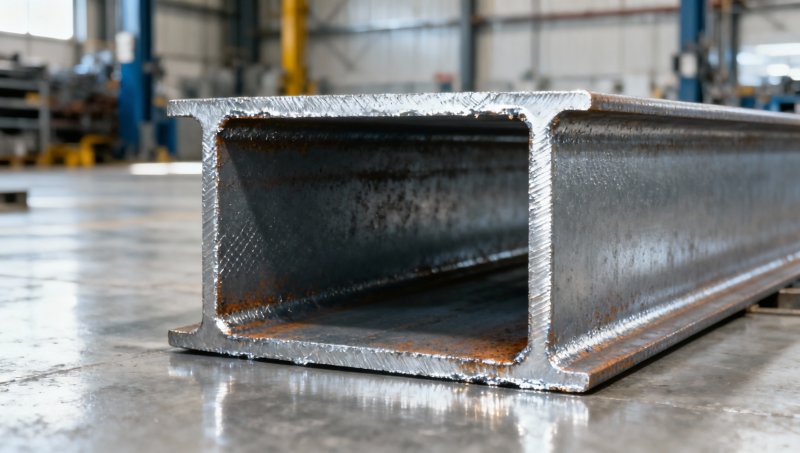
Coating Integrity Testing Beyond Thickness Gauges
Field verification requires more than magnetic thickness gauges. Adhesion failure often appears first at cut edges or weld zones—areas where localized heat alters microstructure. We perform bend tests per ASTM A143 on sample coupons: 90° bends over a mandrel diameter equal to the steel thickness must show no flaking or peeling. For high-stress applications—such as crane support structures or elevator guide rails—coating ductility matters as much as thickness. That’s why we validate performance using real-world load conditions: Galvanized Steel Wire Rope 1470Mpa to 1960Mpa undergoes tensile testing with simultaneous salt-spray exposure (ASTM B117, 500 hrs) to simulate marine or chemical plant service. Results confirm that thick-galvanized wire rope (75–260 g/m²) maintains ≥95% tensile strength retention after cyclic loading and corrosion exposure—unlike electro-galvanized alternatives which degrade rapidly above 100 g/m².
Application-Specific Zinc Requirements
Not all industrial environments demand identical protection. Our specification matrix aligns zinc mass with actual exposure severity—not generic “industrial” labels:
- Mild corrosion (indoor assembly halls, dry warehouses): 15–135 g/m² — sufficient for atmospheric oxidation only;
- Medium corrosion (outdoor fabrication yards, humid inland plants): 60–200 g/m² — balances cost and protection where occasional washdowns occur;
- Severe corrosion (offshore splash zones, acid-handling facilities, mining conveyors): 75–260 g/m² — mandatory for sustained chloride or sulfate exposure.
Note: The upper end of each range (e.g., 260 g/m²) isn’t universally better. Excessive zinc can embrittle thin-walled sections or interfere with welding. We specify exact mass ranges per component geometry and end-use stress—verified by gravimetric analysis per ASTM A90.
Traceability and Compliance Validation
Technical evaluators need verifiable evidence—not just certificates. Every batch carries mill test reports showing bath chemistry logs, immersion time/temperature records, and post-galvanizing coating thickness maps (minimum 5 points per surface). For projects requiring third-party validation, we support witnessed testing per ISO 1461 Annex A: coating continuity verified by copper sulfate dip test (ASTM B201), adhesion confirmed by quench-and-bend, and thickness validated by both magnetic gauge and cross-section microscopy. This traceability enables lifecycle cost modeling—allowing engineers to project maintenance intervals, replacement cycles, and total cost of ownership over 30+ years.
Selecting a Hot Galvanizing Factory: What Technical Evaluators Should Verify
When qualifying a supplier, focus on process control—not just output specs:
- Ask for bath chemistry logs (not just “within spec” statements);
- Require bend test reports on actual production samples—not lab-only data;
- Confirm whether zinc mass is measured gravimetrically (ASTM A90) or estimated from thickness (ASTM B499), since density varies across alloy layers;
- Verify that weld seam preparation meets ASTM A384—unremoved slag or mill scale causes bare spots;
- Check if threading is performed pre- or post-galvanizing: post-galvanizing tapping damages coating integrity unless done with specialized tools.
Our integrated facility performs galvanizing immediately after rolling or forming—eliminating rehandling risks and ensuring coating consistency across full-length beams and custom components. No external subcontracting. No batch-to-batch variability.
For technical evaluators specifying structural steel in aggressive industrial settings, hot-dip galvanizing isn’t a commodity finish—it’s a metallurgically engineered barrier. Its performance hinges on controlled process parameters, not just final thickness. When evaluating suppliers, prioritize documented process control over certification badges alone. And when selecting wire rope for cranes, elevators, or mining equipment, recognize that Galvanized Steel Wire Rope 1470Mpa to 1960Mpa leverages the same metallurgical principles—proven through tensile and corrosion cycling—to deliver reliability where failure isn’t an option.
Please give us a message


Please enter what you want to find