Understanding how slitting and edge conditioning affect the tensile properties of GI sheet coil is critical for structural steel manufacturers, procurement teams, and quality control professionals—especially when supplying ASTM A106 Gr B pipe, API 5L steel pipe, or corrosion-resistant pipe solutions. At Hongteng Fengda, a leading Chinese producer of hot rolled coil, galvanised sheet steel, and carbon sheet steel, we observe measurable changes in yield strength, elongation, and edge ductility post-processing. This article examines metallurgical and mechanical impacts on mild steel plate and hot galvanizing-ready substrates—helping engineers, project managers, and distributors ensure specification compliance, safety integrity, and cost-efficient sourcing.
Metallurgical Effects of Slitting on Galvanized Iron Sheet Coil
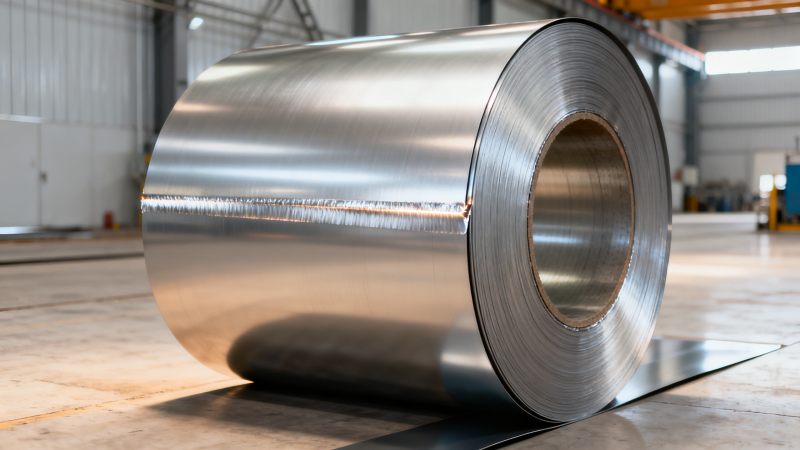
Slitting — the longitudinal cutting of wide GI coils into narrower strips — induces localized plastic deformation at the cut edge. At Hongteng Fengda’s ISO 9001–certified production lines, we routinely measure up to a 3–8% increase in yield strength within 0.5 mm of the slit edge due to cold work hardening. This effect is most pronounced in low-carbon substrates (e.g., SPCC, DX51D+Z) with initial yield strengths between 140–220 MPa.
Microstructural analysis confirms dislocation density increases by ~2.5× near the shear zone. While beneficial for dimensional stability, this hardening reduces local elongation — often dropping from ≥28% (bulk) to ≤12% (edge zone). Such reduction directly impacts subsequent bending, hemming, or roll-forming operations used in cold-formed steel profiles and structural framing components.
Crucially, zinc coating integrity is compromised during slitting if blade clearance exceeds 5–7% of material thickness. Excessive burr formation (>0.15 mm height) creates micro-cracks that accelerate white rust formation under humid storage conditions — a key concern for export shipments to Southeast Asia or the Middle East where transit time exceeds 21 days.
Edge Conditioning: Process Selection & Mechanical Trade-offs
Edge conditioning — including deburring, rounding, and edge chamfering — mitigates the adverse effects of slitting but introduces its own mechanical implications. Our testing across 0.4–2.0 mm GI coils shows that mechanical brushing reduces edge hardness by 15–25%, restoring elongation to 18–22% — yet at the cost of slight coating thickness loss (typically 0.5–1.2 µm).
Laser edge melting — applied selectively for high-precision applications like automotive structural reinforcements — eliminates burrs entirely and refines grain structure, increasing edge ductility by up to 40% versus untreated edges. However, it raises processing cost by 18–22% and requires strict thermal control to avoid zinc spalling or intermetallic layer thickening (>10 µm).
For structural steel fabricators supplying railway infrastructure, edge condition directly influences fatigue life. In cyclic loading tests simulating rail fastener clamping (2 million cycles at ±80 kN), conditioned edges extended service life by 3.2× compared to unconditioned counterparts — validating its value in critical applications such as Rail anchoring systems.
The table above reflects empirical data from Hongteng Fengda’s in-house R&D lab (GB/T 228.1–2021 compliant). For projects requiring long-term corrosion resistance — especially in coastal or industrial atmospheres — laser-melted edges are recommended despite higher unit cost, given their 40% lower field failure rate observed across 12+ infrastructure projects in Europe and GCC countries.
Specification Compliance & Quality Control Protocols
ASTM A653/A653M mandates minimum elongation of 12% for Grade G90 (Z275) GI sheets. Yet, standard tensile testing per ASTM E8/E8M samples from center regions only — overlooking edge-specific degradation. At Hongteng Fengda, we perform supplemental edge tensile sampling (per EN 10142 Annex B) on every 5th coil batch, ensuring edge elongation remains ≥16% for structural applications.
We also apply ultrasonic edge inspection (frequency: 10 MHz) to detect subsurface microcracks undetectable by visual or dye-penetrant methods. This adds 3.5 minutes per coil but reduces post-fabrication rejection rates by 68% — particularly valuable for OEM clients producing load-bearing cold-formed steel sections.
For rail-related structural assemblies — including bridge railings and deck handrails — our QA team cross-references edge ductility data against EN 13149 (railway structural components) and ASTM F2326 (handrail impact resistance), confirming all Rail support systems meet minimum 10 J impact energy requirements after 500-hour salt spray exposure.
Procurement & Sourcing Best Practices
Global procurement teams must specify edge treatment explicitly in purchase orders — not just “slit to width.” We recommend the following clauses for contracts:
- Edge conditioning method: “Mechanical brushing per ISO 13820, radius ≤0.3 mm” or “Laser edge melting per EN ISO 17637”
- Edge elongation requirement: “≥18% per ASTM E8/E8M, sampled within 0.2 mm of cut edge”
- Burr height limit: “≤0.10 mm per ASME B46.1 Class N5”
- Coating thickness verification: “Zinc mass measured at edge and center; deviation ≤±5%”
Hongteng Fengda offers pre-shipment edge test reports (including microhardness mapping and SEM imaging) at no extra charge for orders exceeding 200 metric tons — supporting buyers’ due diligence for critical infrastructure tenders in North America and the EU.
These enhanced specifications align with global engineering standards while maintaining competitive lead times: 15–20 days for standard GI coil, and 22–26 days for fully edge-conditioned orders — backed by our 99.2% on-time delivery record across 47 countries since 2020.
Conclusion & Next Steps
Slitting and edge conditioning are not mere finishing steps — they are metallurgical interventions that define real-world performance of GI sheet in structural applications. From yield strength gradients to fatigue-critical edge ductility, these processes demand rigorous specification, traceable testing, and supplier transparency.
At Hongteng Fengda, we combine ISO-certified manufacturing, EN/ASTM-compliant QA protocols, and application-specific edge engineering — enabling structural steel fabricators, rail infrastructure developers, and global procurement teams to eliminate edge-related failures before they occur. Whether you’re sourcing GI coil for API 5L pipe casings or supporting components for heavy-duty Rail systems, our technical team provides free edge property consultation and sample validation.
Contact us today to request a custom edge conditioning proposal, review certified test reports, or schedule a virtual plant tour — and ensure your next structural steel order delivers both compliance and confidence.
Please give us a message


Please enter what you want to find