For technical evaluators, fatigue performance is a critical factor in material selection for demanding applications. Alloy steel wire stands out for its ability to withstand repeated stress cycles, reduce crack initiation, and improve long-term structural reliability. Understanding how composition and processing influence fatigue resistance helps support more accurate and cost-effective material decisions in steel-intensive projects.
How Alloy Steel Wire Improves Fatigue Resistance
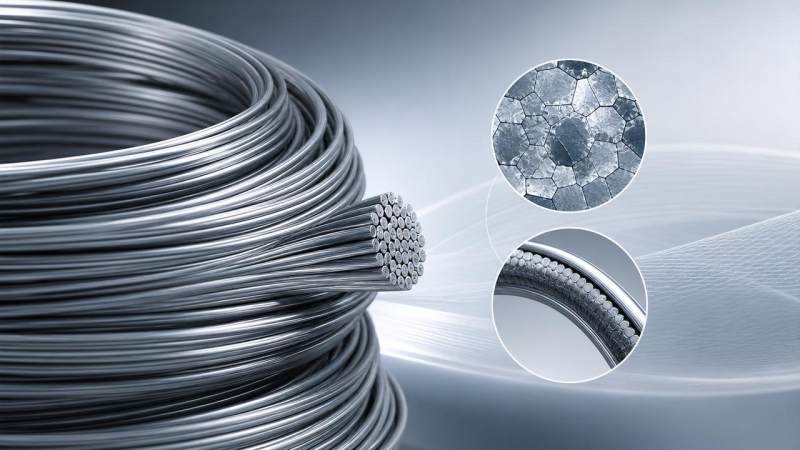
Fatigue resistance is the capacity of a material to survive repeated loading without forming damaging cracks. In steel products, this performance is often more important than static strength alone. Alloy steel wire improves fatigue resistance by combining controlled chemistry, refined microstructure, and stable surface quality.
Compared with ordinary carbon steel wire, alloy steel wire can better balance strength, toughness, and ductility. This balance matters in parts that face vibration, bending, impact, or alternating tension. When the material resists microscopic crack growth, the service life of the whole structure becomes more predictable.
Why the material behaves better under cyclic stress
The fatigue advantage begins with alloy design. Small additions of elements can refine grains, improve hardenability, and raise resistance to local stress concentration. A clean internal structure also lowers the chance of early crack formation.
Processing is equally important. Controlled rolling, drawing, and heat treatment help create uniform mechanical properties across the wire section. A consistent surface finish reduces weak points where fatigue cracks usually begin.
- Refined grains slow crack initiation.
- Stable hardness improves load distribution.
- Better ductility reduces sudden failure.
- Cleaner surfaces help limit stress risers.
Industry signals that make fatigue resistance a priority
Many steel applications now operate under higher load frequency, tighter tolerances, and longer inspection cycles. That makes fatigue resistance a practical quality target, not just a technical phrase. In these environments, alloy steel wire is often selected for its stable performance and repeatable processing results.
In sourcing decisions, alloy steel wire is also evaluated against delivery stability, certification alignment, and downstream processing needs. These factors matter because fatigue resistance is only useful when the material can be produced consistently in volume.
Practical product reference in structural steel supply
In many steel supply chains, related structural products are selected alongside wire-based components to support forming, reinforcement, and fabrication needs. A typical example is Rebar, which reflects the same attention to strength control, weldability, and dependable mechanical behavior. For projects that require consistent performance, carbon steel bar solutions with defined specifications can complement alloy steel wire in structural applications.
Available specifications often include GB1499.2 HRB400, HRB500, HRB400E, HRB500E, ASTM A615 Grade 60, BS4449 460B, 500B, 500C, and AS/NZS 4671 500N. Common carbon content ranges from 0.06-0.22%, with round shape and lengths of 1-12m or custom request. Such parameters help align material selection with fabrication and performance targets.
Typical applications and selection logic
Alloy steel wire is used where repeated stress and reliability are both important. The most common applications include transport equipment, industrial machinery, energy systems, and building material supply chains. Its fatigue resistance supports parts that must keep working under vibration, bending, or alternating load.
- Auto manufacturing and auto-power systems
- Shipbuilding and aerospace-related components
- Petrochemical plants and metallurgical machinery
- Precision tools and structural steel assemblies
- Building material and general fabrication use
When comparing options, it helps to review certification standards such as ASTM, GB, EN, DIN, and JIS. These standards give a clearer basis for performance comparison, especially when projects involve different markets or mixed supply routes.
Key advantages that support long-term use
The main value of alloy steel wire lies in dependable fatigue performance under practical conditions. Its excellent formability and weldability make downstream processing easier, while its structural stability helps extend the usable life of components and assemblies.
For buyers, this translates into fewer early failures, lower maintenance pressure, and better lifecycle planning. For engineering teams, it offers a more reliable material base when load conditions are variable or difficult to fully eliminate.
Points worth confirming before purchase
- Confirm chemistry and heat treatment route.
- Check surface quality and dimensional tolerance.
- Match standards to project requirements.
- Review fatigue-related test data where available.
- Verify supply consistency and lead time.
A practical next step for project planning
If fatigue resistance is a key design or sourcing criterion, start by defining the loading pattern, expected service life, and applicable standard. Then compare alloy steel wire options by chemistry control, surface condition, and processing stability. This approach reduces selection risk and improves total project reliability.
For structural steel supply needs, material consistency and certified production are just as important as nominal strength. A careful review of specifications and application fit can help ensure the final choice supports both performance and cost control.
When the goal is durable steel performance under repeated stress, alloy steel wire remains a practical and proven option. Its fatigue resistance, combined with controlled manufacturing and broad application suitability, makes it a strong candidate for demanding industrial and construction projects.
Please give us a message


Please enter what you want to find