Understanding how ASTM steel pipe standards influence final pricing is critical for procurement teams, project managers, and technical evaluators sourcing seamless steel pipe, stainless steel tube price, or ss304 pipe price globally. At Hongteng Fengda — a certified structural steel manufacturer and exporter from China — compliance with ASTM, EN, JIS, and GB standards directly affects material costs, testing requirements, and lead times. Whether you’re comparing stainless tube price vs. carbon steel coil, evaluating ss pipe 1 inch price, or specifying corten steel plate or metal angle iron with holes, standard adherence shapes both quality assurance and commercial terms. Let’s break down the real-world cost drivers behind ASTM steel pipe specifications.
How ASTM Standards Define Material Composition & Processing Requirements
ASTM standards—such as ASTM A53, A106, A312, and A795—do not merely describe dimensional tolerances. They mandate precise chemical composition limits (e.g., carbon ≤ 0.30% for A106 Gr. B), mechanical property thresholds (tensile strength ≥ 415 MPa, yield ≥ 240 MPa), and mandatory heat treatment protocols (normalizing for A106 Gr. C). These requirements directly impact raw material selection, melting practice, rolling parameters, and post-fabrication inspection frequency.
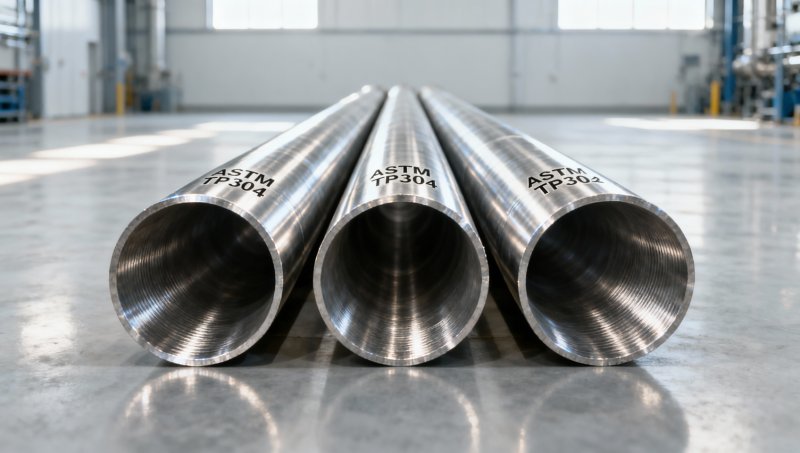
For example, ASTM A312 TP304 stainless steel pipe requires a minimum 18% Cr and 8% Ni content—raising raw material cost by 25–40% versus ASTM A53 Grade B carbon steel pipe of identical dimensions. Moreover, solution annealing at 1040–1120°C followed by rapid quenching adds 3–5 days to production lead time and increases energy consumption by ~18% per ton.
At Hongteng Fengda, all ASTM-compliant pipes undergo batch-specific ladle analysis verification, microstructure evaluation per ASTM E3, and non-destructive testing (NDT) coverage ≥ 100% for pressure-grade applications—factors that collectively add 7–12% to base material cost but eliminate field rejection risk.
This table shows how each ASTM grade introduces distinct process controls—and corresponding cost layers. Buyers must evaluate whether full compliance is required for their application or if performance-equivalent alternatives (e.g., EN 10217-7 for stainless) offer better value alignment.
Testing, Certification & Documentation: Hidden Cost Multipliers
Beyond raw materials and processing, ASTM compliance triggers mandatory third-party certification (e.g., TÜV, SGS, BV), independent lab testing, and granular documentation. For ASTM A53 pipe, each heat lot requires MTRs listing chemical analysis, mechanical test results, and hydrostatic test pressure—verified against ASTM A600. This adds $120–$280 per shipment in certification fees alone.
Certification timelines also affect cash flow: ASTM A106 Gr. C pipe requires 5–7 business days for full QA sign-off before dispatch, versus 2–3 days for non-certified stock. For projects with tight milestones, this delay may trigger liquidated damages—making upfront compliance cost a strategic investment.
Hongteng Fengda maintains ISO 9001:2015-certified QA/QC systems and provides digitally signed, blockchain-verifiable MTRs upon request—reducing audit preparation time by up to 60% for end-users subject to ASME BPVC Section IX or API Q1 audits.
Standard Selection vs. Application Risk: When “Over-Compliance” Increases Total Cost
Not every project needs ASTM A312 TP316L. Using over-specified grades inflates cost without enhancing safety or service life. For instance, ASTM A53 Gr. A (tensile strength ≥ 330 MPa) suffices for low-pressure HVAC ductwork—yet some buyers default to A106 Gr. B (+15% cost) due to procurement inertia or misaligned specs.
Conversely, under-specifying carries higher risk: ASTM A53 pipe used in steam tracing lines (>150°C) without stress-relief annealing may suffer hydrogen-induced cracking—causing field failures with average remediation costs exceeding $8,500 per incident (per NACE SP0106 data).
Our engineering team routinely performs specification gap analysis—cross-referencing client drawings against ASTM scope clauses, environmental exposure, design life, and maintenance access—to recommend optimal grade selection. This reduces total installed cost by 11–19% on average across industrial retrofit projects.
The right ASTM choice balances regulatory necessity, lifecycle reliability, and procurement efficiency—never just “what’s on the spec sheet.”
Why Hongteng Fengda Delivers Predictable ASTM Pricing
As a vertically integrated structural steel manufacturer, Hongteng Fengda controls upstream inputs—including direct billet procurement from Tier-1 Chinese mills and in-house heat treatment lines certified to ASTM E2862. This eliminates 3–4 supplier markups common in distributed supply chains.
We maintain ASTM-compliant inventory across 12 core grades—including I-beam in Q235, Q345, SS400, and A36—available in flange widths 100–400 mm, web thicknesses 6–28 mm, and lengths 6–12 m. Our universal rolling mill ensures ±1% dimensional tolerance—meeting ASTM A6/A6M and EN 10034 requirements without premium surcharges.
With stable capacity of 320,000 MT/year and dedicated export QA labs, we guarantee ≤ 25-day lead time for ASTM-certified orders—even during peak season—and offer volume-based pricing tiers starting at 20 MT per order.
Next Steps: Align Your ASTM Strategy with Project Reality
ASTM standards are not static checkboxes—they’re dynamic levers affecting cost, schedule, risk, and performance. Whether you're evaluating ss pipe 1 inch price, comparing stainless tube price vs. carbon steel coil, or specifying corten steel plate, start with three actions:
- Audit your current specifications: Are they aligned with actual service conditions—or inherited from legacy documents?
- Request ASTM-compliant MTR samples and third-party test reports before placing trial orders.
- Engage our technical sales team for a free specification review—covering ASTM grade optimization, dimensional feasibility, and delivery scheduling.
Hongteng Fengda supports global buyers—from North America to Southeast Asia—with consistent quality, transparent costing, and responsive engineering collaboration. We don’t sell steel; we deliver verified structural integrity, on time and on budget.
Contact us today to request ASTM-compliant quotations, technical datasheets, or a customized structural steel sourcing plan.
Please give us a message


Please enter what you want to find