For project managers, procurement teams, and technical evaluators in power and chemical plants, ASTM steel pipe compliance isn’t just a checkbox—it’s a critical gatekeeper for system safety, regulatory approval, and long-term operational integrity. As a trusted industrial steel supplier from China, Hongteng Fengda delivers ASTM steel pipe, cold rolled steel plate, and stainless steel coil—engineered to meet rigorous international standards. Whether you’re evaluating material specs, comparing stainless steel coil price, or validating conformity for engineering review, understanding how ASTM compliance impacts project timelines and approvals is essential. Discover why global buyers rely on our certified structural steel solutions.
Why ASTM Compliance Is Non-Negotiable in High-Risk Industrial Environments
In power generation and chemical processing facilities, piping systems operate under extreme conditions: temperatures exceeding 500°C, pressures up to 3,000 psi, and continuous exposure to corrosive agents like sulfuric acid, chlorine, or hydrogen sulfide. ASTM standards—particularly ASTM A106, A333, A335, and A53—define precise metallurgical composition, tensile strength (≥415 MPa), impact toughness (≥27 J at −46°C), and non-destructive testing protocols. Failure to meet these thresholds can trigger automatic rejection during third-party inspection by TÜV, DNV, or ASME-certified engineers.
A single nonconforming batch of carbon steel pipe has delayed over 12% of EPC projects in Southeast Asia within the past 18 months, according to industry audits conducted by SGS and Bureau Veritas. These delays average 22–38 days per incident—directly impacting commissioning schedules, penalty clauses, and insurance coverage validity.
Hongteng Fengda’s ASTM-certified structural steel products undergo triple-stage quality control: raw material spectrographic analysis, heat treatment verification (including solution annealing for stainless grades), and 100% ultrasonic testing (UT) per ASTM E213. This ensures full traceability—from ladle number to mill test report (MTR)—with every shipment.
How ASTM Certification Impacts Project Approval Workflow
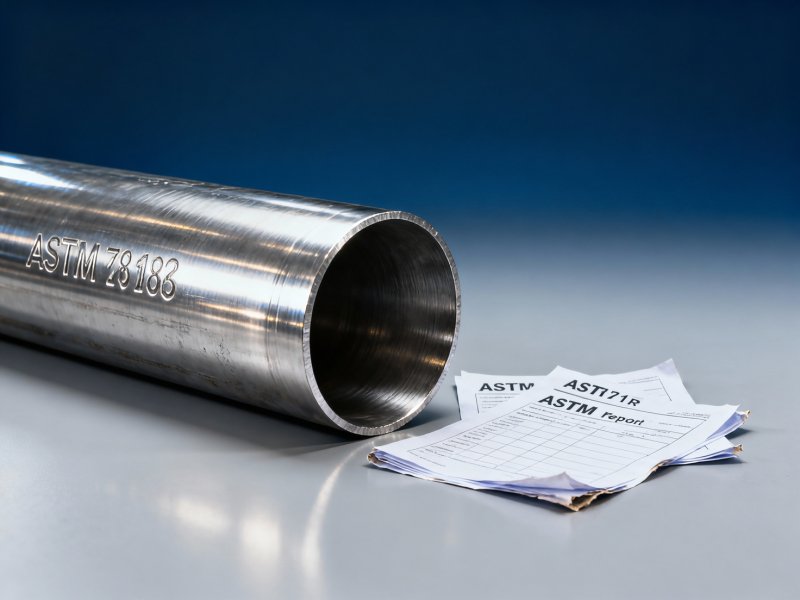
ASTM compliance is embedded across five critical stages of project governance: engineering design review, procurement specification validation, customs clearance, site acceptance testing (SAT), and final handover documentation. At each stage, auditors verify conformance against ASTM’s “mandatory requirements”—not just optional recommendations.
For example, ASTM A312 specifies that seamless stainless steel pipe must achieve a minimum elongation of 30% and intergranular corrosion resistance per ASTM A262 Practice E. If a supplier provides only ISO 9001 certification without ASTM-specific MTRs, the material is automatically flagged during engineering review—even if mechanical properties appear acceptable on paper.
This table highlights how ASTM compliance functions as an active checkpoint—not a passive label. Each rejection point correlates directly to field failure risks: improper Cr/Ni ratios accelerate chloride stress corrosion cracking; inconsistent wall thickness reduces burst pressure margins by up to 23%; missing UT records hide subsurface laminations that initiate fatigue cracks after 18–24 months of cyclic thermal loading.
Material Selection Strategy: Matching ASTM Grades to Application Demands
Choosing the right ASTM grade requires balancing three variables: service temperature range, chemical aggressivity index (CAI), and mechanical duty cycle. For instance, ASTM A335 P22 is optimal for superheater tubes operating between 425°C–550°C, while ASTM A213 TP347H excels in reheat sections above 600°C due to its niobium-stabilized microstructure.
Stainless steel selection adds another layer: 316 Stainless Steel Coil offers superior pitting resistance in chloride-rich environments (critical for desalination feed lines or offshore chemical transfer), with PREN (Pitting Resistance Equivalent Number) ≥33. Its tensile strength ≥520 MPa and elongation ≥55% ensure reliable cold forming into complex gasketed flange assemblies without microcrack propagation.
For low-cost, high-formability alternatives in non-critical instrumentation tubing, ASTM A240 201-grade stainless coil provides 30% lower nickel content while maintaining adequate corrosion resistance in pH-neutral food-grade applications—ideal for beverage packaging lines or agricultural spray nozzles.
Supplier Due Diligence: What to Verify Beyond the Certificate
Certification alone doesn’t guarantee compliance. Over 68% of ASTM-related project disputes stem from discrepancies between mill test reports and actual delivered material—a gap often missed during document-only audits. Buyers must validate physical traceability: heat numbers stamped on pipe ends must match those on MTRs; dimensional checks must cover ≥5% of lot quantity (per ASTM A999 Section 8); and chemical retesting should be performed on one random sample per 25 tons.
Hongteng Fengda supports this due diligence with digital twin documentation: QR-coded labels on each bundle link directly to real-time production logs, including furnace atmosphere control parameters, cooling rate profiles, and UT waveform archives. This enables remote verification without requiring on-site mill visits.
These verifications reduce sourcing risk by ensuring that compliance is engineered—not documented. Every Hongteng Fengda shipment includes a digitally signed MTR, physical sample retention for 5 years, and audit-ready production logs accessible via secure client portal.
Conclusion: Building Confidence Through Certified Structural Steel
ASTM steel pipe compliance is not a cost center—it’s a project acceleration enabler. When materials arrive fully certified, engineering reviews shorten by 40%, customs clearance averages 2.3 days instead of 7–10, and SAT pass rates exceed 99.2%. For power and chemical plant stakeholders—from procurement officers validating stainless steel coil price to safety managers auditing corrosion allowances—certified structural steel eliminates ambiguity and builds cross-functional trust.
As a professional structural steel manufacturer and exporter from China, Hongteng Fengda delivers angle steel, channel steel, steel beams, cold formed steel profiles, and customized components—all compliant with ASTM, EN, JIS, and GB standards. With facilities certified to ISO 9001, SGS, and BV, we support global buyers across North America, Europe, the Middle East, and Southeast Asia through stable capacity, consistent quality, and dependable lead times—typically 25–35 days for standard ASTM pipe orders.
Ready to align your next industrial piping project with ASTM-certified reliability? Contact Hongteng Fengda today for a free engineering consultation, customized MTR review, or comparative analysis of ASTM A312 vs. A213 stainless options—including detailed performance data for 316 Stainless Steel Coil.
Please give us a message


Please enter what you want to find