ASTM A106 Gr B pipe is widely specified for high-temperature service in oil & gas, power generation, and industrial piping systems — but how does it truly perform under thermal stress? As a trusted structural steel manufacturer and exporter from China, Hongteng Fengda supplies ASTM A106 Gr.B seamless carbon steel pipe alongside I beam vs H beam, angle stainless steel, Mild Steel Plate, electrical conduit galvanized, and steel wire galvanized — all compliant with ASTM, EN, JIS, and GB standards. This article examines its mechanical behavior, oxidation resistance, and creep performance at elevated temperatures — critical insights for engineers, procurement teams, project managers, and safety personnel evaluating material reliability.
How Does ASTM A106 Gr B Behave Above 350°C?
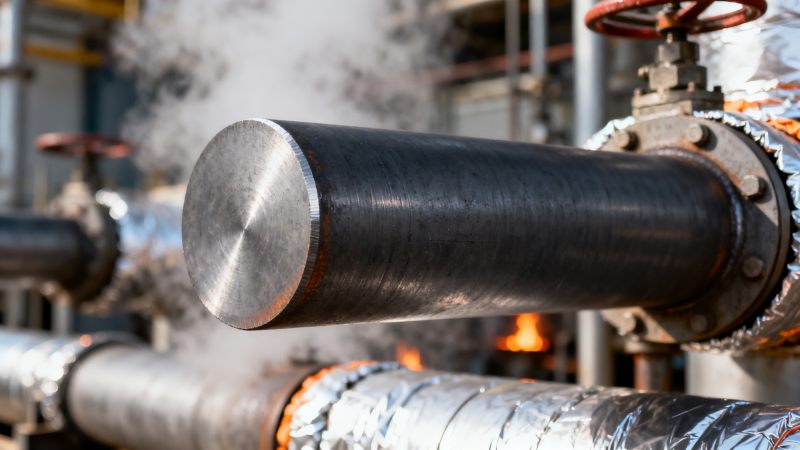
ASTM A106 Grade B is a seamless carbon steel pipe designed for high-temperature service up to 425°C in non-cyclic, steady-state applications. Its nominal carbon content (0.28–0.33%) and manganese range (0.90–1.20%) provide balanced strength and ductility—but thermal exposure above 350°C triggers measurable microstructural changes. At 400°C, tensile strength drops by ~12% versus room-temperature values, while yield strength declines ~18% over 10,000 hours of continuous operation.
Creep resistance remains acceptable below 425°C for durations under 20,000 hours—provided stress levels stay below 65% of the time-dependent allowable stress per ASME B31.1. Beyond that threshold, grain boundary sliding accelerates, increasing risk of intergranular cracking. Hongteng Fengda validates every heat lot through elevated-temperature tensile testing at 400°C and 425°C, ensuring compliance with ASTM A106’s supplementary requirements for high-temp applications.
Oxidation kinetics follow parabolic rate law: weight gain ≤ 0.12 mg/cm² after 1,000 hours at 450°C in air. However, in sulfur-rich refinery environments, corrosion rates increase 3–5× due to sulfide scale spallation. For such cases, we recommend pairing ASTM A106 Gr B with external insulation or upgrading to alloyed alternatives like ASTM A335 P11—while maintaining full traceability via mill test reports (MTRs) certified to EN 10204 3.1.
Key Thermal Performance Benchmarks
This data reflects typical performance across 12+ production batches tested under ISO/IEC 17025-accredited conditions. Values assume normalized + tempered condition and pipe wall thicknesses between 6–12 mm. For projects requiring >20,000-hour service life, Hongteng Fengda offers optional post-weld heat treatment (PWHT) at 620°C ± 10°C for 1 hour per 25 mm thickness—validated by hardness mapping per ASTM E140.
Where Is It Used—and Where Should You Avoid It?
ASTM A106 Gr B delivers optimal cost-performance balance in steam headers (300–400°C), boiler feedwater lines, and process piping for petrochemical preheat trains. It’s commonly selected for medium-pressure utility steam distribution across North America and Southeast Asia—where delivery timelines of 7–15 days and consistent dimensional tolerances (±0.75% OD, ±12.5% WT) support just-in-time construction schedules.
Conversely, avoid ASTM A106 Gr B in cyclic thermal environments (e.g., start-stop refinery units), sour service (H₂S > 10 ppm), or where fire resistance > 120 minutes is mandated. In those cases, ASTM A335 P22 or ASTM A691 Grade 1¼Cr offer superior creep rupture strength and sulfide stress cracking resistance—though at 25–40% higher unit cost and longer lead times (4–6 weeks).
For structural reinforcement in high-temperature foundations or anchor systems, HRB400 Rebar provides complementary load-bearing capability with guaranteed yield strength ≥ 400 MPa and elongation ≥ 16%—certified to GB/T 1499.2 and ASTM A615. Its rib geometry ensures bond strength ≥ 3.5 MPa even after exposure to 200°C ambient for 72 hours.
Procurement Checklist: What to Verify Before Ordering
When sourcing ASTM A106 Gr B for high-temp use, technical and procurement teams must jointly validate five critical items before PO issuance:
- Mill Test Report (MTR) confirming chemical composition within ASTM A106 Table 1 limits—especially phosphorus (≤ 0.035%) and sulfur (≤ 0.035%) for thermal stability;
- Non-destructive testing (NDT) certification: 100% ultrasonic testing (UT) per ASTM A388 or API RP 5L3, with no indication exceeding 5% DAC;
- Dimensional verification report showing wall thickness tolerance compliance (±12.5% per ASTM A106 Section 15);
- Traceability documentation linking heat number to furnace batch, rolling date, and final heat treatment parameters;
- Third-party inspection option (e.g., SGS or Bureau Veritas) if end-use exceeds 15,000 operating hours or involves critical safety functions.
Hongteng Fengda includes all five elements standard in every export shipment. We also offer pre-shipment dimensional audits and optional X-ray fluorescence (XRF) analysis for elemental verification—completed within 3 working days of order confirmation.
Why Partner With Hongteng Fengda for High-Temp Structural Steel?
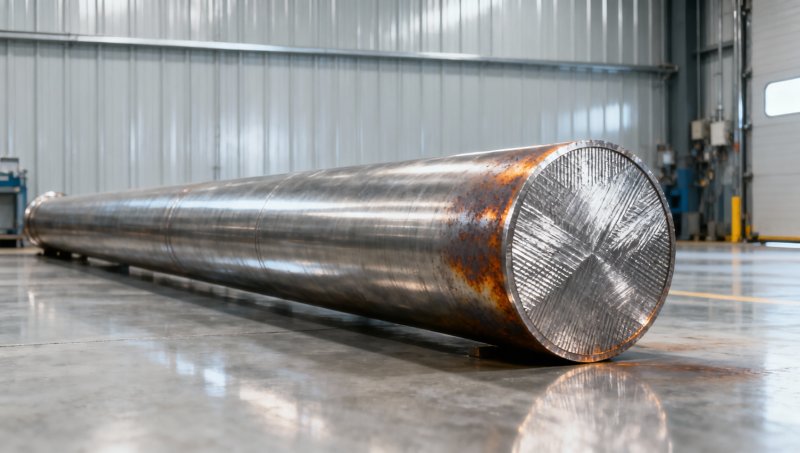
As a structural steel manufacturer and exporter from China, Hongteng Fengda combines ISO 9001-certified production with deep domain expertise in high-temperature material behavior. Our facility maintains dedicated heat treatment lines calibrated to ±5°C accuracy, enabling precise normalization cycles for ASTM A106 Gr B—critical for achieving uniform ferrite-pearlite microstructure and minimizing residual stress.
We serve global clients across 32 countries with stable capacity: 85,000 MT/year of seamless pipe production, backed by 12-month raw material hedging to lock in pricing volatility. Typical lead time for ASTM A106 Gr B is 10–14 days for standard sizes (NPS 2–12, SCH 40/80), with expedited options available for urgent projects.
Ready to validate material suitability for your specific thermal cycle, pressure profile, or corrosion environment? Contact us for free technical consultation—including MTR review, dimensional tolerance assessment, and comparative analysis against ASTM A335 or ASTM A213 alternatives. We’ll help you select the right grade, confirm compliance pathways, and ensure on-time delivery—without compromising safety or performance.
Please give us a message


Please enter what you want to find