For technical evaluators, selecting ASTM 304 stainless steel coil tubing is not only about corrosion resistance and formability, but also about lowering compliance risk across sourcing, fabrication, and end-use performance. By aligning with recognized standards and consistent quality control, this material helps simplify specification review, reduce documentation uncertainty, and support safer, more reliable project decisions.
Why technical evaluators see ASTM 304 coil tubing as a compliance risk control tool
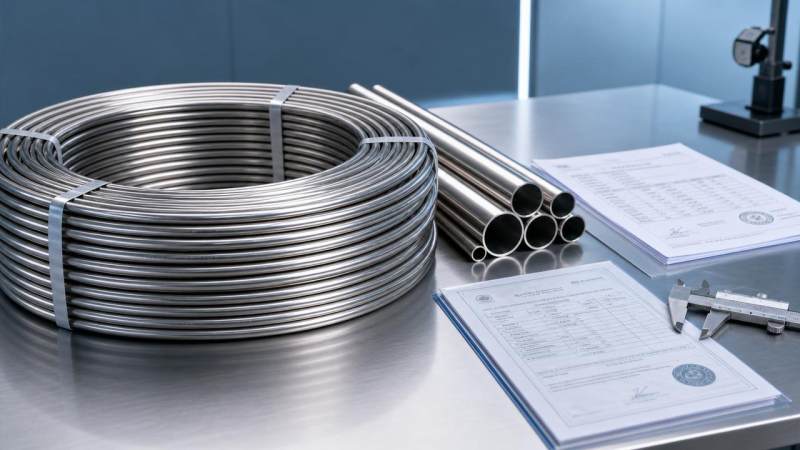
The core search intent behind ASTM 304 stainless steel coil tubing is practical, not theoretical. Evaluators want to know whether this material can reduce approval risk, documentation gaps, and performance uncertainty.
In most projects, compliance risk appears long before installation. It starts when material grades, mill records, dimensional tolerances, and surface conditions do not align with specification requirements or regional standards.
That is why ASTM 304 coil tubing is often preferred in technical review. It offers a well-known stainless grade, broad market familiarity, and easier cross-checking during procurement, fabrication, inspection, and export documentation.
For evaluators, the value is not that 304 solves every corrosion or temperature challenge. The value is that it is easier to specify clearly, verify consistently, and defend technically.
What compliance risk really means in stainless tubing selection
Compliance risk in steel purchasing usually involves four questions. Is the material correctly identified, can the supplier prove conformance, will the product perform as expected, and will records withstand audit or claim review?
When any of these areas is weak, projects face rework, delayed approval, customs issues, installation disputes, or unexpected replacement costs. Technical teams then spend time resolving preventable sourcing problems.
For stainless coil tubing, common risk points include grade substitution, incomplete heat traceability, inconsistent dimensions, poor surface finish control, and vague references to standards without supporting test evidence.
ASTM-based specifications help reduce these issues because they create a common framework. Buyers, fabricators, inspectors, and end users can review the same reference points instead of interpreting private definitions.
How ASTM 304 stainless steel coil tubing reduces specification ambiguity
One of the biggest hidden risks in procurement is unclear wording. If a purchase order only says stainless tube or 304 tube, the supplier may interpret wall thickness, finish, tolerance, or testing differently.
Using ASTM 304 stainless steel coil tubing in a well-structured specification narrows this uncertainty. It encourages clearer requirements on chemistry, mechanical properties, dimensions, inspection scope, and surface expectations.
For technical evaluators, this matters because approval becomes evidence-based. The discussion shifts from sales promises to measurable compliance points that can be checked before shipment and before fabrication begins.
This also helps global sourcing. When material is exported across regions, a recognized standard reduces the chance that local teams, third-party inspectors, and customs reviewers interpret the product differently.
Why traceability and documentation matter as much as material performance
Many compliance failures do not come from catastrophic corrosion. They come from weak paperwork. A technically suitable tube can still become a commercial problem if documentation is incomplete or inconsistent.
Evaluators therefore focus on mill test certificates, heat numbers, production records, dimensional inspection results, and standard references. These documents create the chain of proof that supports acceptance and reduces dispute exposure.
ASTM 304 coil tubing is easier to manage in this respect when the manufacturer has disciplined quality systems. Standardized material control and inspection routines make it simpler to verify that what was ordered is what was delivered.
For projects involving multiple subcontractors, this traceability is especially important. It reduces confusion during receiving, fabrication release, final acceptance, and later maintenance or warranty investigation.
What technical evaluators should check before approving a supplier
Grade familiarity alone is not enough. Evaluators should review whether the supplier can consistently produce tubing that matches the required chemistry, tolerances, surface condition, and documentation package.
First, confirm standard alignment. The supplier should clearly state which ASTM requirement applies and how inspection, testing, and certification are controlled throughout production and export handling.
Second, check dimensional capability. Coil tubing performance and installability depend on stable outside diameter, wall thickness, and length control, especially where downstream forming or automated assembly is involved.
Third, verify process discipline. Consistent raw material sourcing, in-process inspection, and final verification reduce lot-to-lot variability, which is often where compliance risk becomes visible in real projects.
How fabrication and end-use conditions affect compliance confidence
Technical approval should not stop at the mill certificate. Evaluators also need to consider how the tubing will be bent, welded, cleaned, stored, and exposed during service.
ASTM 304 stainless steel coil tubing is widely valued for formability and workability. These qualities support efficient fabrication, but they do not remove the need for process control during cutting, welding, and handling.
If fabrication introduces contamination, excessive heat tint, or poor finishing, compliance risk returns at the application stage. The original material may conform, yet the installed system may still fail acceptance.
This is why experienced evaluators review the full chain: material standard, fabrication compatibility, cleaning procedure, inspection method, and service environment. Real risk reduction comes from this end-to-end view.
Where a broader stainless product range supports lower sourcing risk
In many procurement programs, buyers compare tubing needs with adjacent stainless pipe requirements. A supplier with broader stainless capability can often simplify qualification, communication, and replacement planning.
For example, 304 Stainless steel pipe is commonly used in residential decoration, food and medical sectors, and industrial piping systems where corrosion resistance and workability matter.
Typical technical ranges include lengths from 3000 to 12000 millimeters, outside diameters from 6 to 2500 millimeters, and thickness from 0.6 to 30 millimeters, depending on project requirements.
Common finishes such as No.1, 2B, BA, 2K, and 8K also help evaluators match appearance, cleanability, and fabrication expectations. This wider product familiarity can support more confident sourcing decisions.
How recognized standards help global buyers reduce audit and export friction
For international projects, compliance risk is often amplified by distance. Buyers may not visit the plant, and technical review relies heavily on records, samples, inspections, and supplier responsiveness.
Recognized standards such as ASTM create a shared language across North America, Europe, the Middle East, and Southeast Asia. This is valuable when multiple parties must validate the same material against project requirements.
For exporters, disciplined control over standard conformance reduces the likelihood of shipment disputes, port delays, or rejection caused by unclear labeling, inconsistent certificates, or missing test references.
For evaluators, the practical takeaway is simple: a familiar stainless grade backed by reliable standard compliance is easier to approve than a cheaper option with uncertain technical evidence.
Common misconceptions about ASTM 304 coil tubing and risk reduction
A common mistake is assuming that ASTM 304 automatically guarantees low risk in every environment. In reality, chloride exposure, temperature extremes, or aggressive process media may require different grades.
Another misconception is that compliance equals paperwork only. Documents are essential, but if dimensional consistency, surface quality, or fabrication suitability are weak, the project still carries performance risk.
Some buyers also focus too much on lowest price. Lower upfront cost can quickly disappear if additional inspection, replacement, delay, or customer claims arise from inconsistent supply quality.
Technical evaluators add value by looking beyond the quote. They ask whether the supplier’s manufacturing discipline and certification reliability support the full lifecycle of the application.
A practical evaluation framework for lower-risk approval decisions
If the goal is to reduce compliance risk, evaluators should use a structured review model. Start with application conditions, then confirm grade suitability, relevant standard references, and required documentation outputs.
Next, review supplier capability in terms of production stability, inspection routines, export experience, and responsiveness to technical clarification. These factors often predict delivery quality better than marketing claims.
Then compare sample records or previous order evidence. Mill certificates, dimensional reports, finish photos, and third-party inspection results can reveal whether compliance is managed systematically or only described generally.
Finally, align internal stakeholders. Procurement, engineering, quality, and project teams should agree on acceptance criteria before order release. This prevents interpretation conflicts after production is complete.
Conclusion: why ASTM 304 coil tubing often supports safer technical decisions
For technical evaluators, ASTM 304 stainless steel coil tubing helps reduce compliance risk because it combines recognized standardization, broad processing familiarity, and easier documentation review.
Its real advantage is not that it removes all engineering judgment. Its advantage is that it gives teams a clearer basis for specification control, supplier verification, and acceptance decisions across the supply chain.
When supported by stable manufacturing, traceable records, and realistic application review, this material can lower sourcing uncertainty and improve confidence in both technical and commercial outcomes.
In short, ASTM 304 is often a strong low-risk choice when the project needs a stainless tubing solution that is easier to specify, easier to verify, and easier to defend.
Please give us a message


Please enter what you want to find