In structural projects, even small dimensional errors can trigger alignment problems, material waste, and schedule pressure. That is why 90 angle metal for construction projects matters far beyond simple edge support.
When steel angles are produced with stable tolerances, they improve layout precision, connection consistency, and load transfer. In today’s global steel sector, accuracy has become a competitive requirement, not only a technical preference.
For projects using international standards, reliable structural steel supply also reduces sourcing risk. Hongteng Fengda supports this need with controlled production, custom solutions, and export-ready quality across major construction markets.
Why accuracy expectations are rising in modern steel construction
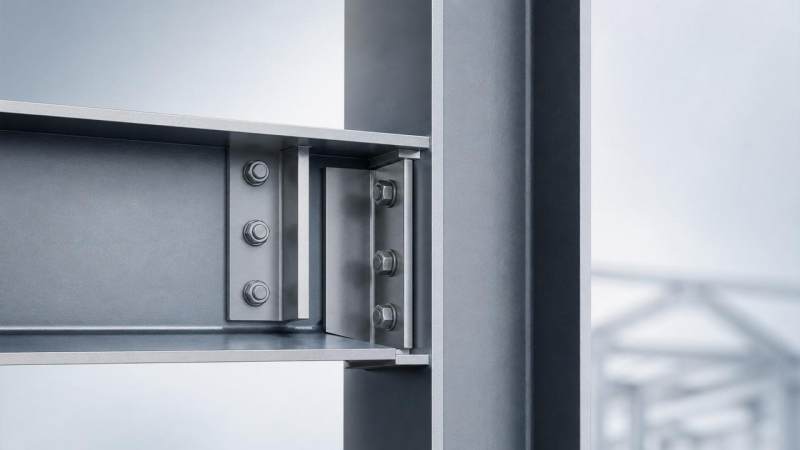
The role of 90 angle metal for construction projects is changing. It is no longer viewed as a basic accessory. It now affects geometry control, installation speed, and coordination across fabricated steel assemblies.
Several industry signals explain this shift. Buildings are more modular. Tighter schedules leave less room for on-site correction. Mixed-material systems require cleaner interfaces between steel, concrete, and cladding.
As a result, dimensional consistency in angle steel directly influences field performance. Poor right-angle accuracy can multiply errors across frames, supports, openings, and welded joints.
Common trend signals seen across structural projects
- Greater use of prefabricated steel members
- Higher demand for repeatable connection accuracy
- Closer tolerance control in international tenders
- Reduced tolerance for rework during erection
- Stronger focus on lifecycle cost, not only material price
What is pushing demand for better 90 angle metal for construction projects
The growing emphasis on 90 angle metal for construction projects comes from practical engineering pressures. Accuracy now affects not only structural safety, but also procurement planning and downstream manufacturing efficiency.
These drivers explain why buyers increasingly compare angle steel by dimensional reliability, surface condition, and process control. Price still matters, but inaccurate steel often creates higher total project cost.
How 90 angle metal affects structural project accuracy in real applications
The influence of 90 angle metal for construction projects appears at several stages. It begins in fabrication, continues during installation, and remains important for structural performance over time.
Layout and alignment control
Right-angle precision helps maintain true reference lines. This is critical for frames, brackets, stair supports, equipment bases, and edge reinforcements connected to larger steel systems.
If the angle deviates, bolt holes may miss alignment. Weld gaps may change. Panel interfaces may become uneven. Small deviations can spread through multiple connected members.
Load distribution and joint behavior
Accurate geometry supports more predictable load transfer. When an angle section sits correctly, contact surfaces improve, local stress concentration decreases, and fastening systems perform more consistently.
This matters in steel structures, bridges, manufacturing supports, and chassis systems. In these conditions, corner shape affects stability as much as nominal thickness or material grade.
Installation efficiency and rework control
Reliable 90 angle metal for construction projects reduces fitting adjustments during erection. That shortens crane time, limits cutting and shimming, and helps teams keep project sequences on track.
Where broader framing is required, sections such as Hot Rolled H Beam are often paired with angle steel. Consistent beam and angle dimensions improve connection accuracy across the full structure.
The business impact goes beyond the steel component itself
The quality of 90 angle metal for construction projects affects several linked business stages. Accuracy problems rarely stay isolated to one steel part.
- Fabrication: more corrections, slower throughput, and material loss
- Logistics: replacement orders and disrupted site sequencing
- Installation: extra labor hours and equipment downtime
- Quality assurance: harder inspection approval and documentation issues
- Project finance: hidden cost growth despite lower initial purchase price
This is why dependable exporters matter in the steel supply chain. Stable production capacity, standard compliance, and consistent lead times can reduce uncertainty before material even reaches the site.
Hongteng Fengda supplies structural steel products including angle steel, channel steel, steel beams, cold formed profiles, and custom components. Its quality systems support ASTM, EN, JIS, and GB requirements for global use.
What deserves closer attention when selecting angle steel now
As demand grows for better 90 angle metal for construction projects, selection standards should become more disciplined. Material choice should connect directly to fabrication method and service environment.
Core points to verify
- Right-angle tolerance consistency across batches
- Leg straightness and edge condition
- Mechanical properties matched to design load
- Surface treatment for corrosion exposure
- Weldability, punching, and cutting suitability
- Inspection records and standards certification
For integrated structural packages, beam compatibility also matters. A section like Hot Rolled H Beam offers options in Q235, Q345B, A572, A992, SS400, S275JR, and stainless grades.
Its flange thickness ranges from 8-64mm, web thickness from 5-36.5mm, and length from 1m-12m. Such flexibility supports steel structures, bridging, shipbuilding, machinery, and automobile chassis applications.
A practical response plan for future projects
The next step is not simply buying heavier steel. The better approach is improving fit between design intent, tolerance requirements, fabrication processes, and supplier capability.
For construction, industrial, and manufacturing work, accurate steel angles support cleaner assembly and lower lifecycle cost. The value of 90 angle metal for construction projects will likely keep increasing as projects become faster and more integrated.
If structural accuracy, dependable lead time, and global-standard quality are project priorities, it is worth reviewing steel supply options before the next order cycle. Better angle accuracy often delivers benefits across the entire structure.
Please give us a message


Please enter what you want to find