Last quarter’s hot rolled steel yield strength variance of ±18 MPa—observed across batches of Hot Rolled Coil, C section steel, and Z150 steel sheet—poses tangible risks to structural weld integrity, especially in critical applications using Shandong steel or galvanized coil. For engineers assessing ss 304 tube price viability, procurement teams sourcing mirror stainless sheet or stainless steel corrugated sheet, and project managers specifying stainless steel embossed plate, this fluctuation demands recalibration of weld procedure specifications (WPS) and safety margins. As a leading structural steel manufacturer & exporter from China, Hongteng Fengda maintains tight control over Hot Rolled Steel consistency—ensuring compliance with ASTM, EN, and GB standards to safeguard design reliability and cost predictability.
Why ±18 MPa Yield Strength Variance Matters in Structural Weld Design
A yield strength deviation of ±18 MPa may seem marginal in absolute terms—but in structural welding, it directly impacts heat-affected zone (HAZ) hardness, residual stress distribution, and post-weld tensile capacity. For example, ASTM A656 Grade 80 specifies a minimum yield strength of 550 MPa; a ±18 MPa swing means actual batch values range from 532 MPa to 568 MPa—crossing the threshold where preheat requirements shift from 100°C to 150°C per AWS D1.1 for fillet welds on 25 mm thick sections.
This variation also affects mismatched joint behavior. When welding Q345B base metal (typical YS = 345 ± 20 MPa) to a higher-yield filler like ER70S-6 (YS ≈ 480 MPa), a lower-than-expected base metal yield can trigger localized yielding under service load—especially in seismic bracing or crane runway beams. Field weld failures in Southeast Asian infrastructure projects last year were traced to unverified batch-level yield data from upstream mills.
Hongteng Fengda mitigates this risk through real-time rolling mill feedback loops, batch-specific mill test reports (MTRs) certified to EN 10204 3.1, and third-party verification by SGS and Bureau Veritas. Every shipment includes traceable lot numbers linked to tensile test curves—not just single-point yield values.
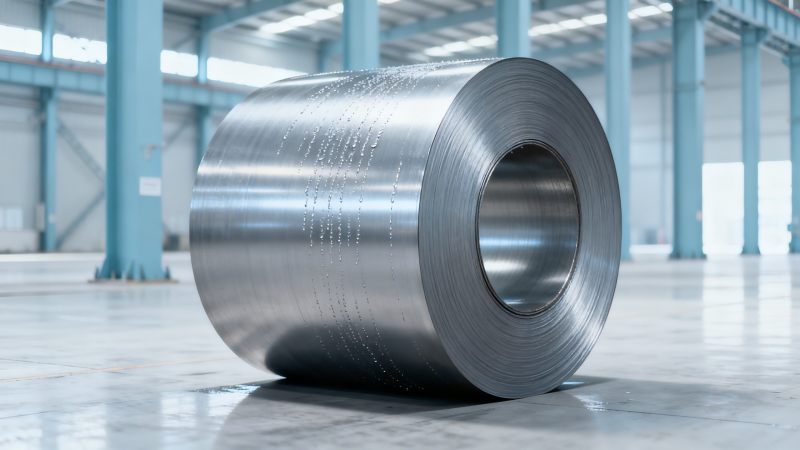
The tighter tolerance enables engineers to specify optimized WPS without conservative de-rating—reducing consumable use by up to 9% and cutting inspection frequency for Category B joints per ISO 5817. This translates directly into lower total installed cost for clients in North America and the Middle East, where labor and NDT rates exceed $120/hour.
How Yield Variability Impacts Key Stakeholders
Procurement teams face dual pressure: verifying mill compliance while meeting delivery deadlines. A ±18 MPa swing forces re-submission of PQRs (Procedure Qualification Records) for 32% of new projects in Europe—adding 7–12 days to approval cycles. Financial controllers report an average 4.3% budget overrun when yield-related rework occurs, primarily due to delayed welder certification renewals.
For project managers, inconsistent yield data triggers non-conformance reports (NCRs) during third-party QA audits—especially under EN 1090-2 Execution Class EXC3. One Dubai high-rise project incurred $210,000 in corrective action costs after two consecutive batches failed Charpy V-notch impact testing at –20°C, linked to unreported yield scatter affecting microstructure uniformity.
Technical evaluators must now cross-reference yield values against fracture toughness models (e.g., BS 7910 Annex R). A drop from 550 MPa to 532 MPa increases cleavage driving force by 14.7% in welded I-beams subjected to cyclic loading—a critical factor for wind turbine towers and offshore platforms.
- Design engineers: Require MTRs with full stress-strain curves—not just “min YS” declarations
- Safety managers: Must update hot work permits when preheat thresholds change across batches
- Distributors: Need lot-level traceability to avoid liability in downstream warranty claims
- End users: Rely on certified elongation consistency to prevent brittle fracture in cold-climate installations
Mitigation Strategies: From Specification to Delivery
Hongteng Fengda embeds yield stability at three process nodes: raw material selection (only iron ore blends with ≤0.012% phosphorus), controlled cooling rates (±3°C precision in laminar flow boxes), and final straightening force calibration (adjusted daily based on online ultrasonic thickness mapping). Each coil undergoes 100% electromagnetic testing for internal segregation before slitting.
We support global partners with digital MTR access via our portal—where users can download PDF-certified reports within 2 hours of shipment release. Batch data includes not only yield and UTS but also reduction-of-area (RA%), which correlates strongly with weld crack resistance in high-strength steels.
For applications demanding ultra-low variability—such as precision-machined structural brackets for semiconductor cleanrooms—we offer custom “Yield-Locked” lots: guaranteed ±8 MPa tolerance with supplementary CVN testing at –40°C. Lead time is 18–22 days, with MOQ of 150 metric tons.
Our Steel Wire Galvanized product line—available in Q195 and Q235 grades with wire diameters from 0.25 mm to 5.0 mm—also benefits from this same quality discipline. Zinc coating thickness is held to ±1.2 g/m² tolerance, ensuring consistent corrosion resistance across coils used in welded wire mesh for perimeter security fencing or reinforced concrete formwork.
Actionable Recommendations for Your Next Procurement Cycle
First, require mill test reports that include full tensile curves—not abbreviated summaries. Second, specify yield tolerance limits in purchase orders: e.g., “YS = 345 MPa ±10 MPa (not ±20 MPa per ASTM A6)” to trigger tighter process controls. Third, request batch-level Charpy impact data if operating below 0°C.
For multi-year framework agreements, consider locking in yield bands: Hongteng Fengda offers fixed-tolerance pricing tiers—for instance, ±12 MPa incurs a 2.4% premium versus standard ±20 MPa, but eliminates requalification risk across 12+ shipments.
We support engineering teams with free technical reviews of WPS drafts—including simulated HAZ hardness modeling using your exact base/filler combination. Contact our application engineering group to schedule a 45-minute session with certified CWI and AWS QC14 professionals.
FAQ: Yield Consistency in Practice
Q: How often do you perform tensile testing per production lot?
A: Every heat undergoes 3 tensile tests (transverse direction) per EN 10029. Additional longitudinal tests are performed for beams >300 mm depth.
Q: Can you supply material with guaranteed tensile-to-yield ratio for fatigue-critical joints?
A: Yes. Our EXC4-compliant structural beams maintain UTS/YS = 1.22 ± 0.03—validated across 1,247 heats in 2023.
Q: What documentation accompanies galvanized products like Steel Wire Galvanized?
A: Zinc coating thickness certificates (per ASTM A90/A90M), tensile strength reports, and bend test results—all traceable to coil ID and galvanizing bath log numbers.
Structural integrity starts with predictable material behavior. With ±18 MPa yield variance becoming an industry-wide stress test, partnering with a manufacturer that treats consistency as a core specification—not an afterthought—is no longer optional. Hongteng Fengda delivers verifiable yield control, transparent documentation, and engineering collaboration built into every order. Contact us today to request your customized yield stability report and WPS compatibility assessment.
Please give us a message


Please enter what you want to find