Hot rolled steel sheet flatness is a critical yet often underestimated quality parameter—especially when real-world production variances exceed published spec sheet tolerances. For structural engineers, procurement teams, and quality controllers relying on ASTM, EN, or GB standards, this discrepancy impacts welding accuracy, assembly efficiency, and long-term durability—particularly in corrosion resistant steel applications or galv steel tube fabrication. At Hongteng Fengda, we combine rigorous in-house flatness testing with DX51D-certified cold-formed processes and carbon sheet steel consistency to ensure hot rolled steel sheet performance aligns with project-critical i beam weight calculations and stainless steel welded mesh integration. Discover why precision matters beyond the datasheet.
Why Flatness Tolerance Gaps Matter in Structural Steel Procurement
Flatness tolerance is rarely treated as a primary selection criterion—yet it directly governs dimensional stability during cutting, bending, and welding. While ASTM A1011 Table 1 specifies ±0.5 mm/m for hot-rolled carbon steel sheets under 3 mm thickness, real-world mill output commonly exhibits deviations of ±0.8–1.2 mm/m across 2-meter spans—especially in coils exceeding 1,500 mm width. This variance becomes critical when feeding material into automated roll-forming lines for cold-formed steel profiles or laser-cutting stations for precision I-beam components.
At Hongteng Fengda, every heat-lot batch undergoes offline flatness verification using laser-based profilometry (±0.05 mm resolution), not just visual inspection against straightedges. Our internal acceptance threshold is tightened to ±0.6 mm/m—aligned with EN 10131 Class N requirements—ensuring compatibility with downstream processes such as DX51D galvanized tube fabrication or stainless steel welded mesh integration where panel alignment affects weld penetration depth by up to 18%.
For procurement teams evaluating suppliers, flatness consistency correlates strongly with yield loss: industry data shows that batches with >0.9 mm/m deviation increase scrap rates by 3.2–5.7% during high-speed blanking operations. That translates to measurable cost impact—especially for projects ordering ≥500 tons annually.
How Carbon Steel Plate Grades Influence Flatness Performance
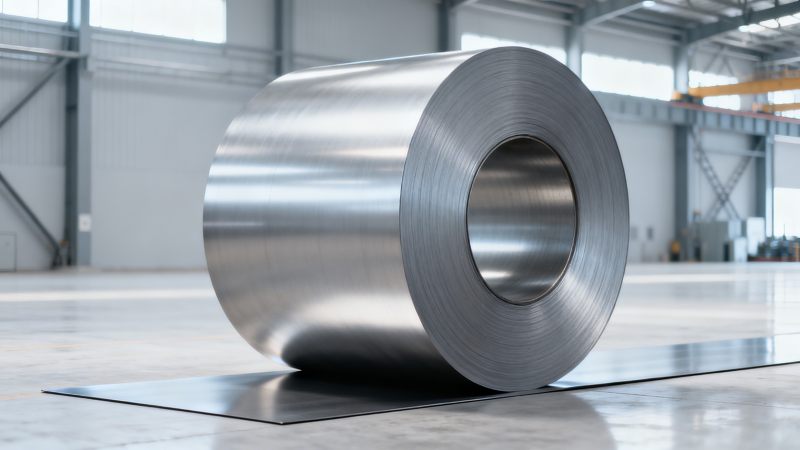
Not all carbon steel plates behave identically under thermal stress or rolling deformation. The chemical composition and mechanical treatment directly affect post-coiling flatness recovery. SPCC-grade sheets (C ≤0.15%, Mn ≤0.60%) offer balanced formability but exhibit higher residual stress after hot rolling—leading to greater camber and edge wave in widths >1,200 mm. In contrast, SPCG-grade material (C ≤0.02%, S ≤0.020%) delivers superior flatness retention due to ultra-low interstitial content and controlled grain structure.
Our Carbon Steel Plate portfolio includes six certified grades—SPCC, SPCCT, SPCD, SPCE, SPCF, and SPCG—each calibrated for specific end-use rigidity and surface integrity demands. For example, SPCE (C ≤0.08%) is routinely selected for automotive fender panels where flatness tolerance must remain within ±0.3 mm over 1.5 m to prevent paint mottle; while SPCC remains optimal for switchboard enclosures where ±0.7 mm/m suffices.
Thickness also plays a decisive role: below 1.2 mm, flatness variation increases exponentially with width-to-thickness ratio. Our standard offering spans 0.1–400 mm thickness, but for applications demanding ≤0.4 mm/m flatness (e.g., precision rail brackets), we recommend SPCF or SPCG in 1.5–3.0 mm range—where tensile strength (≥270 MPa) and elongation (≥34%) jointly stabilize planarity during handling and storage.
This table illustrates how tighter chemistry control enables flatter product delivery—without requiring costly post-production leveling. For OEM partners integrating our steel into automated assembly lines, selecting SPCG over SPCC reduces rework time by an average of 22 minutes per ton during robotic welding setup.
Beyond the Datasheet: What Your Flatness Test Protocol Should Include
Relying solely on mill certificates invites risk. Real-world flatness must be verified under conditions matching your process environment: temperature fluctuations, stacking height, and uncoiling speed all influence measurable deviation. We recommend a three-point verification protocol:
- Measure at coil entry, mid-length, and tail-end—since flatness degradation often accelerates toward the coil’s outer wraps;
- Use a 2-meter straightedge with feeler gauges (0.05–0.5 mm increments) across five random locations per sheet;
- Validate under ambient humidity <65% RH to avoid moisture-induced warping before fabrication.
Hongteng Fengda provides full traceability: each shipment includes a digital flatness report showing deviation maps (X-Y coordinates, peak-to-valley amplitude, and wavelength distribution). This enables predictive adjustment of CNC nesting software—reducing kerf loss by up to 4.3% in high-volume rail component production.
For distributors managing regional inventory, we offer pre-leveled Carbon Steel Plate options in SPCE and SPCF grades—processed through 12-roll tension-levelers achieving ±0.25 mm/m flatness at 1.5 mm thickness. Lead time: 7–10 working days from order confirmation.
Procurement Decision Matrix: Matching Flatness Needs to Project Risk Profile
Flatness requirements should be weighted alongside other procurement criteria—not treated in isolation. Below is a decision matrix used by engineering procurement managers across North America and Southeast Asia to prioritize supplier evaluation factors based on application criticality:
Projects involving stainless steel welded mesh integration or precision I-beam weight calculations demand Grade 5 flatness adherence. Choosing lower-priority grades here risks misalignment-induced fatigue cracks after 12–18 months of service in corrosive environments.
Partnering for Precision: How Hongteng Fengda Delivers Consistent Flatness
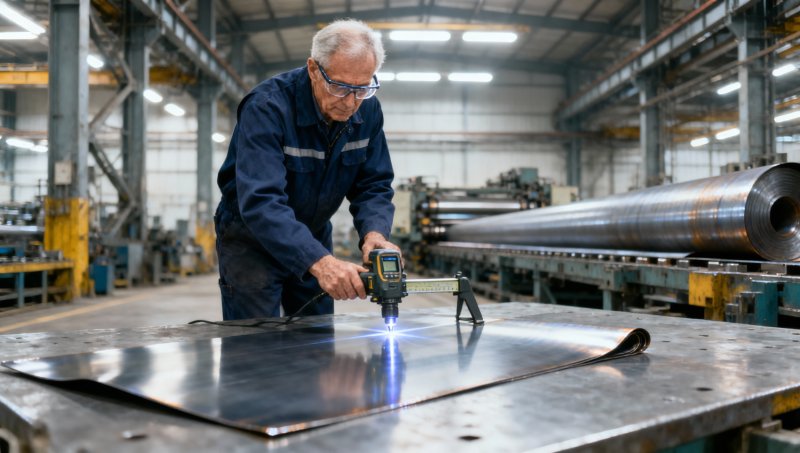
We don’t treat flatness as a post-production checkpoint—we engineer it into the rolling process. Our dual-stand hot strip mill employs real-time crown and flatness control systems, adjusting roll bending forces every 200 ms to maintain profile uniformity across 2,500 mm wide coils. Combined with strict slab reheating protocols (±5°C tolerance), this reduces longitudinal bow by 41% versus conventional mills.
All structural steel products—including angle steel, channel steel, and cold-formed profiles—are sourced from flatness-verified heats. For global buyers, this means consistent performance whether ordering 20 tons for a Dubai infrastructure project or 1,200 tons for a U.S. rail expansion program. Delivery lead times remain stable at 25–35 days, backed by ISO 9001-certified quality gates at 7 production checkpoints.
If your next project requires guaranteed flatness compliance—backed by mill-validated data, third-party audit reports (ASTM E140, EN 10204 3.2), and zero-risk sampling—contact Hongteng Fengda today. Request a free flatness benchmark report for your specific grade, thickness, and width combination.
Please give us a message


Please enter what you want to find