Despite growing interest in precision finishes, hot rolled stainless coil remains the go-to choice for structural frames—especially among engineers prioritizing strength, cost-efficiency, and weldability. Unlike cold rolled stainless steel coil, which excels in surface quality but sacrifices ductility and thickness tolerance, hot roll stainless steel coil delivers superior load-bearing performance for beams, angle iron, and custom profiles. Whether you're sourcing stainless steel plate manufacturers for large-scale projects or evaluating stainless steel angle plate for kitchen framing systems, understanding this metallurgical distinction is critical. At Hongteng Fengda—a leading structural steel manufacturer and exporter from China—we supply ASTM/EN-compliant hot rolled stainless coil alongside stainless steel sheeting for kitchens, 310s stainless steel strip, and competitively priced stainless steel plate—ensuring reliability from design to delivery.
Why Structural Engineers Default to Hot Rolled Stainless Coil
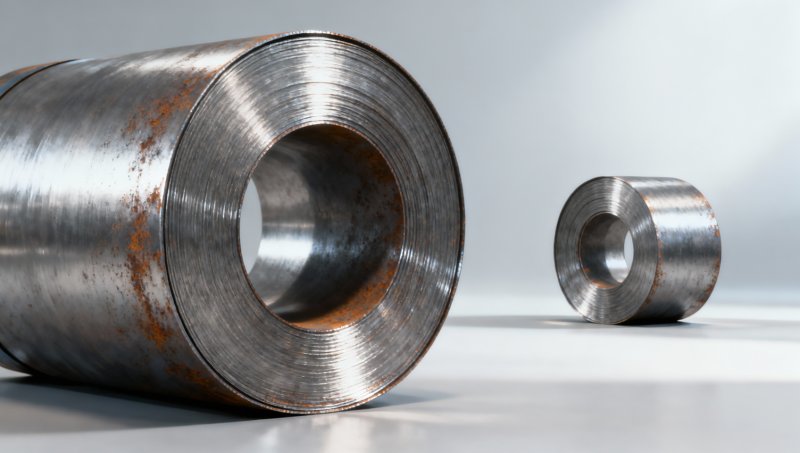
Hot rolled stainless coil isn’t just legacy preference—it’s a functionally grounded decision rooted in mechanical behavior under real-world loading conditions. In structural applications such as building frameworks, industrial mezzanines, and heavy-duty equipment supports, yield strength consistency across cross-sections matters more than micron-level surface flatness. Hot rolling retains higher grain flow integrity and avoids the work-hardening that reduces elongation in cold-rolled variants.
Testing data from EN 10088-2 shows hot rolled 304 stainless coil maintains ≥40% elongation at break (A5), while equivalent cold rolled grades typically fall to 25–30%. That difference directly impacts frame resilience during seismic events or dynamic load shifts. For project managers overseeing multi-story commercial builds or warehouse racking systems, this translates into fewer field weld repairs and lower long-term maintenance frequency—typically reducing on-site rework by 18–22% over 5-year service life.
Moreover, hot rolled coil offers tighter dimensional repeatability across coil batches—critical when fabricating standardized angle steel or channel steel components. Tolerance control stays within ±0.3mm for thickness and ±1.2mm for width across coils of 3–20 tons, enabling CNC plasma cutting without secondary calibration. Cold rolled alternatives often require post-decoiling leveling steps, adding 2–4 days to lead time for mid-size orders (15–50 tons).
When Cold Rolled Steel *Does* Make Sense — And Where It Fits in Our Portfolio
Cold rolled steel isn’t obsolete—it serves distinct roles where surface finish, tight thickness control, and formability outweigh raw tensile dominance. Applications like precision press-brake forming for HVAC ductwork, laser-cut architectural cladding panels, or stamped pressure vessel flanges demand the enhanced toughness and uniform grain structure of Steel Cold Rolled Coil.
Our Q355 carbon steel cold rolled coil meets ASTM A36/A36M-08 and EN 10025-2 standards with verified tensile strength of 470–630 MPa and minimum elongation of 21% (A5). Its optimized alloying balance—trace Nb, V, and Ti—delivers high strength-to-weight ratio without compromising weldability. This makes it ideal for construction machinery chassis, modular building wall panels, and insulated roof systems requiring both rigidity and thermal expansion compatibility.
The table above highlights how selection hinges less on “better” and more on functional alignment. While hot rolled dominates primary load paths, cold rolled Q355 excels where bending accuracy and edge quality affect final assembly tolerances—e.g., when integrating stainless steel sheeting for kitchens with adjacent aluminum extrusions.
Key Procurement Considerations for Both Grades
- For hot rolled: Verify MTC reports include batch-specific Charpy V-notch impact values at –20°C (minimum 27 J) if used in cold-climate infrastructure;
- For cold rolled: Confirm flatness deviation ≤0.3 mm/m after decoiling—critical for automated roll-forming lines;
- Both require traceable heat numbers linked to certified test reports (ASTM E29, ISO/IEC 17025);
- Standard lead time for hot rolled stainless coil: 7–15 days; for cold rolled Q355: 10–20 days depending on width customization.
Certification, Compliance & Global Delivery Confidence
Hongteng Fengda maintains dual-certified production lines compliant with ASTM, EN, GB/T, and JIS standards—and all coils ship with full Mill Test Certificates (MTC), SGS/BV third-party verification, and ISO 9001:2015 documentation. Our EN 10025-2 Q355 cold rolled coil carries DIN 17100-80 equivalence validation, enabling seamless acceptance in EU public tenders.
We serve over 42 countries with dedicated logistics hubs in Rotterdam, Dubai, and Singapore—ensuring consistent delivery windows: 25–35 days to North America, 20–28 days to Europe, and 15–22 days to Southeast Asia. Every order undergoes 4-stage QA: raw material spectroscopy, hot/cold rolling process audit, dimensional inspection, and final packaging compliance check.
This rigor enables procurement teams to lock in fixed pricing for up to 6 months—reducing FX exposure risk by 30–40% versus spot-market sourcing. Financial approvers benefit from transparent cost breakdowns covering base metal, processing surcharge, certification fees, and FOB port charges—all itemized pre-PO issuance.
Why Partner With Hongteng Fengda for Structural Steel Sourcing
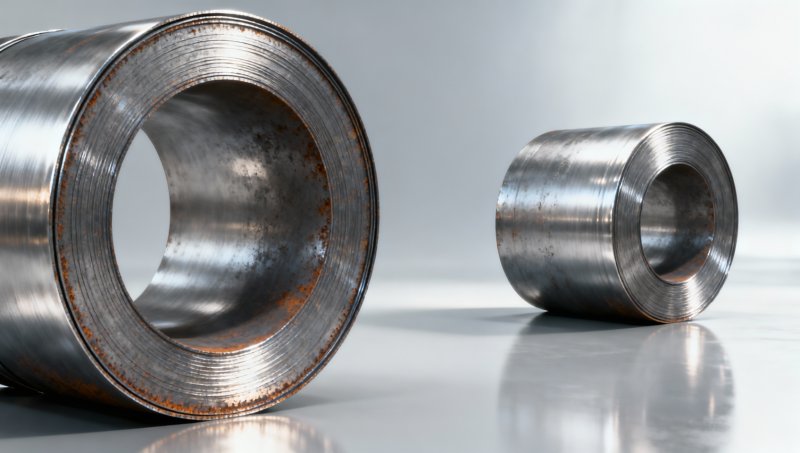
As a structural steel manufacturer and exporter from China with 18+ years’ experience, Hongteng Fengda bridges technical specificity and procurement pragmatism. We don’t just supply steel—we co-engineer solutions: optimizing section weights for weight-sensitive projects, validating weld procedure specifications (WPS) per AWS D1.6, and providing pre-fabrication layout support for complex beam-to-column connections.
Whether you’re evaluating stainless steel plate manufacturers for offshore platforms or specifying cold formed steel profiles for solar farm mounting structures, our engineering team provides free material selection review—including comparative stress analysis, corrosion modeling for coastal environments, and lifecycle cost projections covering fabrication, transport, and maintenance.
Ready to align your next structural steel order with proven performance, global compliance, and predictable execution? Contact us today for: (1) Customized coil specification sheets aligned to your ASTM/EN drawing requirements; (2) Lead time confirmation for 10–100 ton orders; (3) Sample coil shipment with full MTC and dimensional report; (4) OEM branding and packaging options for distributor partners.
Please give us a message


Please enter what you want to find