Understanding hot rolled coil yield strength variations across ASTM, JIS, and GB standards is critical for structural steel manufacturers, procurement teams, and project engineers—especially when sourcing Hot Rolled Coil, carbon sheet steel, or galvanised sheet steel for applications demanding corrosion-resistant pipe, hot galvanizing compatibility, or compliance with API 5L Steel Pipe and ASTM A106 Gr B specifications. As a China-based structural steel manufacturer and exporter, Hongteng Fengda ensures consistent quality and standard alignment across global markets—from Mild Steel Plate to GI sheet coil—supporting technical evaluation, cost control, and regulatory compliance for buyers in construction, energy, and industrial sectors.
Why Yield Strength Variations Matter Across ASTM, JIS, and GB Standards
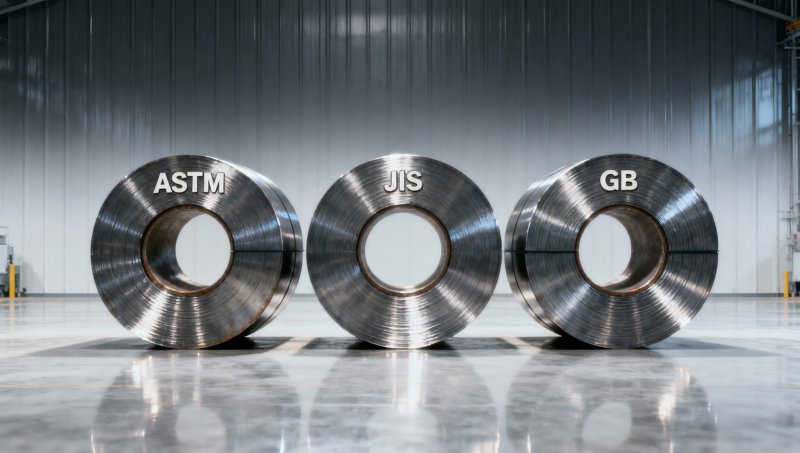
Yield strength is not merely a mechanical property—it’s the foundational threshold determining structural integrity, fabrication safety, and long-term service performance. For hot rolled coil (HRC), even minor deviations in yield strength between ASTM A656, JIS G3131, and GB/T 3274 can trigger cascading effects: welding parameter recalibration, cold-forming springback inconsistencies, and non-compliance during third-party mill test certification.
In North America, ASTM A656 Grade 80 specifies a minimum yield strength of 550 MPa, while JIS G3131 SPHC requires only 127–275 MPa for general-purpose carbon coil. Meanwhile, GB/T 3274-2017 sets tiered requirements: Q235B at 235 MPa, Q355B at 355 MPa, and high-strength Q460B at 460 MPa—each tied to specific thickness ranges and delivery conditions (hot-rolled, normalized, or thermomechanical controlled rolling).
Misalignment isn’t theoretical. A procurement team ordering HRC for API 5L X60 line pipe fabrication under ASTM A106 Gr B specs may unknowingly receive GB/T 3274 Q355B coil labeled “equivalent”—yet its 12% lower tensile elongation and ±15 MPa yield tolerance band risk weld cracking during girth welding. That’s why Hongteng Fengda implements dual-standard verification: every coil batch undergoes simultaneous ASTM E8 and GB/T 228.1 tensile testing, with certified reports traceable to CNAS-accredited labs.
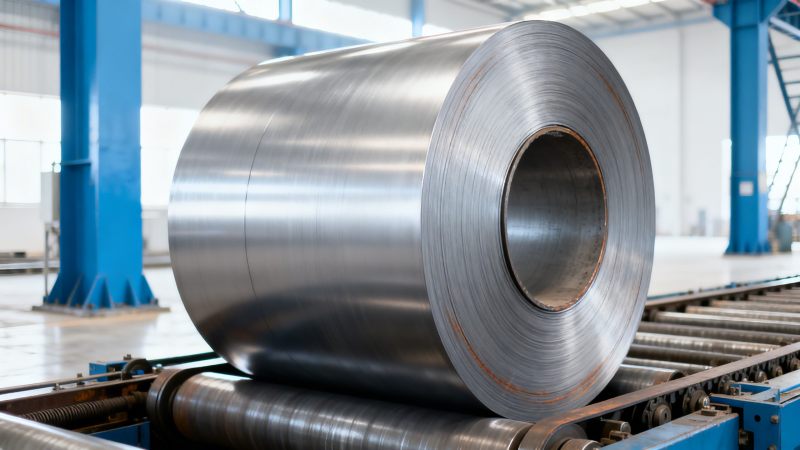
Comparative Yield Strength Ranges & Tolerance Bands
The table below compares nominal minimum yield strengths, permissible tolerances, and typical thickness applicability for widely used hot rolled coil grades under three major standards. All values reflect as-received condition unless otherwise noted.
Key insight: While ASTM grades prioritize tight yield control for high-stress applications, JIS standards emphasize formability over strength consistency—making SPHD ideal for deep-drawn automotive parts but unsuitable for load-bearing structural frames. GB/T 3274 bridges both worlds: Q355B delivers predictable strength across 3–40 mm thicknesses, validated via 100% ultrasonic testing for plates >16 mm. For clients requiring seamless integration into mixed-standard projects—e.g., Middle East oil & gas facilities using ASTM piping alongside GB-specified structural supports—Hongteng Fengda offers pre-certified billet traceability and dual-reporting documentation.
Impact on Downstream Applications & Fabrication
Yield strength directly governs cold roll forming feasibility, laser cutting kerf width, and galvanizing bath immersion time. For instance, coils with yield strength >420 MPa require 25% higher roll force during cold-formed purlin production—increasing tool wear by up to 40% and reducing die life from 120,000 to 75,000 cycles. Similarly, GI sheet coil intended for hot-dip galvanizing must maintain yield strength ≤340 MPa to prevent zinc-bath embrittlement at 450°C.
Structural steel fabricators often overlook how HRC yield variance affects rebar anchorage design. When HRB500 Rebar—a core high-strength seismic-resistant grade—is sourced from mills using inconsistent HRC feedstock, bond strength fluctuations exceed ±8%, triggering anchor length recalculations per ACI 318-19 Clause 25.4.2. This adds 7–15 days to structural drawing approval cycles and increases material waste by 3.2% on average for super high-rise buildings.
To mitigate this, Hongteng Fengda supplies HRB500 Rebar with guaranteed yield strength of 500–570 MPa (per GB/T 1499.2-2018) and certifies each heat against ASTM A615 and EN 10080 equivalents. This cross-standard validation enables direct substitution in projects spanning Southeast Asia (GB-compliant), Europe (EN-certified), and North America (ASTM-aligned)—reducing procurement lead times by 2–4 weeks versus fragmented sourcing.
HRB500 Rebar is strictly produced from fully deoxidized killed steel, ensuring uniform microstructure and eliminating centerline segregation—a known cause of premature fatigue failure in long-span bridges and heavy-duty industrial plants.
Procurement Best Practices for Global Projects
Sourcing HRC across ASTM/JIS/GB frameworks demands more than document matching—it requires process-level alignment. Hongteng Fengda recommends these four procurement checkpoints:
- Verify test method equivalence: ASTM E8 vs. GB/T 228.1 differ in gauge length (50 mm vs. L₀ = 5.65√S₀) and strain rate (0.00025–0.0025/s vs. 0.00025–0.005/s). Require mill test reports specifying exact methodology.
- Validate thickness-specific compliance: GB/T 3274 Q355B yield drops to 335 MPa for t > 40 mm—confirm spec sheets list thickness brackets, not blanket values.
- Require dual-standard certifications: For mixed-spec projects, insist on ASTM + GB reports issued by the same accredited lab (e.g., SGS or BV), not separate certificates.
- Lock in thermal treatment conditions: Normalized coil (e.g., ASTM A516 Gr 70N) shows 12% higher yield consistency than hot-rolled-only batches—critical for pressure vessel applications.
Conclusion: Aligning Standards, Not Just Specifications
Yield strength is the silent linchpin connecting raw material selection to structural safety, fabrication efficiency, and regulatory acceptance. ASTM, JIS, and GB standards aren’t interchangeable—they’re engineered for distinct application ecosystems. Success lies not in finding “the strongest coil,” but in selecting the right yield profile for your thermal processing route, end-use loading regime, and regional compliance architecture.
As a structural steel manufacturer and exporter serving 32 countries, Hongteng Fengda bridges this complexity through standardized testing protocols, cross-certified documentation, and application-specific grade engineering—whether you’re specifying HRC for galvanized ductwork in Dubai, API-compliant coil for Mexican pipeline projects, or seismic-grade HRB500 Rebar for Tokyo skyscrapers. We eliminate guesswork by delivering coil with documented yield stability, traceable chemistry, and zero-compromise quality control.
Need help selecting the optimal hot rolled coil grade for your next project? Contact Hongteng Fengda’s technical sales team for free standard alignment consultation, mill test report review, and customized sampling—delivered within 5 business days.
Please give us a message


Please enter what you want to find