For quality control and safety teams, Hot dipped Galvanized Steel Wire Rope is not just a routine material. It directly influences corrosion resistance, service life, inspection frequency, and operating safety.
In construction, lifting, infrastructure, and industrial systems, rust can shorten rope life and raise failure risks. Understanding how galvanizing works helps improve sourcing accuracy and long-term cost control.
This guide answers common questions about Hot dipped Galvanized Steel Wire Rope, including rust resistance, selection factors, comparison points, and practical precautions in steel-related applications.
What is Hot dipped Galvanized Steel Wire Rope and why does it resist rust?
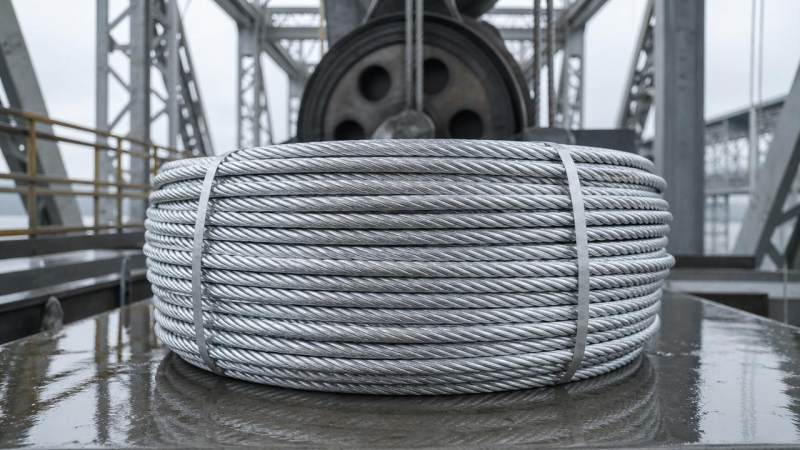
Hot dipped Galvanized Steel Wire Rope is steel wire rope coated with zinc through immersion in molten zinc. The coating forms a protective barrier around the steel surface.
This barrier reduces direct contact between steel, moisture, oxygen, and contaminants. As a result, rust develops more slowly than on uncoated wire rope.
The zinc layer also provides sacrificial protection. If the surface is scratched, nearby zinc can corrode first, helping shield the underlying steel.
That is why Hot dipped Galvanized Steel Wire Rope is widely used in outdoor, humid, and variable-temperature environments. It balances strength, durability, and cost efficiency.
What makes hot-dip galvanizing different?
Hot-dip galvanizing usually creates a thicker and more durable zinc coating than lighter surface treatments. This often improves resistance to abrasion and longer-term atmospheric exposure.
In steel projects, coating thickness, wire quality, rope construction, and lubrication still matter. Galvanizing improves corrosion performance, but it does not eliminate inspection needs.
Where is Hot dipped Galvanized Steel Wire Rope most suitable?
Hot dipped Galvanized Steel Wire Rope is suitable wherever steel components face weather, intermittent moisture, or industrial contaminants. It is common in both temporary and permanent systems.
- Construction hoisting and material handling
- Bridge and infrastructure support systems
- Marine-adjacent installations with non-extreme exposure
- Agricultural and fencing-related steel applications
- Mining, plant, and industrial service lines
- General outdoor anchoring and rigging
It is especially useful when a project needs better rust resistance than plain carbon steel rope, while avoiding the higher cost of full stainless alternatives.
In many steel processing environments, corrosion control involves more than rope alone. Filtration, screening, and separation equipment may also require durable corrosion-resistant materials.
For example, Stainless Steel Welded Mesh is often used in filters, sieve systems, chemical plants, mines, architecture, and residences.
Available grades include SS 201, 304, 304L, 316, 316L, and 430. Common features include rust resistance, corrosion resistance, acid and alkali tolerance, heat resistance, high strength, and durability.
Typical specifications include diameter from 0.0008″ to 0.12″, mesh from 2 to 635 mesh, roll width up to 240″, and roll length up to 2000′, with customized sizes available.
How do you judge the rust resistance level in real conditions?
Rust resistance is not a fixed number. The actual performance of Hot dipped Galvanized Steel Wire Rope depends on service environment, load pattern, maintenance, and installation quality.
Key factors that affect field performance
- Humidity and standing moisture
- Salt exposure or coastal atmosphere
- Chemical splash or industrial pollutants
- Mechanical wear between strands and sheaves
- Bending frequency and shock loading
- Storage conditions before installation
A rope may show excellent corrosion resistance in open-air construction, yet degrade faster in chloride-rich or chemically aggressive conditions. Environment always changes the result.
Visual appearance alone can mislead. A rope with minor white oxidation on zinc may still protect steel well, while hidden internal damage can progress under poor lubrication.
Useful evaluation points
- Check coating consistency across outer wires.
- Review load cycle intensity and rope movement.
- Assess moisture retention around drums or fittings.
- Confirm lubrication compatibility with galvanized surfaces.
- Compare expected life against replacement costs.
How does Hot dipped Galvanized Steel Wire Rope compare with other options?
Selection often comes down to exposure level, budget, mechanical demand, and maintenance planning. Comparing options early helps avoid over-specification or under-protection.
Hot dipped Galvanized Steel Wire Rope often offers the best balance for many steel applications. It provides stronger corrosion protection than plain steel without the premium cost of stainless rope.
However, if a site involves constant salt spray, aggressive chemicals, or strict cleanliness requirements, stainless solutions may still be the safer long-term choice.
What mistakes reduce service life and increase risk?
The most common mistake is assuming galvanizing alone guarantees long life. Hot dipped Galvanized Steel Wire Rope still needs correct selection, installation, and inspection.
Frequent errors to avoid
- Choosing by price only, without matching environment
- Ignoring abrasion, bending fatigue, or shock loads
- Using incompatible lubrication or no lubrication
- Storing rope in wet or dirty conditions
- Delaying inspection until visible red rust appears
Another risk is focusing only on external corrosion. Internal strand wear, crushed sections, broken wires, and end-termination problems may become more critical than surface rust.
A practical maintenance plan should include cleaning, lubrication review, scheduled visual checks, and retirement criteria based on standards and actual operating conditions.
How should you choose the right Hot dipped Galvanized Steel Wire Rope?
Start with the actual service conditions, not only the catalog description. Correct selection depends on corrosion exposure, load requirements, flexibility needs, and expected replacement intervals.
Selection checklist
Reliable steel sourcing also depends on stable production, consistent quality control, and documented specifications. These points are as important as the rope material itself.
Hongteng Fengda, a structural steel manufacturer and exporter from China, supports global construction and industrial projects with dependable steel products and customized solutions.
Its manufacturing system covers angle steel, channel steel, steel beams, cold formed steel profiles, and custom structural steel components, with compliance to ASTM, EN, JIS, and GB.
Stable capacity, strict quality control, and dependable lead times help reduce sourcing risk and improve project execution, especially for international buyers managing cost and reliability.
What is the best practical takeaway for long-term rust resistance?
Hot dipped Galvanized Steel Wire Rope is a strong choice for many outdoor and industrial steel applications because it combines corrosion protection, mechanical performance, and reasonable cost.
Its rust resistance comes from the zinc coating, but actual service life depends on environment, rope construction, loading, maintenance, and storage conditions.
The best results come from matching the rope to the exposure level, verifying standards, avoiding common mistakes, and building a clear inspection plan from the start.
When evaluating Hot dipped Galvanized Steel Wire Rope, compare total lifecycle value instead of unit price alone. That approach usually delivers safer operation and more predictable steel project performance.
Please give us a message


Please enter what you want to find