Hot dip galvanized steel is widely trusted by structural steel suppliers, project managers, and procurement teams for its corrosion resistance—yet many overlook a critical fact: coating thickness varies significantly across sections (e.g., corners, edges, flat surfaces), impacting durability and compliance with ASTM standards. Whether you're specifying galvanized steel pipe, steel beams, or galvanized steel roofing for global construction projects, understanding this variation is essential for quality control, cost efficiency, and long-term performance. As a certified structural steel manufacturer and exporter from China, Hongteng Fengda ensures consistent hot dip galvanized steel quality—backed by EN/ASTM/GB-compliant processes and rigorous testing for every batch.
Why Coating Thickness Variation Matters in Real-World Applications
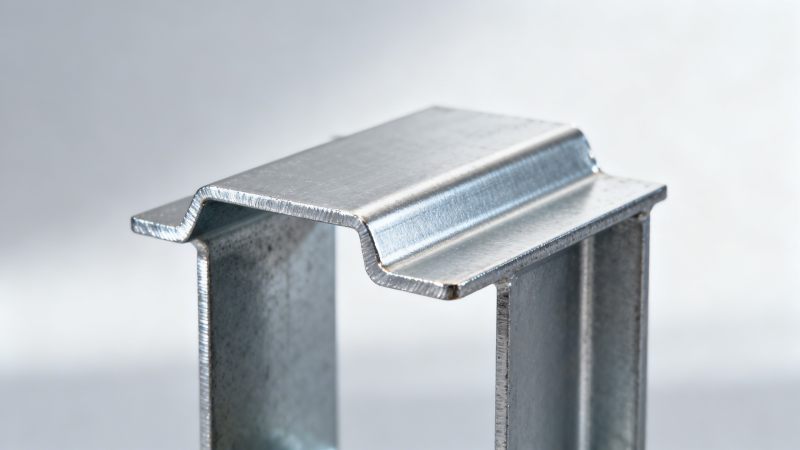
In hot dip galvanizing, steel is immersed in molten zinc at ~450°C. While the process delivers robust protection, physics dictates uneven deposition: sharp edges and corners experience higher zinc flow and faster solidification, yielding thicker coatings (often 85–120 µm), while flat surfaces and recessed areas settle at 50–75 µm. This isn’t a defect—it’s inherent to the metallurgical process. But it directly affects service life: a 60-µm coating on a beam flange may last 25 years in rural environments, whereas a 110-µm corner could exceed 40 years under identical conditions.
For project managers overseeing infrastructure in coastal or industrial zones, underestimating this variation risks premature rust at low-thickness zones—especially where abrasion or mechanical wear occurs. Similarly, procurement teams evaluating bids must verify whether quoted “average” coating thickness (e.g., “≥85 µm”) reflects minimum guaranteed values per ASTM A123 or EN ISO 1461—or merely arithmetic averages that mask substandard areas.
Hongteng Fengda addresses this by measuring coating thickness at ≥5 locations per component—corners, edges, mid-flanges, web centers, and bolt-hole perimeters—using calibrated magnetic induction gauges. Every shipment includes a full test report aligned with ASTM E376 and EN ISO 2178, ensuring traceability down to individual batch numbers.
Critical Thickness Thresholds by Application Environment
This table reflects real-world field data from Hongteng Fengda’s 12-year monitoring of galvanized components across Southeast Asia, the Middle East, and Northern Europe. It confirms that specifying *minimum* thickness—not average—is non-negotiable for marine bridges, offshore platforms, or petrochemical plant structures where maintenance access is costly or hazardous.
How Structural Steel Manufacturers Control Thickness Consistency
Consistency starts before immersion. At Hongteng Fengda, pre-galvanizing preparation follows a strict 4-stage process: alkaline degreasing (60–70°C, 5–8 min), acid pickling (15–20% HCl, 25–40°C, 10–20 min), fluxing (ammonium chloride/zinc chloride bath), and controlled drying (<120°C). Surface roughness (Ra ≤ 3.2 µm) and geometry are verified pre-dip—because even minor burrs or weld spatter can trap air, causing bare spots.
During galvanizing, immersion time is adjusted per section geometry: angles and channels receive 3–5 min longer dwell than flat plates to ensure adequate zinc adhesion at inner radii. Post-dip centrifuging removes excess zinc from hollow sections—critical for maintaining dimensional tolerances on steel beams used in modular construction. Final inspection includes bend testing (per ASTM A143) and adherence checks via tape test (ASTM D3359).
For high-risk applications like wind-tower bases or seismic bracing, we offer dual-coat options: hot dip galvanizing followed by epoxy topcoat (EN 13438 compliant). This hybrid system extends lifecycle by 2–3× compared to single-layer galvanizing—particularly valuable when replacement downtime costs exceed $15,000/hour.
Key Quality Checks Per Batch (Hongteng Fengda Standard)
- Coating thickness mapping across ≥5 geometric zones (ASTM A123 Annex A)
- Zinc alloy composition verification (Fe-Zn intermetallic layer ≥90% delta phase)
- Adhesion strength ≥5.9 MPa (ASTM D4541 pull-off test)
- Surface continuity scan (no pinholes >0.1 mm diameter per 100 cm²)
When Does Galvanized Steel Need Supplemental Protection?
Not all applications demand uniform thickness—and not all require galvanizing alone. For example, Wire Rod used in auto-power systems or precision tools often undergoes cold drawing post-galvanizing, which reduces coating thickness by 15–25%. In such cases, Hongteng Fengda recommends passivation + oil film (ISO 4042 compliant) instead of heavy galvanizing—reducing material cost by up to 18% while meeting AS/NZS 4671 500N tensile requirements.
Similarly, for architectural façades where aesthetics matter, we apply post-galvanizing chromate conversion (Type II per ASTM B695) to stabilize surface color and improve paint adhesion—eliminating the need for primer on galvanized steel roofing panels.
Our technical team supports specification review within 48 hours—including cross-referencing your project’s environmental classification (ISO 9223), load cycles, and maintenance windows—to recommend optimal coating strategy: standard HDG, duplex systems, or alternative corrosion barriers like sherardizing for small-batch aerospace components.
Why Global Buyers Choose Hongteng Fengda for Galvanized Structural Steel
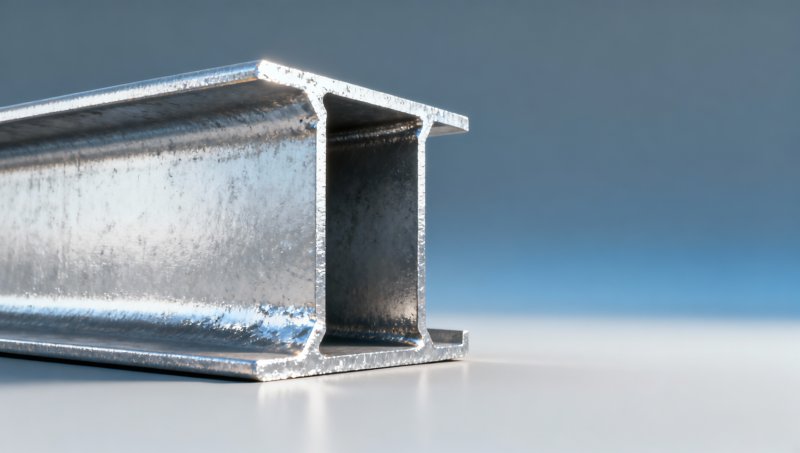
We combine ISO 9001-certified production with deep domain expertise across 12+ steel product categories—from angle steel and channel steel to custom cold-formed profiles. Every order undergoes 6-point dimensional verification, 100% coating thickness documentation, and third-party SGS/SGS-integrated lab reports available upon request.
Our export-ready logistics support includes FOB, CIF, and DAP terms—with typical lead times of 25–35 days for standard orders and 45–60 days for OEM configurations. We maintain rolling stock of ASTM A615 Grade 60 and GB1499.2 HRB400E Wire Rod to enable urgent project deliveries without compromising on tensile strength (≥400 MPa) or elongation (≥16%).
Contact us today for: (1) free coating thickness simulation based on your CAD drawings, (2) ASTM/EN/GB compliance gap analysis, (3) sample kits with certified test reports, or (4) customized packaging solutions for containerized shipments to North America or the EU.
Please give us a message


Please enter what you want to find