For quality control and safety teams, reliable hot dip galvanized coil inspection is the first step in preventing costly claims, corrosion failures, and project delays. From coating thickness and adhesion to surface defects and compliance with ASTM, EN, JIS, or GB standards, strong verification procedures help buyers reduce risk before material reaches the jobsite or production line.
Why hot dip galvanized coil quality checks matter before shipment
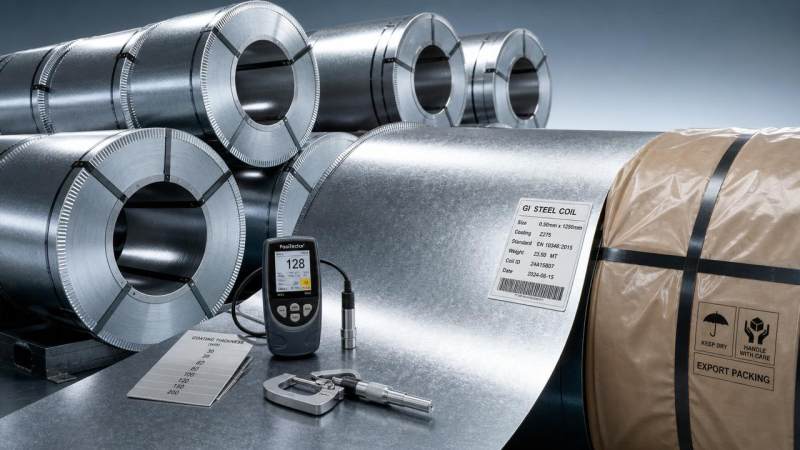
A claim on hot dip galvanized coil rarely starts with one obvious defect. It usually begins with small inspection gaps, unclear acceptance criteria, or incomplete mill records.
When those gaps remain unchecked, coils may reach fabrication lines with poor zinc coating, edge damage, wet storage stain, or mechanical properties outside project requirements.
A checklist approach improves consistency. It also helps compare batches, verify supplier control, and document each hot dip galvanized coil lot against contract, drawing, and standard.
This matters across structural steel supply chains. A galvanized coil issue can affect roll forming, slitting, welding preparation, coating life, and downstream compliance for finished components.
Core checklist for hot dip galvanized coil quality verification
Use the following checks in sequence. Each point supports faster release decisions and better evidence if nonconformity appears later.
- Confirm the order data first, including grade, thickness, width, coil weight, zinc coating designation, surface treatment, and referenced ASTM, EN, JIS, or GB standard.
- Check the mill test certificate against each heat and coil number, making sure chemical composition and mechanical properties match the approved specification.
- Measure base metal thickness at several points across the strip width, because local variation can affect forming behavior and coating weight calculations.
- Verify coating thickness or coating mass using calibrated gauges and agreed test methods, then compare both average and spot results to the contract requirement.
- Inspect zinc coating adhesion by bend or impact-related methods where applicable, especially if the hot dip galvanized coil will be profiled or deeply formed.
- Look for surface defects such as bare spots, pimples, ash inclusions, roll marks, scratches, edge cracks, black spots, and excessive spangle variation.
- Check coil edges and ends carefully, because transit impact often causes telescoping, crushed wraps, or deformation that later creates feeding problems.
- Review passivation or oiling condition if specified, since missing surface treatment can increase white rust risk during ocean transport or warehouse storage.
- Assess packing quality, including waterproof wrapping, steel straps, edge protectors, pallet condition, and container loading arrangement for long-distance export shipments.
- Record photos, coil labels, test readings, and nonconformity notes immediately, creating traceable evidence before release, rework, claim negotiation, or replacement discussion.
What to verify in coating performance
Coating performance is the most common reason a hot dip galvanized coil claim escalates. Visual appearance alone is not enough for acceptance.
Check coating mass, coating continuity, and local uncoated areas. If the material will be exposed outdoors, confirm the zinc layer meets the expected corrosion life.
For formed parts, coating adhesion becomes critical. Brittle or poorly bonded zinc may crack during bending, punching, or roll forming.
What to verify in dimensions and shape
Flatness, camber, edge wave, and coil tightness can directly affect processing yield. Even compliant coating cannot offset poor shape control.
Measure width and thickness using calibrated tools. Review tolerance limits clearly, because different standards and contracts may define acceptance differently.
Application-specific checks for downstream steel use
Not every hot dip galvanized coil serves the same purpose. Inspection depth should reflect the actual fabrication route and service environment.
For roll forming and light structural sections
Focus on shape, edge quality, and coating adhesion. Minor edge cracking can grow quickly during continuous forming operations.
If galvanized strip supports structural fabrication, dimensional reliability upstream also benefits related steel products used in industrial structure work.
In some projects, galvanized components are combined with I-beam members. Matching standards such as JIS, DIN, GB, EN, or ASTM helps maintain consistent project documentation.
For reference, such sections may use grades like Q195-Q235, Q345, SS400, A36, or St52, with industrial structure applications and tolerances around ±1% depending on specification.
For outdoor building envelope and exposed structures
Prioritize coating mass, passivation condition, and storage protection. These applications are more sensitive to early corrosion staining and appearance variation.
If the hot dip galvanized coil will be visible after installation, define acceptable spangle, gloss, and stain levels before production starts.
For welded or punched fabricated parts
Check zinc uniformity near edges and review the fabrication plan. Welding, punching, cutting, and decoiling can expose weak coating zones quickly.
Where heavy structural members are used together with formed galvanized parts, supporting sections like I-beam may be selected for bending, welding, punching, or cutting efficiency in industrial structure projects.
Commonly missed issues that later become claims
Some hot dip galvanized coil problems are easy to overlook during routine receiving or pre-shipment inspection. These items deserve extra attention.
Wet storage stain hidden under wrapping
Moisture trapped in poorly ventilated packaging can produce white rust quickly. Inspect inner wraps and ask how long the coils remained at port or yard.
Mismatched coating designation
A hot dip galvanized coil may look acceptable but still fail the order if coating class differs from the contract. Verify labels, certificate, and test report together.
Unclear acceptance standard for visual defects
Terms like “good surface” are too vague. Define acceptable levels for scratches, dross, bare spots, edge damage, and spangle variation before inspection begins.
Sampling that ignores coil head and tail areas
Defects often appear near the beginning or end of the strip. Random checks only at mid-coil may miss the most relevant nonconformities.
Practical execution steps for better inspection control
Build a short working routine instead of relying on memory. Good inspection becomes repeatable when sequence, tools, and records stay consistent.
- Prepare the purchase specification, approved standard, and previous claim history before opening any hot dip galvanized coil lot.
- Use calibrated coating and thickness instruments, then note calibration dates directly on the inspection sheet.
- Sample more than one position across width and along coil length when risk, value, or exposure conditions are high.
- Separate visual defects from functional defects, because not every appearance issue creates service failure.
- Issue a hold decision immediately if traceability, coating data, or packing integrity cannot be confirmed.
Suppliers with strong export control usually support this process with stable production capacity, documented quality systems, and compliance with major international standards.
That is especially important in structural steel supply, where dependable lead times and consistent material quality reduce project disruption across global construction and industrial work.
Final takeaway
A reliable hot dip galvanized coil checklist prevents more than surface-level disputes. It protects corrosion performance, fabrication efficiency, traceability, and contract compliance.
Start with coating, dimensions, certificates, surface condition, and packing. Then adjust the inspection depth to the final application and exposure risk.
When every hot dip galvanized coil lot is checked the same way, claims become easier to prevent, explain, and resolve before they affect the project.
Please give us a message


Please enter what you want to find