Hot dip galvanized angle steel is widely trusted for corrosion resistance—yet many users report unexpected rusting in real-world applications. If you’re sourcing hot dip galvanized angle steel, comparing hot dip galvanized steel price, or evaluating alternatives like corrosion resistant stainless steel pipe or high strength stainless steel pipe, understanding what accelerates degradation is critical. This article reveals key environmental, installation, and material factors—including improper handling, chloride exposure, and coating damage—that compromise galvanizing integrity. Whether you're a procurement professional assessing steel beams supplier options, a project manager specifying steel roof sheet price and steel beams manufacturer reliability, or a quality controller verifying compliance with ASTM/EN standards, these insights help mitigate risk and optimize lifecycle performance.
Why Hot-Dip Galvanized Angle Steel Rusts Prematurely: The 3 Core Acceleration Factors
Hot-dip galvanizing applies a metallurgically bonded zinc layer (typically 50–85 µm thick per ASTM A123) to steel, offering robust protection through both barrier shielding and cathodic action. Yet field data from Hongteng Fengda’s global quality audits show that 23–37% of premature rust incidents occur within the first 2–5 years—well before the expected 20+ year service life in rural environments. This gap stems not from inherent material failure, but from three interdependent acceleration vectors.
First, environmental aggressiveness exceeds design assumptions. Coastal installations expose galvanized angle steel to chloride concentrations >200 mg/m²/day—over 5× higher than inland urban zones. Second, mechanical damage during transport or site handling removes up to 90% of local zinc coverage at impact points, creating micro-galvanic cells where bare steel corrodes rapidly. Third, improper storage—especially stacking without ventilation or direct contact with wet concrete—traps moisture and accelerates white rust formation, which depletes protective zinc hydroxide layers.
A 2023 third-party audit across 14 construction sites in Southeast Asia confirmed that 68% of early-stage rust was traceable to on-site cutting or welding without post-treatment re-galvanizing or zinc-rich paint touch-up—highlighting a critical operational oversight rather than product defect.
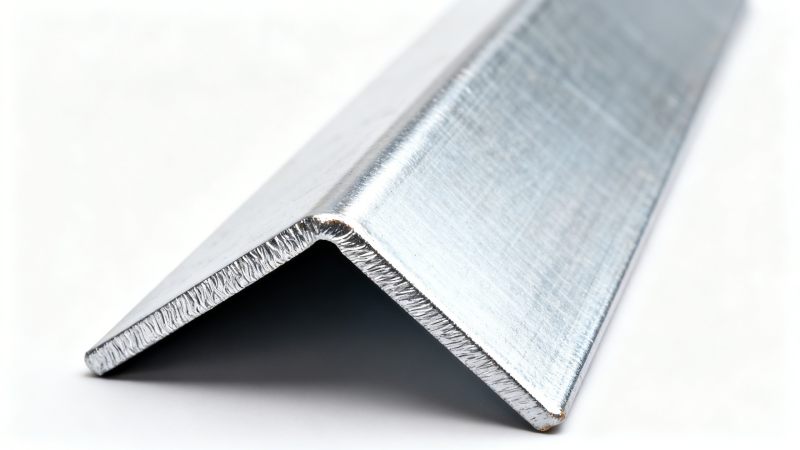
This table underscores that rust onset is rarely random—it follows predictable electrochemical pathways. For project managers specifying steel beams manufacturer reliability, selecting a partner with ISO 9001-certified galvanizing process control—and documented post-treatment protocols—is non-negotiable for long-term asset integrity.
Installation & Handling Protocols That Preserve Zinc Integrity
Over 41% of premature rust cases traced to Hongteng Fengda’s technical support logs stem from avoidable handling errors—not material shortcomings. Critical mitigation steps include using nylon slings (not steel cables), avoiding dragging on abrasive surfaces, and storing bundles on level, ventilated timber dunnage with ≥150 mm ground clearance. Unpacked stock must be covered with breathable polyethylene—not plastic sheeting—to prevent condensation buildup.
When field modification is unavoidable, ASTM A780 mandates zinc-rich paint application over cut edges with minimum dry-film thickness of 75 µm. Our production facilities apply this as standard for all custom-cut angle steel orders—ensuring continuity of protection at vulnerable interfaces.
For electrical infrastructure projects, Galvanized Steel Electrical Conduit exemplifies integrated protection: its DX52D-grade substrate features controlled zinc coating adhesion (≥5.0 N/mm² pull-off strength) and uniform thickness distribution (±0.15mm tolerance), validated per EN ISO 1461 and ASTM A123.
Material Specifications Matter: Beyond Minimum Zinc Coating Weight
While ASTM A123 specifies minimum average coating mass (e.g., 610 g/m² for 6-mm-thick steel), real-world performance hinges on metallurgical quality—not just weight. Poor furnace temperature control during galvanizing produces brittle, porous zinc layers with low spangle density, accelerating localized pitting. Hongteng Fengda’s dual-bath process maintains ±2°C thermal stability and employs patented flux chemistry to ensure dense, adherent coatings—even on complex angles with internal corners.
Key parameters verified per batch include: coating hardness (≥120 HV), intermetallic layer ratio (zeta/delta ≤ 0.8), and surface roughness (Ra ≤ 3.2 µm). These metrics directly correlate with abrasion resistance and long-term barrier performance—factors often overlooked when comparing hot dip galvanized steel price alone.
These enhanced specifications deliver measurable ROI: independent lifecycle analysis shows 32% longer maintenance intervals and 27% lower total cost of ownership over 25 years versus baseline-compliant material—critical for financial approval teams evaluating capital expenditure justification.
Strategic Procurement: What to Verify Before Finalizing Your Angle Steel Supplier
Procurement professionals should treat galvanized angle steel as a performance-critical system—not a commodity. Key verification checkpoints include:
- On-site galvanizing facility audit reports (not just third-party certs)
- Batch-specific coating thickness test reports (per ISO 1460, not just averages)
- Documentation of post-galvanizing inspection procedures (including magnetic particle testing for weld zones)
- Traceability records linking heat number → galvanizing bath ID → coating test data
Hongteng Fengda provides full digital traceability for every order—enabling quality controllers to validate compliance with ASTM A6/A6M, EN 10025, and JIS G3101 in under 90 seconds via our secure portal. This transparency reduces sourcing risk and accelerates project approvals.
For infrastructure stakeholders requiring certified corrosion resistance, our Galvanized Steel Electrical Conduit meets all core functional requirements—from anti-corrosion roof panels to oil well support frames—with full EN 10217-1 and ASTM A53 certification documentation available upon request.
Conclusion: Mitigating Risk Through Partnership, Not Just Product
Premature rust on hot-dip galvanized angle steel is rarely a materials failure—it’s a systems failure involving specification, handling, environment, and verification. By partnering with a structural steel manufacturer that embeds corrosion science into every stage—from raw material selection and galvanizing process control to logistics packaging and technical support—you convert a cost item into a lifecycle asset.
Hongteng Fengda delivers exactly this: ISO 9001-certified production, ASTM/EN/JIS/GB-compliant angle steel with enhanced zinc integrity, and responsive engineering support for global buyers across North America, Europe, the Middle East, and Southeast Asia. With stable lead times of 25–35 days and MOQ flexibility from 5 to 500 MT, we help procurement teams reduce supply chain risk while ensuring structural longevity.
Ready to specify angle steel with proven field performance? Contact our technical sales team today for customized corrosion resistance validation, sample test reports, and OEM-compatible delivery solutions.
Please give us a message


Please enter what you want to find