Choosing between a Hot Rolled I-Beam and a welded beam can directly affect project cost, delivery time, structural performance, and long-term reliability. For contractors, fabricators, and procurement decision-makers, the better option depends on load requirements, design flexibility, international standards, and sourcing efficiency. As global projects demand both strength and cost control, understanding the practical differences helps reduce risks and improve purchasing decisions. This guide compares hot rolled I-beams and welded beams from a structural steel sourcing perspective, helping you select the most suitable solution for your next construction or industrial project.
For enterprise buyers, the question is rarely limited to unit price. A beam choice affects fabrication planning, inspection workload, container loading, 6–12 m stock availability, and the ability to meet ASTM, EN, JIS, or GB requirements.
Understanding Hot Rolled I-Beam and Welded Beam Basics
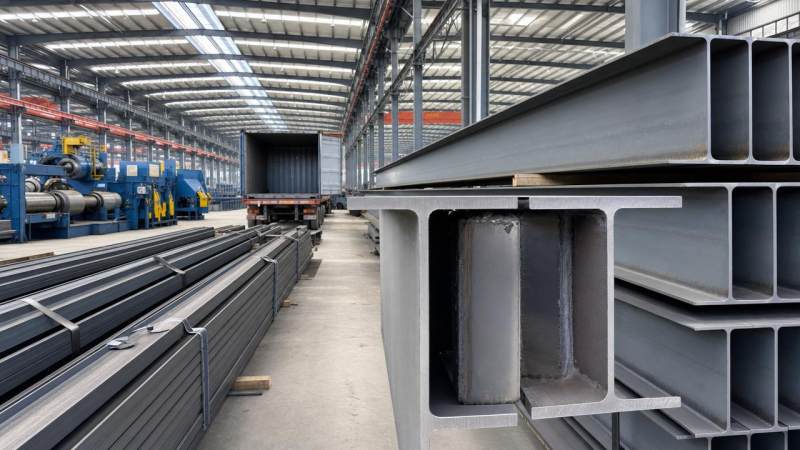
A Hot Rolled I-Beam is formed by rolling steel at high temperature through shaped mills. The web and flanges are produced as one continuous section, usually with stable geometry and predictable performance.
A welded beam is fabricated by cutting steel plates and welding the web and flanges together. This method allows larger or non-standard sizes, but it also adds welding, straightening, inspection, and dimensional control steps.
Why the Manufacturing Method Matters
The manufacturing route influences residual stress, dimensional tolerance, lead time, and weld inspection needs. For repeated building frames, rolling often provides stronger procurement efficiency across hundreds of identical pieces.
Welded beams become more attractive when the design requires a special depth, unusual flange ratio, or heavy plate thickness outside standard rolled ranges, sometimes above 900 mm web depth.
The comparison below gives a practical first filter for procurement teams reviewing drawings, bill of materials, and delivery schedules before final engineering approval.
In most commercial and industrial structures, the Hot Rolled I-Beam is preferred when standard dimensions meet the design. Welded beams should be selected when customization provides structural or logistical value.
Structural Performance: Strength, Stability, and Reliability
Both beam types can meet serious structural requirements when designed and supplied correctly. The real difference is how strength, stability, and fabrication risk are managed from design to installation.
Load Capacity and Section Efficiency
A Hot Rolled I-Beam is an economic section steel because material is concentrated in the flanges and web where bending and shear forces are carried efficiently.
For routine column, beam, platform, and support applications, standard I-sections reduce over-design. Buyers often compare section height, flange width, web thickness, and steel grade together.
Welded beams allow engineers to increase a flange from 200 mm to 400 mm or adjust web thickness for localized load concentration. That flexibility can reduce total tonnage in special designs.
Welded Joint Risk and Quality Control
The welded beam has more process variables. Welding parameters, heat input, plate preparation, groove design, and post-weld straightening can affect distortion and residual stress.
For critical structures, welded beams may require visual testing, ultrasonic testing, magnetic particle testing, or other inspection methods. These steps add cost and may extend the schedule by several days.
Decision Point for Engineering Teams
- Choose a rolled section when standard sizes meet bending, shear, deflection, and connection requirements.
- Choose a welded section when drawings require dimensions not available from common rolling schedules.
- Request mill certificates, tolerance confirmation, and inspection records before shipment, especially for export projects.
For decision-makers, the safest route is not simply the strongest section. It is the section that satisfies the calculation with the fewest uncontrolled production and inspection variables.
Cost, Lead Time, and Supply Chain Efficiency
Cost comparison should include steel tonnage, fabrication labor, inspection, surface treatment, inland transport, container loading, documentation, and possible replacement risk.
A Hot Rolled I-Beam usually has an advantage when the project uses standard sizes in repeated quantities. Shorter processing steps can support predictable lead times and easier batch control.
Typical Procurement Cost Drivers
In many projects, the lowest quoted ton price is not the lowest delivered cost. A 3% material saving can disappear if welding inspection or rework delays shipment.
Buyers should evaluate at least 6 cost elements before approving a beam type. These elements reveal where a technically acceptable option may become commercially inefficient.
- Base steel price by grade, such as Q235, Q345, SS400, A36, S235, or S355JR.
- Cutting, punching, welding, or additional fabrication requirements.
- Tolerance requirements, often around ±1% for suitable structural steel supply.
- Lead time, commonly within 20 days for available rolled specifications.
- Packing method, loading plan, and export documentation for 20 ft or 40 ft containers.
- Risk allowance for dimensional mismatch, late inspection, or project schedule interruption.
Export Sourcing Considerations
For cross-border procurement, stable production capacity and accurate documentation are essential. Buyers need traceable specifications, commercial invoices, packing lists, and standard compliance records.
Hongteng Fengda supplies structural steel to global buyers across North America, Europe, the Middle East, and Southeast Asia, supporting standard specifications and OEM needs.
In mid-volume projects, combining rolled beams, channels, angle steel, and cold formed profiles from one supplier can reduce communication cycles from 5 parties to 1 coordinated source.
Product Fit: Standard I-Beam Specifications for Industrial Structures
For buyers seeking practical standardization, Structural Steel I Beam options can support industrial structure projects with rolled molding, stable section geometry, and workable processing flexibility.
Available material references include Q195-Q235, Q345, SS355JR, SS400, A36, ST37-2, St37, S235J0, S235J2, and St52, depending on project standards and sourcing requirements.
Key Size and Processing Parameters
The following parameters help purchasing teams compare drawing requirements with available supply ranges before confirming price, packing, and delivery schedule.
These ranges are especially useful when buyers need Hot Rolled I-Beam supply for workshops, machinery bases, mezzanine floors, industrial sheds, and equipment support frames.
Processing Capabilities That Affect Project Execution
Common downstream services include bending, welding, decoiling, punching, and cutting. For export buyers, pre-processing can reduce site labor and shorten installation steps by 2–4 operations.
The product is rolled on a four-roller universal mill, which supports consistent section formation. Delivery can be arranged within 20 days when specifications and production schedule are confirmed.
How to Choose the Better Option for Your Project
The right beam type depends on engineering need and procurement reality. A good decision combines drawing review, standard matching, supplier capability, and risk control.
Use a 5-Step Selection Process
- Confirm load cases, span, deflection limit, connection details, and fire or coating requirements.
- Match steel grade to project standards, such as ASTM A36, SS400, S235, or Q345.
- Check whether a Hot Rolled I-Beam meets the required section depth, flange size, and tolerance.
- Compare delivery timeline, inspection requirements, processing needs, and logistics cost.
- Approve the final option only after confirming mill certificates, packing plan, and shipment documents.
This process is simple, but it prevents expensive mistakes. Many procurement disputes begin with unclear dimensions, unavailable standards, or assumptions about substitute beam sections.
When Hot Rolled I-Beam Fits Better
A Hot Rolled I-Beam normally fits better when the design uses standard structural dimensions, the quantity is repeatable, and the project requires dependable lead time control.
It is also a strong choice when buyers need economical section steel, simpler inspection, and compatibility with cutting, punching, welding, or bolt connection preparation.
When Welded Beam Fits Better
Welded beams fit better when the design needs a non-standard section, an unusually deep web, or a flange thickness beyond common rolled profiles.
They are also useful in heavy industrial frames where optimizing section geometry may reduce total steel weight despite higher fabrication and inspection requirements.
Risk Control for Global Buyers
International steel procurement includes technical, commercial, and logistical risks. Managing these risks early is often cheaper than correcting them after production or arrival.
Common Mistakes to Avoid
- Approving a substitute section without checking moment of inertia, section modulus, and connection layout.
- Ignoring tolerance, straightness, and surface condition until pre-shipment inspection.
- Comparing rolled and welded beams only by price per ton, not by total installed cost.
- Failing to align product standards with the destination market and engineering documentation.
A disciplined sourcing process should include at least 3 document checks: technical specification review, material certificate verification, and packing or loading confirmation.
Supplier Questions Before Purchase
Ask whether the supplier can provide the required grade, length, tolerance, processing service, standard compliance, and shipment schedule. Clear answers reduce uncertainty before payment.
Hongteng Fengda supports buyers with structural steel beams, angle steel, channel steel, cold formed profiles, and customized components for construction, manufacturing, and industrial projects.
With modern manufacturing facilities and strict quality control, the company focuses on stable production capacity, consistent quality, and dependable lead times for global sourcing programs.
Final Recommendation for Decision-Makers
If your project can use standard sizes, a Hot Rolled I-Beam is usually the more efficient option for cost control, lead time, inspection simplicity, and repeatable structural performance.
If your design demands special dimensions or unusual load optimization, a welded beam may provide the needed flexibility, provided welding quality and inspection are properly controlled.
For contractors, fabricators, and procurement teams, the best choice comes from matching engineering data with sourcing realities, not from selecting the cheapest beam in isolation.
Hongteng Fengda can help you review specifications, compare rolled and welded beam options, and source suitable structural steel for international projects. Contact us to discuss product details, request a customized solution, or explore more structural steel supply options.
Please give us a message


Please enter what you want to find