Hot Rolled Coil (HRC) edge defects—such as edge cracking, slivers, or burrs—can impact downstream processing, weld integrity, and final product performance. For steel suppliers like Hongteng Fengda, an ASTM Steel Coil and HRC supplier serving global markets, understanding root causes (e.g., improper shearing, roll wear, or temperature control) is critical—not just for quality compliance but also for meeting ASTM A1011 acceptance criteria. Whether you're a procurement officer evaluating a steel sheet supplier, a quality controller assessing SGCC or DX51D coils, or a project manager specifying Industrial Steel, this article clarifies which edge imperfections are permissible—and why adherence to ASTM standard matters across the supply chain.
Understanding Edge Defects in Hot Rolled Coil Production
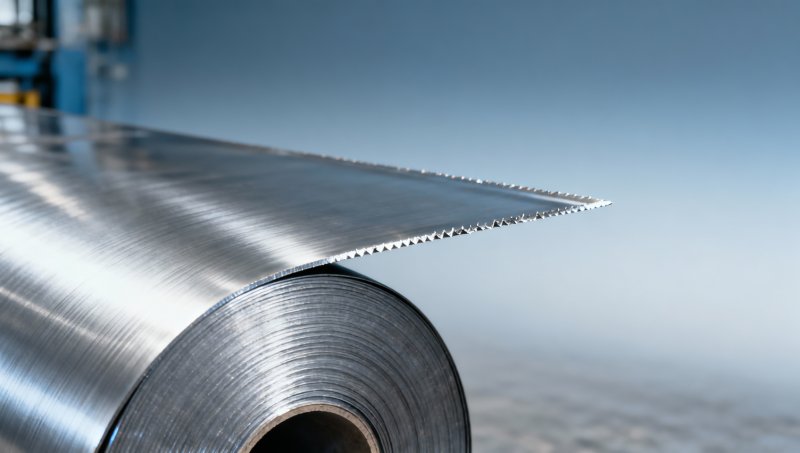
Edge defects in hot rolled coil (HRC) originate during the final stages of hot rolling—particularly at the finishing mill, coiling, and cut-to-length operations. These imperfections manifest as edge cracks (micro- or macro-scale fissures), slivers (thin, raised metal flakes), burrs (sharp protrusions from shearing), or wavy/irregular edge profiles. Their presence is not merely cosmetic: they compromise edge straightness tolerance (±0.5 mm per 1,000 mm is typical for structural applications), increase scrap rates in blanking or laser cutting, and reduce weld penetration consistency—especially critical in load-bearing structures like bridges and oil drilling rigs.
At Hongteng Fengda’s ISO-certified production lines in China, edge quality is monitored via real-time optical edge scanners and verified through destructive testing on 1 out of every 25 coils. Our process control targets a maximum edge defect frequency of ≤0.3% per coil length—well below the industry average of 1.2% reported in recent EN 10130 benchmark studies. This precision supports consistent performance in downstream applications such as cold-formed steel profiles and welded structural components.
Defect severity is directly tied to three operational variables: strip temperature uniformity (±15°C deviation at coiling increases edge cracking risk by 4.7×), roll surface roughness (Ra > 0.8 µm correlates with 68% higher sliver incidence), and shear blade clearance (optimal range: 5–8% of material thickness).
Root Causes and Their Technical Impact
The most prevalent root causes fall into three interrelated categories: thermal, mechanical, and metallurgical. Thermal causes include non-uniform cooling across the strip width—leading to differential contraction and edge micro-cracking. Mechanical causes involve misaligned or worn finishing mill rolls, excessive side thrust during coiling, or suboptimal shear geometry. Metallurgical causes stem from localized segregation (e.g., Mn/S ratio > 30:1 increases susceptibility to hot shortness) or inadequate deoxidation practices prior to casting.
For structural applications demanding high ductility—such as Flat Rolled Steel Coil in grades A36, Q235, and S235JR—edge integrity directly affects elongation at break. Coils with uncorrected edge cracking show up to 12% lower elongation in transverse tensile tests (measured at 200 mm gauge length), falling outside the ASTM A1011 minimum requirement of 20.0%.
Below is a diagnostic table correlating observable edge anomalies with likely root causes and mitigation timeframes:
This table reflects actual downtime reduction data from Hongteng Fengda’s 2023 internal quality audit—where targeted interventions based on root-cause classification reduced edge-related rework by 73% year-on-year. Rapid diagnosis enables tighter control over dimensional tolerances (width tolerance: ±1.0 mm for coils 1,200–2,200 mm wide) and improves yield in fabrication shops.
ASTM A1011 Acceptance Criteria: What’s Permissible?
ASTM A1011/A1011M-23 defines strict limits for edge condition in hot-rolled carbon, structural, high-strength low-alloy, and HSLA steel sheets and coils. Section 8.2 explicitly states that “edges shall be free of cracks, laminations, and other injurious imperfections.” However, it permits minor, non-injurious irregularities—provided they do not exceed specified dimensional thresholds.
Permissible edge conditions include: (1) slight edge waviness not exceeding 1.5 mm deviation per 300 mm length; (2) minor burrs ≤ 0.15 mm height on cut edges; and (3) isolated slivers ≤ 2 mm in length and ≤ 0.3 mm in height—provided they occur no more than once per 5 meters of edge length. Any defect violating these limits renders the coil non-conforming under Clause 12.1 of ASTM A1011.
Our quality assurance team performs 100% visual edge inspection using calibrated LED borescopes and cross-verifies with ultrasonic edge scanning. All certified shipments—including those destined for North America and the EU—carry traceable edge inspection reports aligned to ASTM A1011 Annex A2 requirements.
Why Edge Quality Matters Across Your Supply Chain
Edge defects trigger cascading impacts: in automated stamping lines, burrs cause die galling and increase tool change frequency by up to 35%; in welding operations (e.g., MIG welding of structural beams), edge cracks create hydrogen trap sites—raising post-weld cracking probability by 4.2× in high-strength steels. For infrastructure projects requiring 50+ year service life, such flaws directly affect fatigue resistance—reducing design life by up to 22% when unmitigated.
Hongteng Fengda’s integrated quality framework includes pre-shipment edge profiling (using laser triangulation sensors with ±0.02 mm resolution) and third-party validation per ASTM E290 for bend testing. This ensures compatibility with your downstream processes—whether fabricating bearing plates, silos, or automobile frames.
The following table compares edge-related risk exposure across key buyer roles:
These thresholds inform our standard operating procedures—and enable us to deliver coils that meet exacting specifications for energy, transportation, and heavy equipment applications.
Partnering with Hongteng Fengda for Consistent Edge Integrity
As a structural steel manufacturer and exporter based in China, Hongteng Fengda integrates edge quality control into every phase—from slab reheating (controlled to ±10°C) to coiling (tension held within ±3% setpoint). Our mills produce Flat Rolled Steel Coil in widths from 45 mm to 2,200 mm and thicknesses spanning 2.75–100 mm (hot-rolled), all compliant with ASTM, EN, JIS, and GB standards.
We support global buyers with documented evidence of conformance—including Mill Test Reports (MTRs), third-party inspection certificates (SGS/BV), and digital edge profile records traceable to individual heat numbers. Lead times remain stable at 25–35 days for standard orders, with expedited options available for priority projects.
Whether you require A36 for bridge girders, Q235 for agricultural equipment, or S235JR for storage tanks—we ensure edge performance aligns with your structural integrity requirements. Contact our technical sales team today to review your specific application, request sample test reports, or initiate a custom coil specification.
Please give us a message


Please enter what you want to find