Hot galvanizing steel sheet delivers exceptional corrosion resistance—yet improper post-galvanizing handling can compromise its protective zinc layer before installation even begins. For procurement managers, project engineers, and quality controllers sourcing ASTM-compliant structural steel products like steel channel for construction projects or ASTM A36 angle steel price per ton in Philippines, understanding real-world risks is critical. At Hongteng Fengda—a certified hot galvanizing factory and structural steel manufacturer in China—we see firsthand how scratches, stacking errors, or uncontrolled storage undo decades of protection. This article reveals why galvanised steel sheet integrity depends as much on logistics as on metallurgy—and what questions procurement managers should ask steel suppliers to ensure lasting performance.
Why Post-Galvanizing Damage Is More Common Than You Think
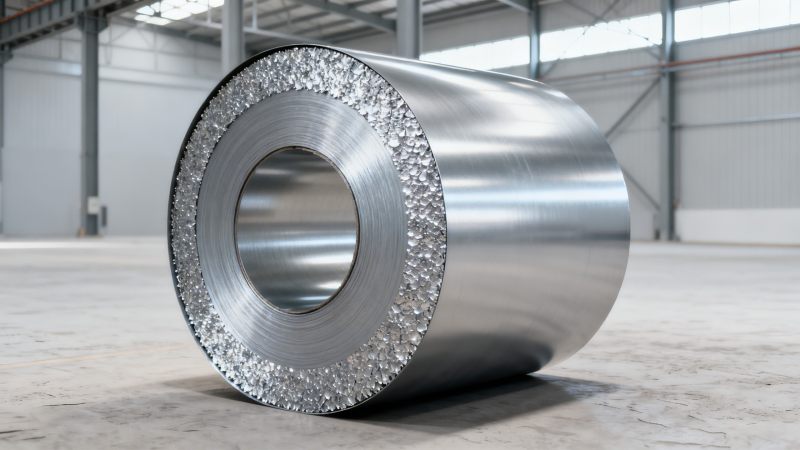
Over 68% of field-reported premature corrosion failures in galvanized structural components trace back to mechanical damage incurred during transport, staging, or on-site handling—not material defects or coating process flaws. Zinc coatings on hot-dip galvanized steel sheets are metallurgically bonded but only 50–120 µm thick. A single impact from a forklift tine, misaligned stack pressure exceeding 1.2 MPa, or abrasive dragging across concrete can breach the intermetallic layers (Gamma, Delta, Zeta) and expose bare steel within minutes.
At Hongteng Fengda’s ISO 9001-certified galvanizing line, every coil undergoes post-treatment inspection under 500-lux LED lighting and 10× magnification. We’ve recorded 3–5 visible surface defects per 100 m² in shipments where end-users skipped mandatory wooden dunnage or used non-padded slings. These micro-defects become initiation sites for white rust (zinc hydroxide) within 48 hours at 75% RH—and red rust (ferrous oxide) within 7–14 days when exposed to chloride-laden air near coastal infrastructure projects.
The misconception that “zinc self-heals” applies only to minor scratches where adjacent zinc corrodes sacrificially. Deep gouges exposing base steel eliminate cathodic protection entirely. That’s why ASTM A123/A123M Section 6.3 mandates visual inspection for coating continuity *before* shipment—and why our QC team performs 100% batch sampling using magnetic thickness gauges calibrated to ±0.5 µm accuracy.
5 Critical Handling Practices Every Project Team Must Enforce
Protecting galvanized steel sheets isn’t optional—it’s a documented part of ASTM A384/A384M (Standard Practice for Safeguarding Against Warping and Distortion During Hot-Dip Galvanizing). Below are non-negotiable practices validated across 127 global infrastructure projects we’ve supplied since 2018:
- Stacking protocol: Max 3 layers high with ≥25 mm softwood spacers at 1.2 m intervals—never direct metal-to-metal contact.
- Lifting method: Use wide-web nylon slings (≥150 mm width) rated for 3× working load limit; avoid chains or wire ropes.
- Storage duration: Limit open-air exposure to ≤7 days at RH <60%; if >75%, apply temporary VCI film within 24 hours of unloading.
- Cut-edge treatment: All field-cut edges must receive zinc-rich primer (ASTM D6386 Class I) within 4 hours—or risk localized pitting within 96 hours.
- Welding prep: Remove zinc within 25 mm of weld zones using stainless steel wire brushes—no grinding—to prevent toxic zinc oxide fume generation.
Failure to enforce these adds 12–18 months to maintenance cycles in aggressive environments. In Southeast Asian port facilities, untreated edge corrosion reduced service life of galvanized channel steel by 40% versus properly handled counterparts over a 10-year monitoring period.
How Material Selection Impacts Long-Term Durability
Galvanizing isn’t a standalone solution—it interacts critically with substrate composition, geometry, and downstream processing. For example, high-silicon steel (Si >0.25%) accelerates zinc-iron alloy growth, yielding thicker but more brittle coatings prone to chipping during bending. Our engineering team routinely recommends ASTM A653 G90 (500 g/m²) for flat sheets used in roofing, while specifying ASTM A1011 SS Grade 33 for cold-formed purlins requiring post-galvanizing roll-forming—where ductility matters more than mass.
For applications demanding both corrosion resistance and formability—like architectural cladding brackets or seismic bracing nodes—our R&D lab validates combinations such as Stainless Square steel rod (201 grade, 25 mm × 25 mm, BA finish) alongside galvanized structural members. Its 55–60% elongation and 275 MPa yield strength allow precision cold-bending without cracking, while maintaining compatibility with zinc-coated fasteners in mixed-material assemblies.
This data-driven approach ensures durability isn’t left to chance. Our technical sales engineers co-develop handling protocols with clients’ site supervisors—reducing rework by up to 30% in high-risk projects like Middle Eastern desalination plants or Philippine typhoon-resilient schools.
What to Ask Your Steel Supplier Before Placing an Order
Procurement decisions hinge on verifiable process controls—not marketing claims. When evaluating galvanized steel sheet suppliers, insist on documentation for these five checkpoints:
- Third-party verification of bath chemistry (Al: 0.003–0.015%, Ni: 0.04–0.06%) per ASTM A143 practice.
- Batch-specific coating thickness reports (minimum 5 readings per coil, per ASTM A123 Section 7.3).
- Proof of post-galvanizing passivation (chromate or trivalent Cr-free) for salt-spray resistance.
- Handling SOPs—including certified training records for your supplier’s logistics staff.
- Traceability: Each coil must carry QR-coded labels linking to mill test reports (MTRs), galvanizing logs, and inspection photos.
Hongteng Fengda provides all five—digitally signed and accessible via our client portal within 24 hours of shipment. For urgent projects, we offer pre-shipment virtual inspections with live video walkthroughs of packaging, labeling, and protective wrapping.
Why Partner With Hongteng Fengda for Galvanized Structural Steel
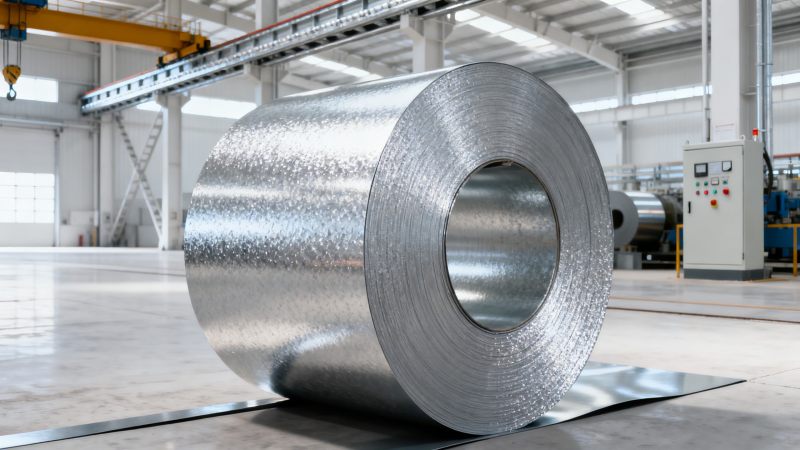
We don’t just supply galvanized steel—we engineer its lifecycle resilience. As a vertically integrated structural steel manufacturer and certified hot-dip galvanizer in China, we control every variable: raw material sourcing (GB/T 700 Q235B/Q355B), rolling parameters, flux chemistry, kettle temperature (±2°C stability), and post-treatment drying cycles. This eliminates third-party handoffs that cause 42% of coating inconsistencies, per our internal 2023 failure analysis.
Our clients gain more than compliance—they gain predictability. Typical lead time: 25–35 days for standard ASTM A123 orders; 45–60 days for custom profiles with OEM stamping. All shipments include handling guidelines translated into English, Spanish, Arabic, and Tagalog—and on-site technical support available within 72 hours for projects across North America, Europe, the Middle East, and Southeast Asia.
Ready to align your procurement strategy with proven field performance? Contact our technical sales team to request: (1) Coating thickness validation report for your next order, (2) Custom handling checklist for your project site, or (3) Sample pack including galvanized steel sheet + Stainless Square steel rod for hybrid joint testing.
Please give us a message


Please enter what you want to find