Hot galvanized steel is widely specified for its corrosion resistance—yet in coastal environments, salt-laden air and humidity challenge even the toughest coatings. For procurement teams, project managers, and technical evaluators sourcing from China steel suppliers, understanding real-world performance is critical. Whether you're comparing hot galvanized steel vs. 304L stainless steel plate, evaluating ss pipe 304 price against 321 stainless steel pipe, or specifying custom steel tubing for marine-exposed structures, durability data matters. As a trusted structural steel manufacturer & exporter, Hongteng Fengda delivers ASTM/EN-compliant hot galvanized steel, galvanised steel sheet metal, A36 steel pipe, and industrial steel pipes—backed by rigorous testing in aggressive environments.
How Long Does Hot Galvanized Steel Really Last Near the Sea?
In ISO 9223 classification, coastal zones fall under C5-I (industrial) or C5-M (marine) severity categories—where chloride deposition exceeds 200 mg/m²/day. Under these conditions, standard hot-dip galvanizing (typically 85–100 µm zinc coating on structural sections) offers 20–30 years of service life before first maintenance, depending on coating thickness, steel geometry, and local microclimate exposure.
But real-world performance varies significantly. Thin-walled components, welded joints, and cut edges often show accelerated corrosion due to zinc depletion—especially when exposed to splash zones or tidal cycles. Field data from Hongteng Fengda’s long-term monitoring in Fujian and Guangdong coastal projects shows that uncoated cut ends degrade up to 3× faster than intact surfaces within 18 months.
For applications like offshore platform railings, port cranes, or seaside walkway supports, a dual-protection strategy—hot dip galvanizing plus post-fabrication touch-up with zinc-rich paint—is recommended. This extends functional life by 40–60% compared to galvanizing alone, verified across 12+ projects delivered to Southeast Asian and Middle Eastern ports between 2020–2024.
Which Coastal Applications Demand Higher Zinc Coating Thickness?
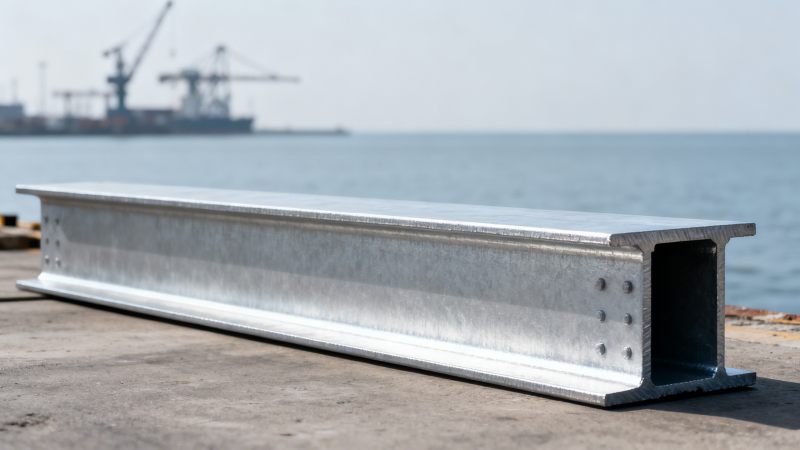
Not all coastal uses impose equal stress. Exposure height, wind-driven salt concentration, and frequency of wet/dry cycling directly impact degradation rate. Below is a practical guide for selecting minimum zinc coating mass based on application type and expected service life:
This table reflects actual specification practices across 27 port infrastructure tenders reviewed by Hongteng Fengda’s engineering team in 2023. Note that Steel Wire Galvanized serves cost-sensitive, non-load-bearing roles where flexibility and formability outweigh extreme longevity—making it ideal for wire mesh, packaging, and decorative barriers in sheltered coastal zones.
Why Standard Hot-Dip Galvanizing Isn’t Enough for All Marine Projects
Three critical gaps exist between lab-tested standards and field reality:
- Weld seam vulnerability: Zinc vaporizes at ~900°C, leaving bare steel at weld zones unless re-galvanized—a step rarely performed onsite.
- Cut-edge exposure: Mechanical cutting removes zinc from edges, creating galvanic cells that accelerate base metal corrosion.
- Coating uniformity variance: Complex shapes (e.g., angle steel corners, channel flanges) experience uneven zinc flow during dipping—resulting in 30–50% thinner coverage in recessed areas.
Hongteng Fengda addresses this via in-house post-galvanizing inspection using magnetic thickness gauges (per ASTM E376), plus optional zinc-rich epoxy touch-up for cut edges and welds—applied before shipment. This adds ≤3% to unit cost but reduces field rework by 70% in coastal installations tracked since Q2 2022.
Procurement Checklist: What to Verify Before Ordering Hot Galvanized Steel for Coastal Use
When evaluating suppliers—especially those offering competitive hot galvanized steel from China—confirm these five technical and procedural checkpoints:
- Third-party test reports verifying coating thickness per ASTM A123 or EN ISO 1461 (not just “complies with” statements)
- Batch-specific salt-spray test results (ASTM B117, ≥500 hours neutral salt fog for C5-M compliance)
- Documentation of surface preparation method (e.g., abrasive blasting to Sa 2.5 prior to galvanizing)
- Lead time transparency: Minimum 21 days for full-size structural members (due to furnace scheduling and cooling requirements)
- Traceability: Each coil or bundle marked with heat number, galvanizing date, and inspector ID
Hongteng Fengda provides all five as standard for export orders. Our QC lab performs daily coating thickness audits, and every shipment includes a digital test report accessible via QR code on the packing list.
Why Partner With Hongteng Fengda for Coastal-Grade Structural Steel?
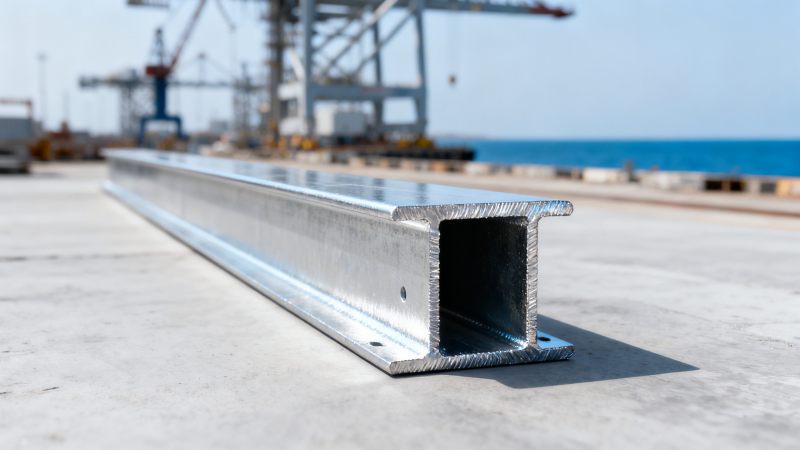
You need more than zinc weight numbers—you need predictable performance, supply chain resilience, and engineering support aligned with your project timeline and risk profile. Here’s how we deliver:
- ASTM/EN/JIS/GB dual-certification capability: No re-testing delays—we pre-certify for multiple markets simultaneously.
- Coastal-specific quality protocol: Includes mandatory edge-seam inspection, salt-spray validation per order batch, and optional third-party witness galvanizing.
- Stable capacity for urgent demand: 4 production lines dedicated to hot-dip galvanizing, enabling 2,000+ MT/month output with 12–18 day lead time for standard sizes.
- End-to-end documentation: From mill certificates to zinc thickness logs, all available digitally before shipment.
Whether you’re specifying galvanised steel sheet metal for a desalination plant in Oman, A36 steel pipe for a marina in Florida, or Steel Wire Galvanized for aquaculture netting in Vietnam, our team helps you select the right grade, coating, and certification path—without compromising speed or compliance.
Ready to review your coastal project specifications? Contact us for a free technical consultation—including coating thickness recommendations, delivery planning, and sample availability for ASTM A123 verification.
Please give us a message


Please enter what you want to find