Hot dip galvanized steel beam products are widely used where strength, durability, and corrosion resistance matter most. For buyers, engineers, and project teams comparing structural steel options, understanding the basics of hot dip galvanized steel beam performance, applications, and cost value helps support safer selection, better project efficiency, and more reliable long-term results.
In steel construction, the beam is not only a load-bearing member but also a long-term cost factor. The right galvanized solution can reduce repainting cycles, lower site maintenance frequency, and improve service life in humid, coastal, industrial, or outdoor environments. For technical evaluators and procurement teams, the decision is rarely just about section size; it also involves zinc coating quality, standard compliance, fabrication coordination, and delivery reliability.
As a structural steel manufacturer and exporter from China, Hongteng Fengda supplies steel beams, channels, angles, cold formed profiles, and customized structural steel components for global projects. With production aligned to ASTM, EN, JIS, and GB requirements, the company supports buyers who need stable quality, OEM processing, and practical sourcing control across North America, Europe, the Middle East, and Southeast Asia.
What a Hot Dip Galvanized Steel Beam Is and Why It Matters
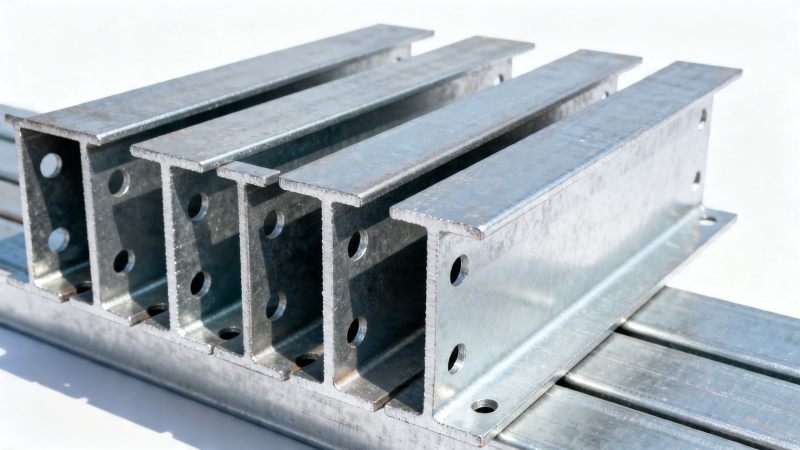
A hot dip galvanized steel beam is a structural beam that has been immersed in molten zinc after surface preparation. This process creates a metallurgically bonded coating that helps protect the base steel from corrosion. In many projects, the zinc layer performs as both a barrier and a sacrificial protective layer, which is why hot dip galvanizing is often preferred for exposed or semi-exposed structures.
Compared with painted carbon steel, galvanized beams can offer a longer maintenance interval, especially in outdoor applications. In practical project planning, that may mean fewer shutdowns over a 10–25 year period, depending on environment severity, coating thickness, and installation conditions. For warehouses, industrial buildings, utility supports, platforms, and infrastructure frames, that difference can directly affect lifecycle cost.
The value becomes more obvious when beams are installed in hard-to-access areas. A roof support frame, elevated conveyor structure, or coastal service platform can be expensive to repaint every 3–5 years. If the initial structural design supports galvanizing from the start, teams often improve asset protection without adding complex maintenance planning later.
Typical Beam Types Used for Galvanizing
Hot dip galvanizing can be applied to many structural sections, including I-beams, H-beams, universal beams, channels, and fabricated beam assemblies. The final coating performance depends on steel chemistry, component geometry, venting and drainage design, and the galvanizer’s process control. For fabricated parts with stiffeners, holes, or welded connections, early design review is important to avoid trapped chemicals or uneven drainage.
- Common beam materials include carbon structural steel produced to ASTM, EN, JIS, or GB grades.
- Typical project lengths range from 6 m to 12 m, while custom fabrication can go longer depending on transport conditions.
- Pre-drilled and pre-cut beams are often galvanized after fabrication to protect edges, holes, and welded areas in one process.
The following table summarizes where galvanized beams are most often selected and what buyers usually prioritize during evaluation.
The key takeaway is that galvanizing is rarely chosen for appearance alone. In most structural steel projects, it is a maintenance strategy. Buyers who evaluate beams only by ton price may miss future savings related to service intervals, labor access, and reduced corrosion repairs.
Core Performance Factors: Coating, Strength, Standards, and Service Life
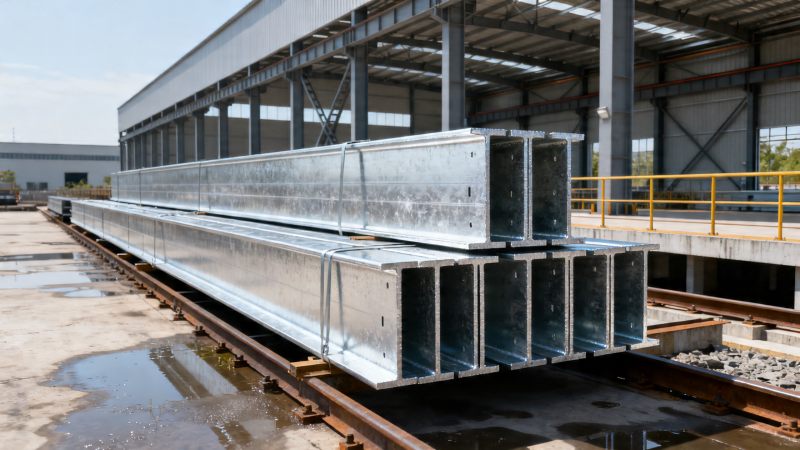
When specifying a hot dip galvanized steel beam, four factors deserve close attention: structural grade, section tolerance, zinc coating quality, and expected corrosion environment. A beam may meet strength requirements but still underperform if coating thickness is inconsistent or if the environment is more aggressive than originally assumed. Technical and quality teams should therefore review both steel and galvanizing data together.
In general practice, hot dip galvanized coatings are assessed by appearance, adhesion, continuity, and coating mass or thickness according to the relevant standard. The exact acceptance criteria depend on the governing specification, but buyers commonly request verification documents, visual inspection records, and coating test results before shipment. For export projects, document alignment can save 7–10 days during approval and customs review.
Service life is linked to environment. In mild rural exposure, galvanized beams may perform for many years with limited intervention. In coastal, chemical, or heavy industrial zones, the same beam may require stronger coating control or a duplex system combining galvanizing and paint. This is why project location, humidity, chloride exposure, and chemical contact must be discussed at the quotation stage rather than after production.
Common Evaluation Points for Engineers and QC Teams
- Confirm beam section, steel grade, and load design before galvanizing to avoid rework.
- Check whether vent holes and drainage openings are correctly placed for fabricated assemblies.
- Review surface preparation, weld condition, and edge treatment because these affect coating quality.
- Request inspection records covering dimensions, coating acceptance, quantity count, and packing status.
- Match standards such as ASTM, EN, JIS, or GB with the project’s destination market and contract terms.
Performance Comparison in Typical Conditions
The table below shows a practical comparison for project planning. Values are expressed as common evaluation ranges rather than universal guarantees, because actual durability varies with environment, steel composition, and site conditions.
For many B2B buyers, the decision should be based on total cost over 10–15 years rather than the initial material price alone. A galvanized beam can cost more upfront, but if it reduces shutdown labor, scaffold access, and repair frequency, the total project economics may be stronger.
How to Select the Right Beam for Project Conditions and Sourcing Goals
Selection begins with the load path, but it should not end there. Buyers should align structural design, fabrication detail, coating expectation, and delivery schedule before placing an order. In real sourcing practice, problems often come from missing details such as hole position tolerance, cut length, welding scope, or packing method rather than from the beam section itself.
A practical selection process usually includes 4 stages: structural confirmation, anti-corrosion review, fabrication detail check, and commercial validation. This helps project managers and financial approvers compare quotes on the same basis. If one supplier prices bare beams and another includes galvanizing, cutting, and export packing, the quote comparison will be misleading unless the scope is normalized.
For international sourcing, lead time matters as much as specification. Standard beam rolling may be available faster, while customized drilling, punching, welding, and galvanizing usually require additional production steps. Depending on quantity and complexity, a common export supply cycle can range from 2–6 weeks, excluding sea freight. Early drawing approval and inspection planning reduce delays.
Selection Checklist for Buyers and Engineers
- Define the environment clearly: indoor, outdoor, coastal, chemical, agricultural, or mixed exposure.
- Specify the required steel standard and beam section series before requesting quotations.
- Clarify if fabrication is included: cutting, hole drilling, welding, plates, stiffeners, and surface treatment.
- Confirm quality documents needed for approval, such as mill test certificates, dimensional reports, and coating inspection records.
- Review packing, marking, and container loading plans for 20 ft or 40 ft shipment efficiency.
A Related Product Often Used in Corrosive Structural Environments
Many projects that use galvanized beams also require corrosion-resistant lifting, support, or tension components. In such cases, Galvanized Steel Wire Rope is often considered for mining, loading, forestry, marine work, elevators, cranes, pile-drivers, drilling, railways, photovoltaic systems, and road fencing. Common constructions include 6X7+FC, 6X19+IWR, and 8x19S+FC, with diameters from 1.0 mm to 22 mm and normal tensile strength from 1470 MPa to 1960 MPa.
For buyers managing multi-product sourcing, this matters because corrosion conditions should be coordinated across the whole structure, not only the beam. Wire rope options may be plain, electro galvanized, or hot dipped galvanized, and can be supplied to standards such as GB/T 20116-2008, DIN, EIPS, ISO 9001, and ABS. Zinc coating groups for mild, medium, and severe corrosion conditions provide another way to match service life expectations with budget.
This kind of integrated procurement approach can reduce supplier fragmentation and simplify quality review. If beams, profiles, and related galvanized steel components are sourced with aligned technical specifications, project teams often gain better schedule control and lower interface risk.
Procurement, Manufacturing Control, and Delivery Risk Management
From a procurement standpoint, a hot dip galvanized steel beam order should be managed as a combination of material supply and process control. The procurement team needs to verify raw steel source, fabrication sequence, galvanizing route, inspection checkpoints, and export packing. This is especially important for OEM or custom structural components where the risk of revision increases after production begins.
Experienced buyers usually compare suppliers across 5 dimensions: technical capability, standard compliance, production stability, inspection transparency, and shipment coordination. A factory with modern equipment and clear process control can better support repeat orders, quantity balance, and documentation consistency. That is valuable for distributors, contractors, and project owners who need predictable delivery rather than one-time low pricing.
Hongteng Fengda focuses on structural steel products including angle steel, channel steel, steel beams, cold formed profiles, and customized steel components. For export projects, the practical benefit is that standard specifications and OEM solutions can be coordinated through one manufacturing and quality framework, helping customers reduce sourcing risk and avoid mismatch between design, fabrication, and anti-corrosion requirements.
Typical Risk Points Before Order Confirmation
The table below highlights common procurement risks and how project teams can control them before production starts.
The most effective control is early alignment. When engineering, purchasing, QC, and project management review the same checklist before production, many avoidable claims can be prevented. Even a 1–2 day clarification meeting can save weeks of correction later.
Suggested Delivery Workflow
- Technical confirmation of beam size, grade, drawings, and corrosion environment.
- Commercial confirmation of quantity, price basis, lead time, and packing requirements.
- Production scheduling covering rolling, fabrication, galvanizing, and final inspection.
- Document release including certificates, inspection sheets, packing list, and shipment marks.
- Export loading and logistics coordination according to destination and container plan.
Common Questions, Misunderstandings, and Practical Buying Advice
Many buyers assume that every galvanized beam is suitable for every environment, but that is not always true. The actual result depends on environment class, detailing quality, and the interaction between fabrication and galvanizing. Another common misunderstanding is that cosmetic appearance alone indicates coating performance. In practice, acceptance should also consider continuity, adhesion, and compliance with the specified standard.
A second issue is comparing only ex-works unit price. For project buyers, the more useful comparison includes processing scope, coating process, inspection content, packaging, documentation, and shipment readiness. A quote that is 3% lower at the start may become more expensive if it triggers delays, field modification, or additional corrosion protection on site.
For distributors and resellers, stock strategy also matters. Standard galvanized beam sizes may support faster turnover, while custom fabricated beams are better for project contracts with clear drawings and delivery windows. Balancing these two models can improve cash flow while keeping service capability for urgent customer demand.
FAQ 1: How do I know if a hot dip galvanized steel beam is necessary?
If the beam will be used outdoors, in humid facilities, in agricultural buildings, in utility structures, or in areas where repainting is difficult, galvanizing is often worth evaluating. For indoor dry spaces with easy maintenance access, painted steel may still be acceptable. The decision should be based on expected exposure over at least 10 years, not only on the installation phase.
FAQ 2: What should procurement teams ask for in a quotation?
Ask for the steel standard, beam section and length range, fabrication scope, galvanizing standard, inspection items, packing method, delivery term, and lead time. It is also useful to confirm whether the supplier can provide OEM processing and export support. These details improve quote comparability and reduce change orders.
FAQ 3: Can galvanized beams be customized for global projects?
Yes. Many structural steel exporters support custom lengths, drilling, punching, welded assemblies, and project-specific packaging. However, custom work increases the importance of drawing approval, inspection planning, and lead-time control. For multi-country projects, standard alignment to ASTM, EN, JIS, or GB should be confirmed before production begins.
FAQ 4: What is the most practical way to reduce sourcing risk?
Use a supplier that can combine stable production, quality control, and export communication. Review a 4-part checklist covering technical data, corrosion requirements, inspection records, and logistics packing. This approach is often more effective than focusing only on the lowest ton price, especially when project downtime or installation errors carry high cost.
Hot dip galvanized steel beams remain a practical choice for projects that need structural strength plus reliable corrosion resistance. The best results come from matching beam type, steel standard, fabrication detail, and coating requirements to the real service environment. For buyers, engineers, QC teams, and project managers, this means evaluating lifecycle value, not only initial material cost.
With experience in structural steel manufacturing and exporting from China, Hongteng Fengda supports global customers with steel beams, profiles, customized components, quality-focused production, and dependable delivery coordination. If you are planning a new structure, replacing corroded members, or comparing suppliers for an upcoming project, contact us to get tailored recommendations, technical support, and a sourcing solution that fits your market, schedule, and budget.
Please give us a message


Please enter what you want to find