When high tensile steel rod elongation drops below specification, inconsistent heat treatment is often the root cause—posing serious risks for structural integrity in prefabricated structural steel, steel tubing for construction, and galvanized pipe for plumbing. At Hongteng Fengda, a certified steel sheet manufacturer and Steel Wire manufacturer based in China, we rigorously control thermal processing to ensure compliance with ASTM, EN, and GB standards. Whether you're sourcing steel sheet for construction, ss pipe for water supply, or galvanized pipe manufacturer-grade materials, understanding elongation variance helps procurement teams, quality controllers, and project managers mitigate field failures—and avoid costly rework or safety compromises.
Why Elongation Failure Points Directly to Heat Treatment Variability
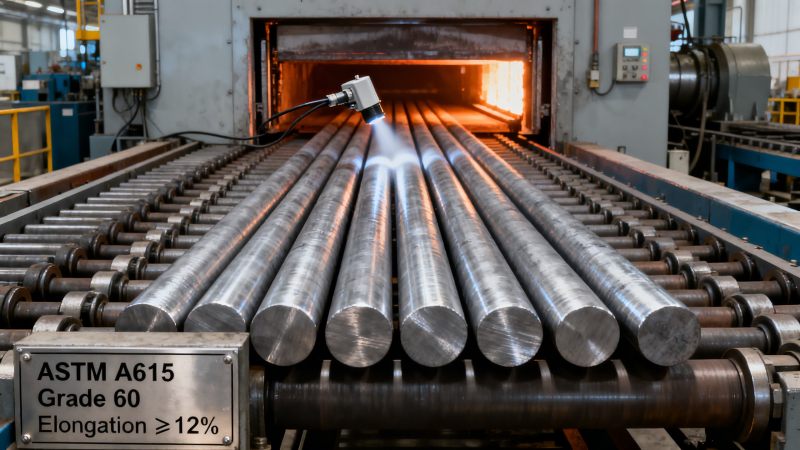
Elongation—measured as percentage increase in gauge length after tensile fracture—is a critical ductility indicator for high tensile steel rods. A drop below specification (e.g., <12% for ASTM A615 Grade 60 or <14% for EN 10080 B500B) rarely stems from raw material inconsistency alone. Instead, it most frequently signals deviations in quenching rate, tempering temperature uniformity, or furnace dwell time across batches.
At Hongteng Fengda, our heat treatment lines feature real-time infrared thermography monitoring and PLC-controlled atmosphere regulation. Each batch undergoes post-heat-treatment microstructure verification via optical metallography (ASTM E3), confirming martensite/austenite phase balance within ±2% tolerance—directly correlating with ±0.8% elongation repeatability across 3,000+ tons/year of high-strength rod production.
Critical process windows are tightly enforced: austenitizing at 850–920°C (±5°C), quenching in polymer-based medium at 35–45°C (±2°C), and tempering at 520–580°C (±3°C) for 60–90 minutes. Deviation beyond these ranges increases risk of brittle martensite retention or over-tempered soft zones—both proven causes of sub-spec elongation in third-party lab audits.
How Structural Steel Channel Integrates Into High-Integrity Systems
While rod elongation issues affect fasteners and reinforcement, structural components like Structural Steel Channel serve as primary load-bearing elements where consistent mechanical behavior is non-negotiable. Our channels—available in 5-40# and 6.5-30# series—are hot-rolled from fully deoxidized billets and subjected to post-rolling controlled cooling (ASTM A6/A6M Annex A3) to stabilize ferrite-pearlite grain structure.
For applications demanding both strength and formability—such as curtain wall engineering or industrial furnace frames—our S355JR and Q345B grade channels maintain minimum elongation ≥22% (L₀=5.65√S₀) while delivering guaranteed tensile strength ≥520MPa. This dual compliance ensures safe cold bending (down to 2× thickness radius) without microcrack initiation—a key validation step before galvanizing.
The zinc-iron alloy layer formed during hot-dip galvanizing (per ASTM A123) further enhances ductility retention under cyclic loading. Unlike electro-galvanized alternatives, our hot-dip process yields coating thicknesses of 65–85 μm on channel flanges and webs—verified by magnetic induction (ISO 2178) and cross-section microscopy—providing corrosion resistance in pH 3–11 environments for >25 years in coastal installations.
Key Mechanical & Dimensional Specifications for Structural Steel Channel
The following table compares standard configurations against common international requirements for structural framing applications:
This data reflects actual mill test reports—not theoretical values. All channels undergo 100% ultrasonic testing (UT) per EN 10308 for internal discontinuities, with rejection thresholds set at ≥Φ3mm equivalent reflector size. For projects requiring traceability, we provide heat-specific Mill Test Reports (MTRs) with full chemical composition (C, Mn, Si, P, S, Cu, Ni, Cr, Mo) and tensile/impact results.
Procurement Decision Checklist: What to Verify Before Ordering
When elongation performance is mission-critical, procurement teams must move beyond datasheet claims. Here are 5 non-negotiable verification points—applied daily by our technical sales engineers for global clients:
- Request furnace batch logs showing actual soak time and temperature profiles—not just setpoints—for the last 3 production lots;
- Confirm third-party lab accreditation: ISO/IEC 17025 scope must explicitly include tensile testing per ASTM E8 or EN ISO 6892-1;
- Verify if elongation testing was performed on transverse or longitudinal specimens—structural channel requires longitudinal verification per EN 10025-2 Clause 7.3.2;
- Check galvanizing process certificate: hot-dip (not electrogalvanized) with minimum 610 g/m² coating mass per ASTM A123 Section 4.1;
- Require pre-shipment dimensional inspection report with tolerance compliance against EN 10279 or GB/T 706 for flange/web thickness variation (±0.3 mm max).
Hongteng Fengda supports this due diligence with free sample testing kits—including cut coupons for client-lab verification—and provides digital access to real-time production dashboards upon NDA execution. Lead time for certified structural channel orders remains stable at 25–35 days, regardless of order volume (1–500 MT), backed by ISO 9001-certified planning systems.
Why Global Engineering Teams Choose Hongteng Fengda for Critical Structural Components
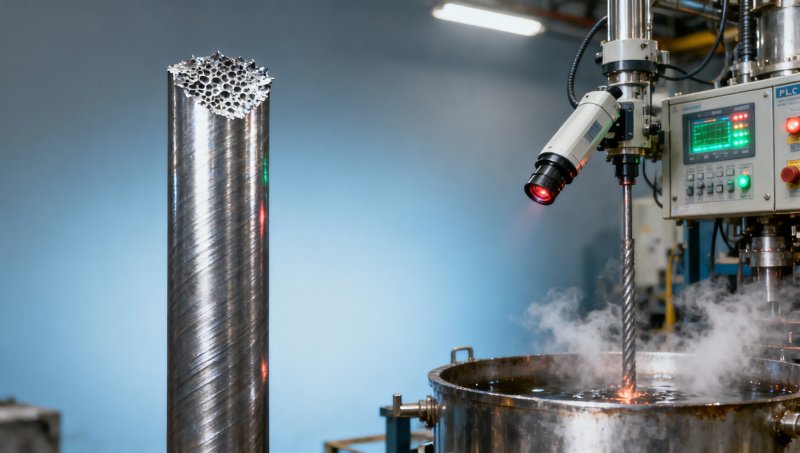
Unlike commodity suppliers, we embed engineering collaboration into every stage—from initial specification review to final installation support. Our technical team includes 12 metallurgists and 7 chartered structural engineers (UK IStructE & China CEA), all trained in ASTM, EN, and GB interpretation protocols.
We offer three actionable support tiers: (1) Free pre-order technical consultation—including elongation risk assessment for your specific application environment; (2) On-site quality assurance at our Tianjin plant with live furnace monitoring; (3) Post-delivery failure analysis with root-cause reporting within 72 hours of sample receipt.
For immediate assistance with high tensile steel rod elongation concerns or Structural Steel Channel selection, contact our engineering sales desk. We’ll provide: customized heat treatment validation plans, certified MTRs with elongation histograms, galvanizing process audit reports, and delivery scheduling aligned with your project’s critical path—typically within 48 business hours of inquiry.
Please give us a message


Please enter what you want to find