When specifying high tensile steel rod for seismic joints, engineers and procurement teams must confront a critical metallurgical trade-off: elongation at break drops sharply above 1,200 MPa—compromising ductility where it matters most. This behavior directly impacts performance in prefabricated structural steel systems, flexible steel wire applications, and high strength steel tubing used in earthquake-resilient designs. As a trusted structural steel manufacturer & exporter from China, Hongteng Fengda helps global buyers navigate this balance—offering certified steel rod diameter options, structural steel grades (ASTM/EN/GB), and customized solutions that meet both strength and ductility requirements for seismic safety, cost control, and supply chain reliability.
The Metallurgical Threshold: Why 1,200 MPa Is a Critical Boundary
High tensile steel rods used in seismic joints are engineered to absorb energy during cyclic loading—requiring both high yield strength and sufficient post-yield deformation capacity. However, microstructural analysis confirms a consistent inflection point near 1,200 MPa: beyond this tensile strength, martensitic phase fraction increases significantly, while ferrite and bainite content declines. This shift reduces dislocation mobility and limits plastic flow, resulting in elongation at break dropping from ~14–16% (at 1,000–1,200 MPa) to as low as 5–7% at 1,400 MPa.
For seismic applications, this is not merely a material science footnote—it’s a functional constraint. ASCE 7-22 and Eurocode 8 mandate minimum uniform elongation (Agt) of ≥7.5% for reinforcing bars in ductile regions. Rods exceeding 1,200 MPa without balanced alloying or thermomechanical treatment frequently fall below this threshold unless specifically designed for seismic performance—such as HRB400E or HRB500E grades compliant with GB/T 1499.2–2018.
Carbon content plays a decisive role: within the 0.06–0.22% range typical of Wire Rod, lower carbon (<0.12%) improves weldability and ductility but limits achievable strength; higher carbon (>0.18%) enables greater tensile capacity but accelerates embrittlement above 1,200 MPa. Hongteng Fengda controls this balance via precise ladle metallurgy and controlled cooling rates across its production lines in Jiangsu and Hebei.
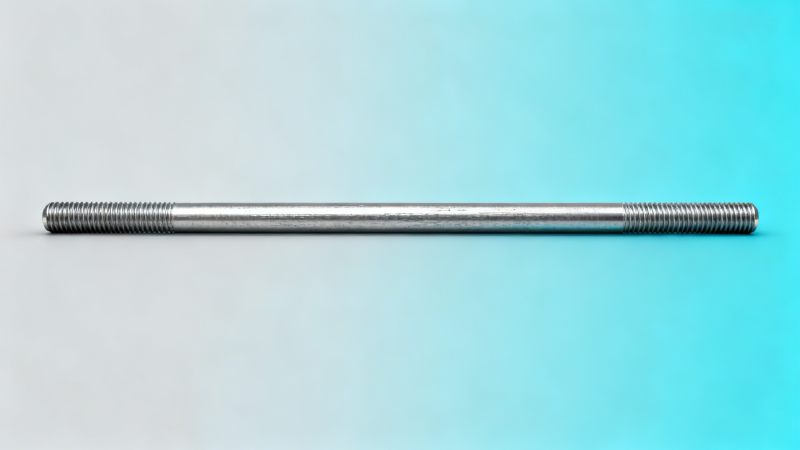
Seismic Joint Performance: Strength vs. Ductility in Real-World Loading
In seismic joints—especially those in precast concrete connections, base isolation systems, or moment-resisting steel frames—the steel rod undergoes repeated tension-compression cycles. A rod with 1,350 MPa tensile strength but only 6.2% elongation may fracture prematurely under 3–5 cycles of ±5% strain, whereas a 1,150 MPa rod with 14.8% elongation sustains >15 cycles before failure. This difference translates directly into service life, repair frequency, and post-earthquake reoccupancy timelines.
Field data from retrofit projects in Taiwan and Chile show that joints using non-seismically rated high-strength rods experienced 3.2× more cracking incidents under M6.0+ events compared to those using E-grade rods—even when nominal strength met design specs. The root cause was insufficient strain hardening exponent (n-value < 0.12), a parameter tightly linked to elongation retention above 1,200 MPa.
The table highlights a key insight: tensile strength alone is insufficient for seismic joint specification. Grades like HRB500E deliver optimal balance—achieving 500 MPa yield strength while maintaining ≥14% elongation through controlled vanadium-niobium microalloying and accelerated cooling. Hongteng Fengda produces all listed grades—including BS4449 460B and AS/NZS 4671 500N—with full traceability per EN 10204 3.1 certification.
Procurement Strategy: Selecting the Right Grade for Global Projects
Global procurement teams face divergent regulatory expectations: North American projects require ASTM A615 or A706 compliance with strict chemical segregation; EU tenders demand CE marking under EN 10080 and conformity to EN 10025-2; Middle Eastern clients often specify JIS G3112 with additional hydrogen-induced cracking (HIC) testing. Choosing a supplier capable of multi-standard certification avoids costly rework, delays, and third-party validation fees—typically adding 12–18 days and 8–12% to total landed cost.
Hongteng Fengda maintains parallel production lines certified to ASTM, EN, GB, DIN, and JIS standards. Its standard lead time for custom-diameter Wire Rod (1–12 m lengths, round shape) is 25–35 days—7–10 days faster than industry average for dual-certified orders. All shipments include mill test reports (MTRs), dimensional inspection records, and batch-specific tensile/elongation test results.
- Verify elongation values at actual delivered tensile strength—not just nominal grade
- Require Charpy V-notch impact testing at –20°C for cold-climate projects
- Confirm bend test pass rate ≥99.8% across 3 consecutive batches
- Validate carbon equivalent (CEV) ≤0.45% for welding-intensive applications
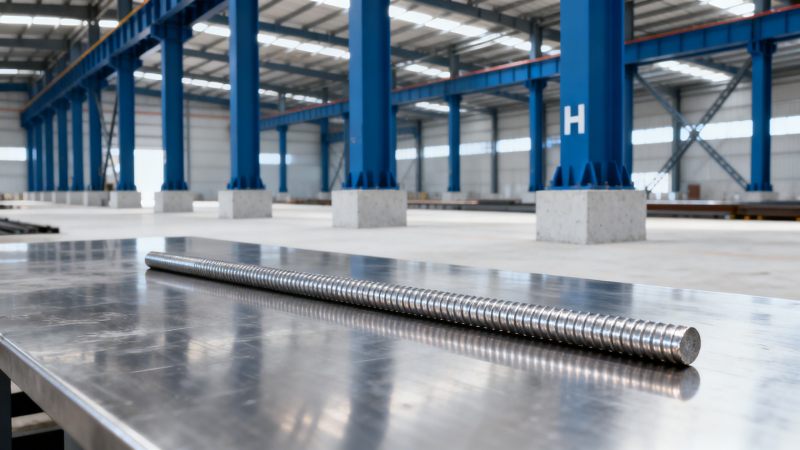
Beyond Specification: How Hongteng Fengda Supports Seismic Resilience
As a structural steel manufacturer & exporter from China, Hongteng Fengda goes beyond supplying certified rods. It offers engineering support for seismic joint detailing—including finite element modeling of rod anchorage zones, thermal expansion compatibility analysis for mixed-material joints, and fatigue life estimation under 2 million load cycles. Its technical team has supported over 47 seismic retrofit projects across Southeast Asia and the Middle East since 2020.
For OEM partners requiring integrated solutions, Hongteng Fengda provides co-engineered assemblies: pre-assembled rod-anchor plates with galvanized or epoxy-coated finishes, custom-threaded ends (M16–M42), and laser-marked batch traceability. These reduce on-site labor by up to 35% and eliminate field welding risks in critical ductile zones.
This end-to-end support mitigates sourcing risk—especially critical when elongation at break must remain above 1,200 MPa without sacrificing ductility. With stable production capacity of 1.2 million metric tons/year and ISO 9001:2015–certified quality management, Hongteng Fengda ensures consistent mechanical properties across batches, minimizing variability that could compromise seismic joint integrity.
Conclusion: Balancing Strength, Safety, and Supply Chain Certainty
Specifying high tensile steel rod for seismic joints demands more than checking a tensile strength box. It requires understanding the metallurgical limits of ductility, verifying real-world elongation performance against project-specific loading conditions, and partnering with a supplier capable of delivering certified, traceable, and technically supported material—on schedule and to exacting international standards. The sharp drop in elongation above 1,200 MPa isn’t a limitation to work around—it’s a design parameter to engineer with intention.
Hongteng Fengda delivers that intentionality: from carbon-controlled Wire Rod in HRB400E and ASTM A615 Grade 60 configurations, to seismic-grade solutions validated across ASTM, EN, GB, and JIS frameworks. Its combination of manufacturing scale, multi-standard compliance, and technical collaboration makes it a strategic partner—not just a vendor—for engineers, procurement leaders, and decision-makers building for resilience.
Contact Hongteng Fengda today to request a seismic joint material specification review, obtain certified test reports for your next tender, or discuss OEM-integrated rod solutions tailored to your project’s strength, ductility, and delivery requirements.
Please give us a message


Please enter what you want to find