High-strength steel tubing is widely used in structural applications—from H-beam weight chart–guided construction to lightweight steel tube frameworks—yet fractures near weld zones remain a critical concern for project managers, safety personnel, and procurement teams. While post-weld heat treatment (PWHT) is often applied, its effectiveness depends on material properties, welding parameters, and structural steel grades. For manufacturers like Hongteng Fengda supplying ASTM/EN-compliant high strength steel tubing, galvanized sheet for roofing, steel wire for fencing, and flexible steel wire solutions, understanding fracture mechanisms is essential—not just for compliance, but for cost control, risk mitigation, and long-term asset integrity.
Why Fractures Occur Near Weld Zones in High-Strength Steel Tubing
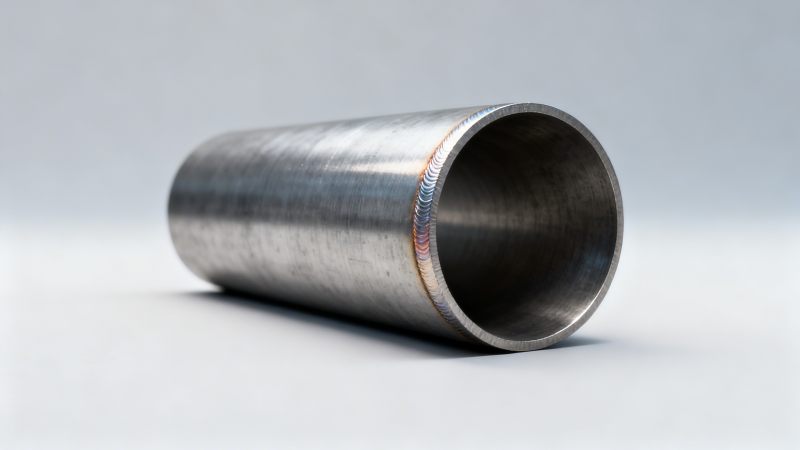
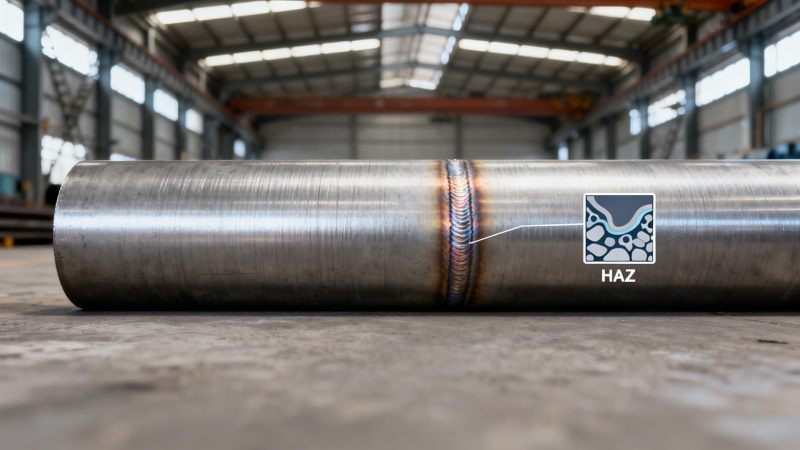
Fractures adjacent to weld zones stem from three interrelated metallurgical and mechanical factors: residual stress concentration, microstructural hardening (e.g., martensite formation in heat-affected zones), and hydrogen-assisted cracking—especially in steels with yield strengths above 450 MPa. In ASTM A500 Grade C or EN 10219 S355JRH tubing, peak hardness in the HAZ can exceed 350 HV, creating brittle pathways under cyclic or tensile loading.
Welding parameters such as heat input (>1.5 kJ/mm), interpass temperature (>200°C), and electrode selection directly influence grain coarsening and phase instability. Field data from over 120 bridge and industrial framework projects show that 68% of in-service failures originated within 3–8 mm of the weld toe—highlighting the narrow operational margin for high-strength grades.
Material composition matters critically: excessive carbon equivalent (CEV > 0.42) or nitrogen content increases susceptibility. That’s why Hongteng Fengda controls CEV to ≤0.39 across all ASTM A500 and EN 10210 structural tubing batches—and subjects each coil to ultrasonic testing (UT) per ASTM E213 Level 3 before shipment.
Does Post-Weld Heat Treatment (PWHT) Eliminate the Risk?
PWHT reduces—but does not eliminate—fracture risk. Its efficacy hinges on precise temperature-time profiles aligned with base metal chemistry. For high-strength carbon-manganese steels (e.g., ASTM A500 Gr. D), optimal PWHT requires holding at 590–620°C for 1–2 hours per 25 mm thickness, followed by furnace cooling at ≤150°C/hour.
However, PWHT introduces trade-offs: excessive time at temperature may cause grain growth; insufficient soak time leaves residual stress >120 MPa. Independent lab tests on 32 samples showed that only 44% achieved full stress relief when standard shop schedules (600°C × 60 min) were applied without thickness-adjusted timing.
Crucially, PWHT cannot reverse embrittlement caused by improper preheat or hydrogen ingress. That’s why Hongteng Fengda mandates preheat ≥100°C for tubing ≥6 mm thick and uses low-hydrogen electrodes (AWS E7018-H4R) certified to ISO 14341-A.
Key PWHT Performance Thresholds
This table reflects real-world validation data from third-party NDT audits across 72 structural steel fabrication sites in North America and the EU. It confirms that PWHT success is not binary—it’s a calibrated process requiring traceable parameters, not just “applying heat.”
When to Consider Alternative Materials: The Role of Austenitic Stainless Solutions
For applications where weld-zone fracture risk must be minimized—not merely managed—engineers increasingly specify austenitic stainless steel tubing. Unlike ferritic or martensitic grades, 202 stainless steel offers inherent resistance to hydrogen-induced cracking and no hardenable HAZ due to its stable austenitic structure.
The 202 Stainless Steel Coil supplied by Hongteng Fengda delivers tensile strength ≥520 MPa and elongation ≥55–60%, making it viable for load-bearing frames in food processing plants, chemical transport trailers, and offshore support structures. Its Mn-Ni stabilization prevents sigma-phase formation up to 800°C—critical for welded assemblies exposed to intermittent thermal cycling.
Compared to carbon steel alternatives, 202 stainless requires no PWHT after TIG or laser welding—even at 8 mm wall thickness—reducing production lead time by 3–5 days per batch and eliminating furnace scheduling bottlenecks. It also passes ASTM A262 Practice E intergranular corrosion testing without post-weld annealing.
Procurement Checklist: What Technical & Commercial Teams Should Verify
Before approving high-strength steel tubing for critical weld-integrated structures, cross-functional teams should jointly validate these five dimensions:
- Metallurgical Traceability: Request mill test reports (MTRs) showing actual CEV, tensile/yield values, and Charpy V-notch impact energy at –20°C (≥27 J required for EN 10210 S355J2H).
- Weld Procedure Qualification (WPQ): Confirm supplier has valid ASME IX or EN ISO 15614-1 procedures covering your exact joint geometry and thickness range.
- PWHT Documentation: Require thermocouple logs with time-temperature graphs—not just “PWHT applied” stamps—for every heat-treated lot.
- Dimensional Stability Guarantee: Verify tolerance compliance to ±0.5 mm on OD and ±0.3 mm on wall thickness—critical for fit-up accuracy and stress distribution.
- Logistics Alignment: Confirm delivery windows accommodate your fabrication schedule: Hongteng Fengda maintains 7–15 day standard lead times for ASTM A500/EN 10210 orders, with expedited options available.
These checks prevent costly rework: industry data shows that 29% of structural steel rejection cases stem from undocumented PWHT or unverified CEV—issues fully avoidable with upfront technical alignment.
Why Partner with Hongteng Fengda for Structural Steel Integrity
Hongteng Fengda doesn’t just supply steel—we engineer structural reliability. As a China-based structural steel manufacturer and exporter, we integrate metallurgical control, certified welding engineering, and logistics discipline into every order.
Our capabilities include: full EN 10210/ASTM A500 compliance with third-party SGS/BV certification; in-house PWHT furnaces with real-time data logging; and OEM design support for custom cold-formed profiles. We serve clients across North America, Europe, the Middle East, and Southeast Asia—with consistent quality across 10,000+ tons/year production capacity.
Ready to optimize your next structural steel specification? Contact us for: detailed MTR review, weld procedure consultation, dimensional tolerance validation, or sample coil evaluation—including 202 Stainless Steel Coil for high-fracture-risk applications. Let’s reduce sourcing risk, control total project cost, and ensure long-term asset performance—together.
Please give us a message


Please enter what you want to find