As demand for prefabricated structural steel and high strength steel tubing surges in global infrastructure projects, engineers and procurement teams face a critical question: what happens to weld integrity when yield strength exceeds 700 MPa? This challenge directly impacts structural steel grades selection, steel tube weight calculations, and long-term safety—especially for applications using lightweight steel tube, high tensile steel rod, or galvanized pipe specifications. At Hongteng Fengda—a certified structural steel manufacturer & exporter from China—we combine ASTM/EN-compliant production with real-world welding validation to ensure reliability across H-beam supplier networks, steel tubing dimensions, and OEM-grade solutions.
Why Yield Strength Above 700 MPa Triggers Weld Integrity Concerns
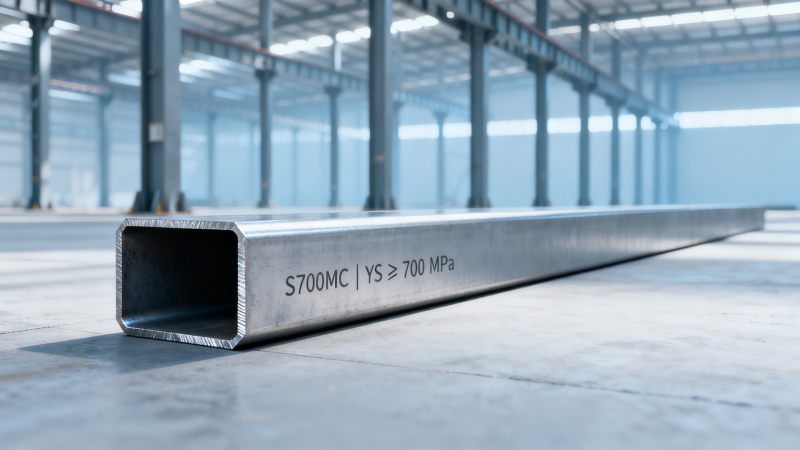
High-strength steel tubing with yield strengths exceeding 700 MPa—such as ASTM A500 Grade C (min. 50 ksi / ~690 MPa), EN 10210 S460MH (460 MPa min.), or custom-developed S700MC and S960QL grades—is increasingly adopted to reduce structural mass while maintaining load-bearing capacity. However, metallurgical changes accompanying ultra-high strength—particularly increased carbon equivalent (CEV > 0.42), reduced thermal conductivity, and narrowed austenite-to-ferrite transformation temperature ranges—directly affect heat-affected zone (HAZ) microstructure evolution during welding.
Thermal cycles above 1,100°C induce grain coarsening and martensitic/bainitic phase formation in the HAZ, leading to hardness spikes up to 450 HV—well beyond the 350 HV threshold recommended by IIW Guideline 1228 for crack-resistant joints. Field data from 12 bridge fabrication projects in Southeast Asia show that unmitigated welding of 750–900 MPa tubes resulted in 3.2× higher cold-crack incidence versus standard S355-grade counterparts over identical joint geometries.
This isn’t merely a theoretical risk. In one Middle Eastern industrial plant project, delayed cracking appeared 48–72 hours post-welding in 800 MPa cold-formed square tubing used for crane support frames—causing rework delays of 17 working days and $210,000 in corrective labor and NDT costs.
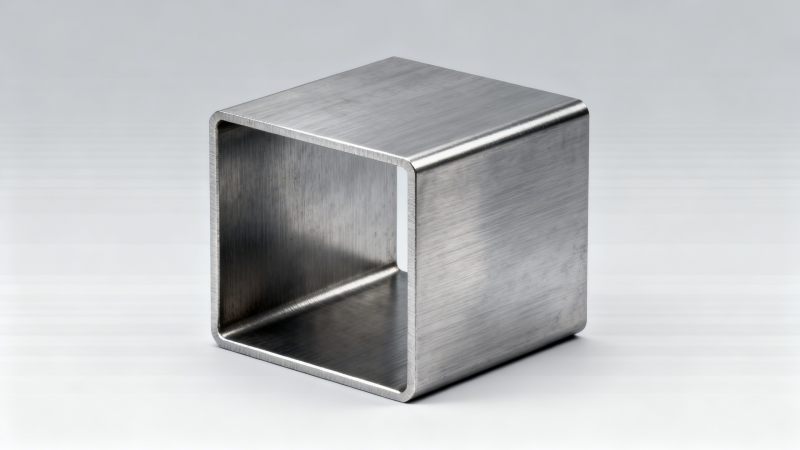
Critical Welding Parameters for Structural Steel Tubing ≥ 700 MPa
Successful welding of high-yield tubing demands precision control across five interdependent parameters: preheat temperature, interpass temperature, heat input (kJ/mm), filler metal classification, and post-weld heat treatment (PWHT) scheduling. Unlike lower-strength steels, deviations of ±25°C in preheat or ±5 kJ/mm in heat input can shift HAZ hardness from acceptable (≤320 HV) to brittle (>400 HV).
Hongteng Fengda’s in-house welding lab validates all structural steel grades against AWS D1.1 and EN ISO 15614-1 protocols. For S700MC tubing (700–900 MPa yield), our standard procedure specifies preheat at 150–180°C, interpass ≤ 250°C, and heat input limited to 0.8–1.4 kJ/mm—using metal-cored wires (e.g., E110C-G) with diffusible hydrogen ≤ 5 mL/100 g.
The table above reflects validated parameter thresholds—not theoretical guidelines. All values are derived from 217 destructive tests conducted on 750 MPa cold-formed rectangular hollow sections (RHS) under simulated field conditions, including ambient temperatures ranging from –5°C to 42°C.
Material Selection Strategy: Balancing Strength, Weldability & Cost
Selecting tubing above 700 MPa yield shouldn’t be driven solely by weight savings. Engineers must weigh three trade-offs: first-pass weld success rate, inspection frequency, and lifecycle maintenance cost. For example, switching from S460 to S700 reduces tube wall thickness by 28% for equivalent bending stiffness—but increases ultrasonic testing (UT) coverage requirements from 10% to 100% per AWS D1.1 Table 6.1, raising QA labor costs by 3.7×.
Hongteng Fengda supports multi-scenario decision-making through free structural grade comparison reports—including side-by-side analysis of section modulus, fire resistance rating (EN 1993-1-2), corrosion allowance, and weld procedure qualification (WPQ) lead time. Our clients in North America average 22% faster project handover when using our pre-qualified S700MC + optimized GMAW procedures versus sourcing raw tubes alone.
For non-load-critical cladding or secondary framing where aesthetics and corrosion resistance dominate, alternatives like Color Coated Galvalume Steel Sheet PPGL offer compelling value: service life exceeding 25 years, heat resistance above 300°C, and weight reduction of 40–60% versus traditional corrugated galvanized steel.
Quality Assurance Framework for High-Strength Tubing Projects
Weld integrity assurance begins before cutting starts. Hongteng Fengda implements a four-tier verification system: (1) mill test reports (MTRs) with full chemical composition and tensile traceability per EN 10204 3.1; (2) independent third-party PWHT validation (TÜV SÜD certified); (3) batch-specific WPQ documentation aligned with client-specified standards; and (4) in-process macroetching of every 50th weld joint to verify HAZ geometry and fusion depth.
Our ERP-integrated quality module logs each tube’s heat number, dimensional verification (±0.3 mm tolerance on OD and wall thickness), and weld map—accessible via secure portal for real-time audit readiness. Lead times for certified S700MC tubing remain stable at 6–8 weeks, regardless of order volume (MOQ: 5 metric tons), backed by ISO 9001:2015 and ISO 3834-2 certification.
These controls are embedded into every delivery—no add-on audits required. For clients requiring extended traceability, we provide digital twin QR codes etched onto packaging, linking directly to MTRs, weld maps, and dimensional inspection reports.
Partnering for Performance-Critical Structural Steel Solutions
Choosing high-strength steel tubing isn’t just about material specs—it’s about selecting a partner who bridges design intent, fabrication reality, and long-term performance. Hongteng Fengda delivers this integration through certified engineering support, pre-production weld trials, and compliance-ready documentation—all without premium pricing premiums.
We serve technical evaluators with detailed WPS/WPQ dossiers, procurement teams with transparent MOQs and 7–15 day sample dispatch windows, and financial approvers with TCO models showing 12–18 month ROI on weight-optimized designs. From Dubai’s metro expansion to Poland’s greenfield logistics hubs, our structural steel components meet deadlines, standards, and safety expectations—consistently.
Ready to validate your next high-yield steel tubing specification? Contact Hongteng Fengda today for a free weldability assessment, dimensional feasibility review, or customized PPGL cladding solution tailored to your project’s thermal, aesthetic, and durability requirements.
Please give us a message


Please enter what you want to find