When comparing Steel Rod high strength options with standard grades, technical evaluators need more than basic tensile data. Real-world performance depends on load demands, fabrication limits, compliance standards, and long-term cost efficiency. This article examines how Steel Rod high strength performs in actual structural and industrial applications, helping buyers and engineers make more accurate material selections with lower sourcing risk.
Why a checklist matters in real-use steel rod selection
Material decisions often fail when selection starts from catalog strength alone. A Steel Rod high strength grade may outperform standard steel in one structure, yet create welding, bending, or cost issues in another.
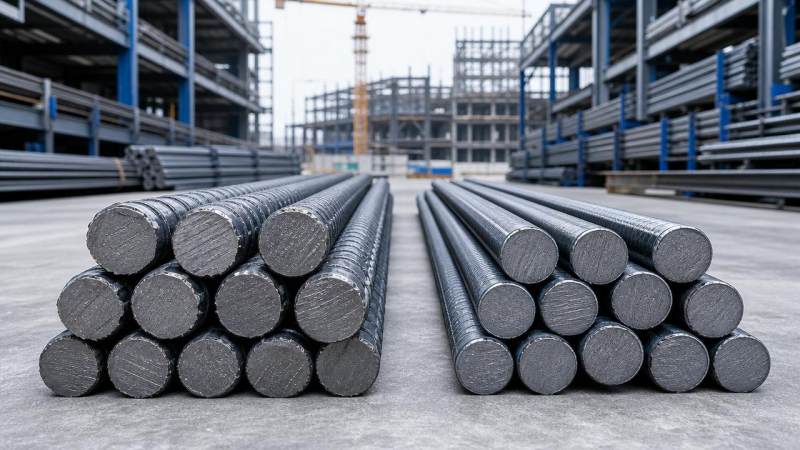
A checklist approach keeps evaluation practical. It connects mechanical properties with fabrication behavior, standards compliance, service environment, and total project efficiency. That is especially important in structural steel sourcing, where design intent and delivered product quality must match.
For construction and industrial use, the best answer is not always the strongest bar. The right answer is the grade that balances strength, ductility, availability, processing limits, and inspection requirements.
Core checklist for comparing high strength steel rod with standard grades
- Define the actual load case first, including static load, impact, cyclic stress, and safety factors, before assuming a Steel Rod high strength grade will automatically improve overall structural performance.
- Check yield strength and not just tensile strength, because service behavior, deformation control, and reinforcement design usually depend more directly on yield performance than peak failure values.
- Review ductility and elongation data carefully, since higher strength grades can reduce forming tolerance and may limit bending radius, anchorage behavior, or seismic performance in some applications.
- Compare welding and heat input sensitivity, especially when the rod will be cut, bent, joined, or prefabricated, because process restrictions can offset the benefit of using stronger material.
- Verify compliance with ASTM, EN, JIS, or GB requirements, and confirm mill test documentation, because equivalent-sounding grades may differ in chemistry, tolerances, or inspection methods.
- Measure cost through total steel consumption, transport weight, labor time, and connection design, instead of evaluating only unit price per ton or short-term purchasing budgets.
- Confirm dimensional range and supply stability, because a high strength option is only practical when required diameters, lengths, and delivery schedules align with the construction sequence.
- Assess corrosion exposure and coating compatibility, since marine, humid, or chemical environments can change the material priority from pure strength toward durability and maintenance control.
What changes in real structural and industrial applications
Heavy load structural frames
In heavily loaded structures, Steel Rod high strength grades can reduce section demand and reinforcement quantity. That may improve dead-load efficiency and lower total steel consumption in columns, transfer zones, and foundation elements.
However, design teams must check deflection, connection detailing, and local stress concentration. A stronger rod does not eliminate the need for proper anchorage, crack control, or practical installation tolerances.
Seismic and dynamic conditions
In seismic regions, ductility can be as important as strength. Standard grades sometimes remain preferable where repeated deformation and energy dissipation are critical. The decision should come from full code-based performance, not headline strength numbers.
Where high yield steel is accepted, detailing rules become more important. Bend diameter, lap length, confinement, and quality consistency all need tighter review during design and site execution.
Industrial fabrication and customized components
Industrial projects often involve cutting, welding, rolling, or cold forming. In these cases, Steel Rod high strength selection must include process validation. Some grades save weight but increase tooling wear or restrict field adjustment.
A reliable supplier with modern manufacturing control can reduce this risk. Consistent chemistry, dimensional accuracy, and traceable testing matter as much as nominal grade strength in exported structural steel products.
A practical product example in the middle of selection work
One relevant example is HRB600 Rebar, a hot-rolled ribbed reinforcing bar used in construction where higher yield capacity can improve reinforcement efficiency.
Its standard yield strength reaches 600 MPa, about 39% higher than HRB400 grade steel bars. Available models include HPB300, HRB400, HRB500, and HRB600, with sizes from φ6 to φ50 and lengths such as 1M, 4M, 6M, 8M, and 12M.
In projects that aim to reduce reinforcement ratio and decrease steel consumption, this option can be technically attractive. It also aligns with major standards including AiSi, ASTM, BS, DIN, GB, and JIS, which supports broader export compatibility.
Still, the same rule applies: selection should follow actual structural demand, code acceptance, and fabrication conditions. Higher nominal strength creates value only when the whole design system can use it efficiently.
Commonly overlooked risks when choosing Steel Rod high strength
Overlooking bendability is a frequent mistake. Some high strength materials need larger bend radii, and field crews may struggle if detailing was based on assumptions taken from standard grades.
Ignoring connection behavior also creates problems. Bolted, welded, or embedded systems may become the weak link, so a stronger rod does not guarantee a stronger assembled structure.
Treating standards as interchangeable adds sourcing risk. Similar grade names across regions can hide meaningful differences in chemical composition, test frequency, or acceptance limits.
Focusing only on tonnage price can mislead cost evaluation. A higher grade may cost more per ton but reduce material quantity, transport load, and congestion in reinforced sections.
Neglecting supplier process capability is another issue. If consistency varies from heat to heat, the design benefit of Steel Rod high strength can disappear during fabrication or inspection.
Execution advice for lower-risk material decisions
- Start with design load, service life, and compliance requirements, then shortlist standard and high strength options that genuinely satisfy the same project conditions.
- Request full mill test certificates, chemistry ranges, and mechanical property reports, then compare yield, elongation, and dimensional tolerance side by side.
- Run a fabrication review before approval, covering bending, welding, cutting, and site handling, especially when the product enters customized structural assemblies.
- Calculate total installed cost, including labor, detailing complexity, transport, and waste, rather than using purchase price alone as the decision driver.
- Confirm supply continuity across the required diameter and length range, because substitution during execution can disrupt engineering assumptions and delivery timing.
Conclusion and next action
Steel Rod high strength products can deliver clear advantages in load-bearing efficiency, reinforcement reduction, and optimized material use. In real projects, though, performance must be judged through a wider lens than strength alone.
The most reliable comparison checks yield behavior, ductility, processing limits, standards compliance, and total installed cost. That approach reduces sourcing risk and improves the chance of matching steel grade to real-use demands.
For structural steel supply, customized profiles, and export-ready solutions, stable manufacturing, strict quality control, and international standard alignment remain decisive. A disciplined checklist makes Steel Rod high strength selection practical, defensible, and easier to implement.
Please give us a message


Please enter what you want to find