Choosing between high strength steel tubing and standard tubing affects load capacity, weight, fabrication efficiency, and total project cost. For technical evaluators, understanding these trade-offs is essential when specifying materials for structural, industrial, or manufacturing applications. This article compares performance, processing, compliance, and sourcing factors to help you make a more informed and cost-effective selection.
What really changes when you choose high strength steel tubing?
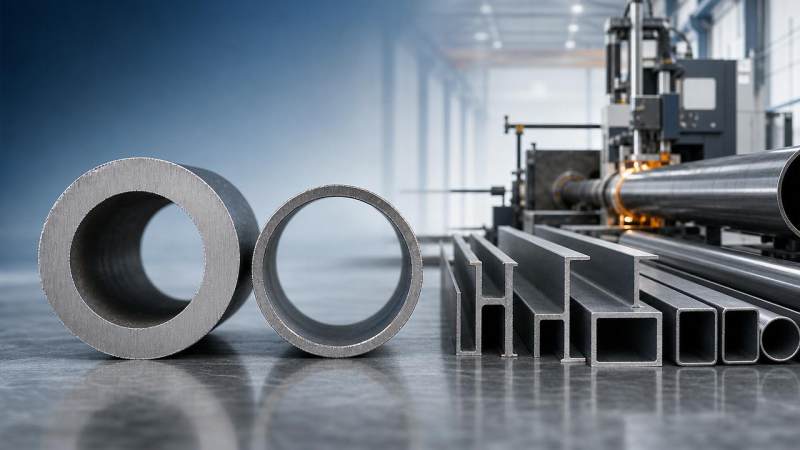
At a basic level, the difference between high strength steel tubing and standard tubing is not only tensile or yield strength. The choice changes how the section behaves under load, how much material is needed to reach a target design capacity, and how fabrication teams handle welding, cutting, bending, and finishing. For technical evaluators, this is rarely a simple “stronger is better” decision.
High strength steel tubing is often selected when designers want to reduce section weight while maintaining structural performance. It can improve load-to-weight ratio, support longer spans, and help reduce dead load in frames, platforms, equipment supports, trailers, and fabricated assemblies. Standard tubing, however, remains practical in many projects because it is easier to source, more forgiving during fabrication, and sometimes more economical once total manufacturing cost is included.
In steel procurement, the right decision depends on project constraints rather than material prestige. If the design is governed by stiffness, connection behavior, or local buckling rather than gross strength, upgrading to higher strength tubing may deliver less benefit than expected. If transport weight, erection speed, or lifting limitations are critical, the upgrade may create clear value.
- Use high strength steel tubing when weight reduction has measurable value in structural efficiency, shipping, handling, or equipment performance.
- Use standard tubing when fabrication simplicity, broad market availability, and balanced cost control matter more than maximum strength.
- Review the full design basis, including deflection, weldability, hole detailing, coating requirements, and compliance with the governing standard.
High strength steel tubing vs standard tubing: side-by-side technical comparison
For technical evaluation, a comparison table helps separate material strength from total project performance. The table below summarizes the main trade-offs engineers and sourcing teams usually examine before approving a steel tubing specification.
The key point is that high strength steel tubing does not automatically lower total project cost. It often lowers steel tonnage, but total savings depend on whether design optimization is allowed and whether fabrication complexity offsets the raw material reduction. Evaluators should compare installed cost, not just price per ton.
Which performance criteria matter most in real steel projects?
When teams compare high strength steel tubing with standard tubing, the most common mistake is focusing on one mechanical number. In real projects, performance is multidimensional. Structural safety, durability, manufacturability, and supply continuity all affect project success.
Strength is important, but stiffness may control the design
If a member is controlled by deflection, vibration, or serviceability limits, a higher yield strength grade may not reduce size as much as expected. The elastic modulus of carbon steel remains essentially similar across many grades. That means high strength steel tubing can improve ultimate capacity, but not necessarily solve stiffness-driven issues without geometry changes.
Section stability must be checked carefully
Reducing wall thickness is one of the main reasons buyers upgrade material grade. However, thinner walls can increase sensitivity to local buckling, distortion during welding, and handling damage. In practice, a well-balanced section may outperform an aggressively reduced one, especially in repetitive industrial fabrication.
Fabrication can change the economics
Cutting, end preparation, hole making, welding sequence, and dimensional tolerance all matter. Technical evaluators should confirm whether the workshop has experience with the required procedures. A theoretically efficient material choice can lose value if rework, slower throughput, or higher inspection requirements are introduced.
- Review the governing failure mode before changing grade.
- Check whether wall reduction will affect connection detailing or buckling behavior.
- Confirm fabrication procedures, especially for welded assemblies and close-tolerance components.
Where high strength steel tubing creates the most value
Not every application benefits equally from a stronger tube. The strongest business case appears when lighter weight improves more than one part of the project, such as lower freight cost, easier lifting, reduced support loads, or faster assembly.
Typical examples include modular structural frames, equipment bases, machinery support skids, transport-related assemblies, and exported steel fabrications where container loading efficiency matters. For long-span or heavily loaded members, high strength steel tubing can also help reduce section count or simplify frame layouts when properly engineered.
In broader steel supply programs, some buyers also pair tubing decisions with related materials. For reinforcement and construction support packages, products such as Wire rod may be specified alongside structural steel items. Depending on the project, common grades like HRB335, HRB400, or HRB500, hot rolled or cold rolled processing options, and standards such as ASTM, JIS, GB, or BS can influence overall procurement planning, logistics, and compliance review.
For technical evaluators, this matters because steel purchasing is rarely isolated to one item. If a project includes tubing, beams, channels, cold formed sections, and reinforcing materials, supplier coordination becomes part of risk control. A manufacturer with stable production, processing services such as cutting, welding, bending, or punching, and familiarity with export documentation can reduce schedule friction.
How should technical evaluators compare cost beyond the material price?
A useful cost comparison for high strength steel tubing should include more than the quotation per ton. The table below outlines the major cost drivers that affect real procurement decisions in steel fabrication and structural supply.
This cost view is especially useful for export projects. A Chinese structural steel manufacturer that can supply standard sections, customized fabrication, and multi-standard compliance support can help buyers compare raw material savings against production feasibility. That reduces the risk of selecting a grade that looks efficient on paper but creates procurement delays later.
What standards, compliance, and sourcing checks should you make?
For high strength steel tubing, compliance review should begin early. Technical evaluators should verify not only the nominal grade but also the applicable manufacturing standard, dimensional tolerances, chemical limits, mechanical properties, and traceability requirements. International projects often require alignment with ASTM, EN, JIS, or GB pathways, and those standards are not always directly interchangeable.
Key sourcing checks before approval
- Confirm the exact tubing standard, section shape, size range, wall thickness, and tolerance required by the design documents.
- Request mechanical property documentation, chemical composition information where relevant, and mill test certificates tied to heat numbers.
- Review welding compatibility, especially if field welding or fatigue-sensitive details are involved.
- Check whether coating, galvanizing, painting, or corrosion protection systems interact with fabrication sequence and lead time.
- Assess whether the supplier can also support related structural items to simplify logistics and document control.
Hongteng Fengda supports global construction, industrial, and manufacturing buyers with structural steel products, cold formed profiles, steel beams, channels, angle steel, and customized structural components. For technical teams, this is valuable because specification review often involves more than one steel product category. Stable production capacity and consistent quality control help reduce variation across shipments and shorten coordination cycles between design, purchasing, and fabrication teams.
Common mistakes when specifying high strength steel tubing
Most specification problems do not come from the material itself. They come from incomplete assumptions. Technical evaluators can avoid expensive revisions by checking a few recurring issues before purchase orders are released.
- Assuming higher strength always means lower total cost. If the design is stiffness-controlled or fabrication-heavy, savings may be limited.
- Reducing wall thickness too aggressively. This can create welding distortion, local instability, or handling problems during manufacturing.
- Ignoring lead time differences. Specialized dimensions or higher-grade material may not match the schedule of standard tubing supply.
- Treating different standards as direct substitutes. Mechanical values, tolerances, and test requirements may differ significantly.
- Reviewing tubing alone without considering the rest of the structural steel package, fabrication services, and export documentation needs.
A disciplined evaluation process is usually more valuable than simply choosing the strongest available option. In many projects, the best specification is the one that balances mechanical performance, workshop practicality, and reliable delivery.
FAQ: practical questions technical evaluators often ask
Is high strength steel tubing always better for structural projects?
No. High strength steel tubing is better when higher capacity or lower weight creates measurable project value. If the design is controlled by deflection, vibration, joint behavior, or standardization with existing fabrication practices, standard tubing may be the more efficient choice.
What should I check first when comparing grades?
Start with the governing design limit. Determine whether strength, stiffness, buckling, fatigue, or fabrication constraints control the member. Then compare grade availability, lead time, welding requirements, and standard compliance. This sequence prevents over-specification.
Does high strength steel tubing reduce shipping cost?
Often yes, but only if the design actually reduces steel tonnage or improves packing efficiency. If section sizes remain similar due to stiffness or detailing limits, freight savings may be smaller than expected. Export projects benefit most when material optimization is combined with smart fabrication and loading plans.
How important is supplier capability in this decision?
It is critical. Material choice, fabrication methods, inspection records, and shipping coordination are connected. A supplier experienced in structural steel export can help confirm standards, tolerances, processing services, and delivery timing before small specification issues become commercial risks.
Why many global buyers work with an integrated structural steel supplier
When a project includes high strength steel tubing, standard tubing, beams, channels, angles, cold formed profiles, and customized structural components, fragmented sourcing can slow everything down. Technical reviewers may spend more time reconciling standards, tolerances, and documentation than evaluating actual engineering value.
Hongteng Fengda supports buyers with a broad structural steel supply scope, modern manufacturing facilities, and quality control aligned with major international standards such as ASTM, EN, JIS, and GB. For technical evaluators, this supports clearer communication during parameter confirmation, section selection, compliance review, and delivery planning. It also helps buyers manage sourcing risk in markets where cost pressure and schedule pressure often arrive at the same time.
Why choose us for your steel tubing and structural steel evaluation
If you are assessing high strength steel tubing for a structural, industrial, or manufacturing project, the most useful support is not a generic sales pitch. It is clear technical coordination. Hongteng Fengda can help you review section options, compare high strength steel tubing with standard tubing, and align your decision with fabrication feasibility and export requirements.
- Parameter confirmation for grade, section size, tolerance, and applicable standards.
- Product selection support across tubing, angle steel, channel steel, steel beams, cold formed profiles, and customized structural components.
- Lead time discussion based on quantity, processing scope, and export destination.
- Customization review for cutting, welding, punching, and related fabrication requirements.
- Certification and documentation communication for ASTM, EN, JIS, GB, and project-specific compliance needs.
- Quotation and sample support so your team can compare technical fit, cost, and sourcing risk before committing.
If your team is balancing performance, budget, and delivery, contact us with your drawings, target standards, expected quantity, and application conditions. We can help you evaluate whether high strength steel tubing is the right choice, or whether a standard tubing solution will deliver a better overall result for your project.
Please give us a message


Please enter what you want to find