Selecting a high strength steel plate is not only about achieving higher load-bearing capacity; it also requires careful evaluation of weldability, toughness, formability, cost, and compliance with project standards.
For technical assessment teams, understanding both the benefits and trade-offs is essential to making reliable material decisions for structural, industrial, and manufacturing applications.
This article examines key performance advantages, practical limitations, and sourcing considerations to help balance strength, safety, and long-term project value.
Where High Strength Steel Plate Creates Practical Value
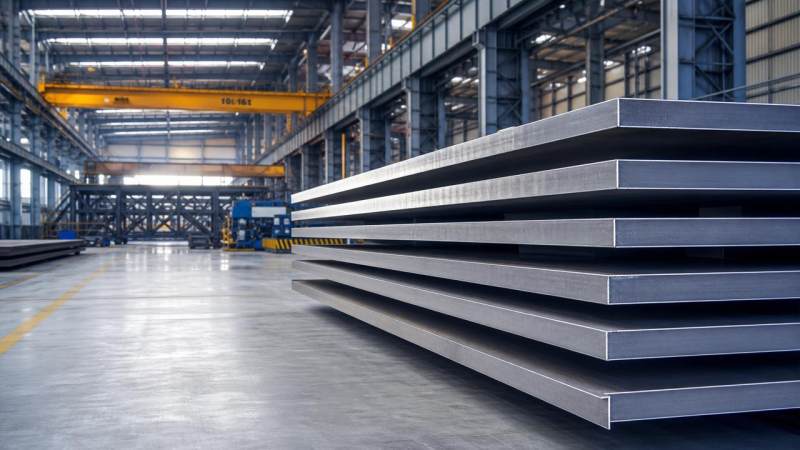
A high strength steel plate is often selected when structures must carry higher loads without excessive material weight.
This makes it valuable in bridges, heavy equipment, offshore structures, mining systems, transport frames, and industrial platforms.
Compared with conventional carbon steel plate, high strength steel plate can reduce section thickness while maintaining required mechanical performance.
The result may include lighter structures, easier transportation, lower foundation loads, and better utilization of available design space.
However, higher yield strength does not automatically mean better performance in every scenario.
Welding procedure, impact toughness, bending radius, fatigue exposure, and service temperature all influence final material suitability.
Scenario Background: Why Application Conditions Matter
Different projects place different demands on high strength steel plate, even when the same nominal grade is specified.
A crane boom may prioritize weight reduction and fatigue resistance, while a pressure-related frame may prioritize toughness and traceability.
A bridge component may require weather exposure evaluation, stable weld quality, and strict compliance with regional design codes.
In industrial manufacturing, flatness, surface quality, cutting performance, and predictable delivery can be as important as strength level.
Therefore, high strength steel plate selection should start from service conditions, not only from a strength number on a datasheet.
Structural Load-Bearing Scenarios: Strength with Safety Margin
In building frames, bridges, towers, and support structures, high strength steel plate can improve load-bearing efficiency.
The main advantage is the potential to reduce plate thickness while still meeting design load requirements.
This benefit can lower dead load and simplify installation when lifting capacity or foundation loading is limited.
The trade-off is that structural detailing becomes more important as strength increases.
Connection design, bolt bearing zones, weld access, and local buckling checks should be reviewed carefully.
For critical structures, high strength steel plate should be matched with certified standards such as ASTM, EN, JIS, or GB.
Heavy Equipment Scenarios: Weight Reduction and Fatigue Control
Mobile cranes, trailers, mining machinery, agricultural equipment, and lifting systems often use high strength steel plate for lighter designs.
Lower structural weight can improve fuel efficiency, payload capacity, and operating flexibility.
In these scenarios, fatigue performance should not be ignored.
Repeated vibration, shock loading, and welded details may create stress concentrations during long-term use.
A high strength steel plate with suitable toughness and controlled composition helps reduce failure risk in demanding equipment applications.
Cutting, forming, and welding parameters should be aligned before production begins.
Industrial Fabrication Scenarios: Weldability and Processing Balance
In workshops, high strength steel plate must remain practical for cutting, drilling, bending, machining, and welding.
Higher strength usually comes from alloying, heat treatment, or controlled rolling.
These methods can affect hardness, heat-affected zone behavior, and sensitivity to improper welding procedures.
Preheating, interpass temperature, filler material, and post-weld inspection may be required depending on grade and thickness.
For fabricated assemblies, compatibility with other steel components also matters.
Hongteng Fengda supplies angle steel, channel steel, beams, cold formed profiles, and customized structural components for integrated projects.
In some industrial packages, plate structures are combined with filtration, screening, or protective mesh elements.
For such requirements, Stainless Steel Welded Mesh can support filters, sieves, architecture, residences, chemical industry, and mine industry applications.
Available materials include SS 201, 304, 304L, 316, 316L, and 430 stainless steel wire.
Typical options cover 2-635 mesh, diameter 0.0008″-0.12″, open area 25-84.6, and customized roll dimensions.
Harsh Environment Scenarios: Toughness, Corrosion, and Temperature
Outdoor, marine, mining, low-temperature, and chemical environments require more than simple tensile performance.
A high strength steel plate used in cold regions may need verified impact toughness at specified temperatures.
In corrosive environments, coating systems, galvanizing compatibility, or weather-resistant grades may be required.
Abrasion exposure should also be separated from structural strength requirements.
If wear is dominant, abrasion-resistant plate may be more suitable than general high strength steel plate.
Environmental assessment should include humidity, chemicals, temperature cycles, impact risk, maintenance access, and expected design life.
Different Scenario Requirements at a Glance
Benefits of High Strength Steel Plate in Project Decisions
- Higher yield strength supports lighter and more efficient structural design.
- Reduced plate thickness can lower transportation and installation difficulty.
- Improved strength-to-weight ratio benefits mobile and lifting equipment.
- Proper grades can improve performance under demanding service loads.
- Standardized supply improves traceability, inspection, and project documentation.
These benefits explain why high strength steel plate is common in modern structural steel design.
The value becomes stronger when engineering, fabrication, and sourcing requirements are aligned from the start.
Trade-Offs That Should Be Evaluated Before Selection
- Weldability may require stricter procedures than mild steel plate.
- Forming radius may increase as strength and hardness rise.
- Material cost per ton may be higher than conventional grades.
- Availability may vary by thickness, grade, and standard.
- Improper substitution can create hidden safety and compliance risks.
A high strength steel plate should not be chosen only because it looks stronger on paper.
The best choice is the grade that meets structural demand while staying practical for fabrication and inspection.
Scenario Fit Recommendations for Reliable Use
- Define the load type, including static, dynamic, impact, and fatigue conditions.
- Confirm the required standard, grade, thickness, tolerance, and testing scope.
- Check whether the design needs toughness at low or specified temperatures.
- Review weldability with actual plate thickness and joint configuration.
- Evaluate cutting, bending, machining, and surface preparation requirements.
- Request mill certificates and traceable quality documents before shipment.
Hongteng Fengda supports customized structural steel solutions for global construction, industrial, and manufacturing projects.
Modern manufacturing facilities and strict quality control help maintain stable production capacity and consistent steel product quality.
Common Misjudgments in High Strength Steel Plate Applications
Assuming Higher Strength Always Reduces Total Cost
Higher strength may reduce weight, but it can increase welding, testing, forming, and qualification costs.
Total cost should include fabrication time, inspection requirements, logistics, and future maintenance exposure.
Ignoring Toughness in Cold or Impact Conditions
A high strength steel plate can meet yield strength requirements but still fail toughness expectations.
Impact testing requirements should be specified clearly when structures face low temperatures or sudden loading.
Treating All Standards as Equivalent
ASTM, EN, JIS, and GB grades may differ in chemistry, testing, tolerances, and acceptance rules.
Equivalent grade comparison should be supported by mechanical properties and project documentation, not only grade names.
Overlooking Lead Time and Batch Consistency
Special thickness or uncommon grade combinations may require longer production planning.
Stable sourcing helps reduce schedule risks, especially for projects with phased deliveries or repeated fabrication batches.
Sourcing Considerations for Global Steel Projects
Reliable supply of high strength steel plate depends on technical clarity and disciplined quality control.
Specifications should state grade, standard, thickness, tolerance, testing, surface condition, marking, packaging, and delivery schedule.
Documentation should include mill test certificates, heat numbers, inspection records, and compliance references when required.
For export projects, packaging and shipping protection also influence final plate condition at the jobsite or workshop.
Hongteng Fengda serves markets across North America, Europe, the Middle East, and Southeast Asia.
Its structural steel portfolio supports both standard specifications and OEM solutions for demanding project requirements.
Action Guide: Turning Material Choice into Project Value
Before confirming a high strength steel plate order, prepare a clear technical package and scenario-based requirement list.
Include drawings, applicable standards, operating conditions, fabrication methods, inspection requirements, and delivery expectations.
This reduces misunderstanding and helps identify the most suitable plate grade before production begins.
A well-selected high strength steel plate improves structural efficiency, but only when benefits and trade-offs are managed together.
For structural steel supply, customized components, or project-based material support, Hongteng Fengda can provide practical steel sourcing assistance.
The next step is to share specifications and service conditions, then verify the most reliable steel solution for the intended scenario.
Please give us a message


Please enter what you want to find