Hard Steel Wire: Best Uses and Bending Limits
Hard steel wire is valued for strength, wear resistance, and stable performance under load. It is widely used in construction, fabrication, lifting support, fencing, reinforcement, and industrial assemblies.
Knowing the best use of hard steel wire matters because high hardness improves strength, but it also reduces flexibility. If bending goes too far, cracking, springback, or permanent damage may occur.
This guide explains where hard steel wire performs best, how bending limits are judged in practice, and what checkpoints help you select the right specification safely.
Why a Clear Evaluation Process Matters
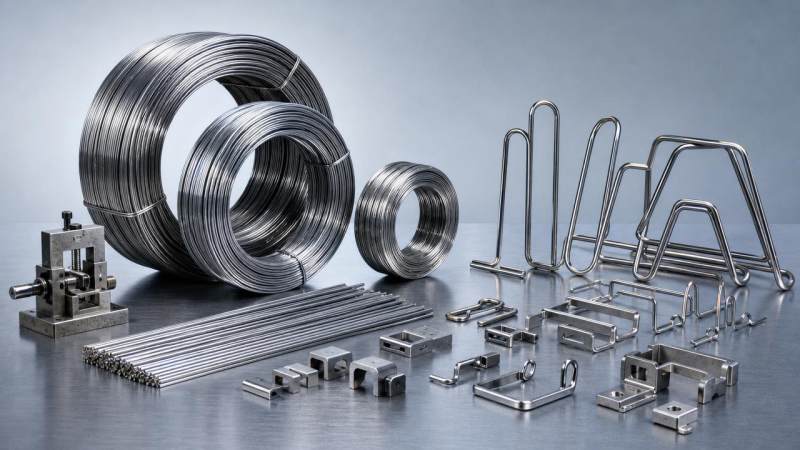
Hard steel wire is not a one-size-fits-all material. Diameter, carbon content, heat treatment, coating, and final use all affect bending behavior and service life.
A simple evaluation process helps reduce breakage, wasted material, and unsafe installation. It also improves cost control by matching wire properties to real working conditions.
In steel-related applications, the right choice often depends on balancing tensile strength with workable bend radius, corrosion needs, and repeated load exposure.
Core Points to Check Before Using Hard Steel Wire
- Confirm the wire grade, diameter, and tensile range before bending, because small changes in chemistry or hardness can greatly change bendability and crack risk.
- Check whether the hard steel wire will face static load, vibration, impact, or repeated cycling, since fatigue conditions require larger bend radii and tighter inspection.
- Review the required bend angle and final shape early, because tight bends near the minimum radius increase springback and may need tooling compensation.
- Inspect surface condition carefully, including scale, scratches, rust, and coating damage, because small defects often become crack starting points during bending.
- Match forming equipment to wire hardness and diameter, since poor roller alignment or undersized dies can overstress the section and distort the profile.
- Verify whether post-forming welding, galvanizing, or exposure to moisture is expected, because downstream processing may alter stress distribution or corrosion behavior.
- Use sample bends and destructive testing for critical jobs, especially when the hard steel wire must meet structural, safety, or export standard requirements.
Best Uses of Hard Steel Wire
1. Construction Ties and Reinforcement Support
Hard steel wire is often used where shape retention matters more than easy hand bending. It performs well in binding, support cages, mesh positioning, and reinforcement accessories.
For these uses, moderate forming is acceptable, but repeated rebending should be avoided. Once work hardening increases at the bend point, fracture risk rises quickly.
2. Fencing, Barriers, and Security Applications
In fencing and perimeter systems, hard steel wire offers stiffness, impact resistance, and shape stability. It is a practical choice for line wires, welded mesh, and barbed assemblies.
Bending should be limited to installation points and designed anchors. Sharp field bends can damage coatings and shorten service life in outdoor environments.
3. Springs, Clips, Fasteners, and Formed Parts
Some hard steel wire grades are selected for clips, pins, retention rings, and light spring elements. In these applications, precision forming and controlled bend radii are essential.
The main concern is not only the first bend, but also long-term fatigue. Small radii may pass initial inspection yet fail early under repeated movement.
4. Industrial Handling and Mechanical Guidance
Hard steel wire can support guides, hangers, retainers, and shaped mechanical connections where rigidity is needed. It is useful when low deformation under load is important.
In broader steel systems, related components must also meet load and dimensional targets. For example, transport infrastructure may combine wire supports with Rail products built from carbon steel or medium manganese steel.
Such rail products may include grades like U74, U71Mn, PD2, 55Q, and QU80, with lengths from 12m to 30m, thickness from 3mm to 24mm, and ISO9001-2008 compliance.
How to Understand Bending Limits in Practice
There is no universal single bending limit for every hard steel wire. The safe limit depends on diameter, hardness, microstructure, surface condition, and whether the bend is one-time or repeated.
A practical rule is that harder wire needs a larger inside bend radius. As wire diameter increases, the minimum safe radius usually increases as well.
For many cold-forming situations, an inside bend radius around 2 to 4 times wire diameter is a cautious starting point. Very hard or brittle grades may require more.
If the hard steel wire has coatings, plating, or surface hardening, limits can tighten further. Surface cracking may appear first in the coating, then continue into the base metal.
Springback is another key factor. Harder wire tends to return more after bending, so tooling often needs overbend allowance to achieve the target angle.
Practical Signs the Bend Is Too Tight
- Visible surface cracks or whitening at the outer bend zone.
- Flattening, necking, or distortion of the wire profile.
- Excessive springback that prevents dimensional control.
- Unexpected fracture during secondary forming or installation.
Application Notes for Different Working Conditions
Outdoor and Corrosive Environments
When hard steel wire is used outdoors, coating condition becomes critical. Bending after galvanizing or painting may damage protection at the most stressed area.
Use larger radii and inspect coating continuity. If corrosion resistance is essential, evaluate whether pre-forming before final coating is the safer route.
Load-Bearing or Safety-Related Assemblies
For structural retention, guides, or safety restraints, sample validation is necessary. Hard steel wire should be checked for bend performance, tensile behavior, and fatigue reliability.
Do not rely only on nominal diameter. Heat treatment and batch consistency can significantly affect final field performance.
Precision Fabrication
For formed parts with tight tolerances, test tooling with production-grade material. Hard steel wire often varies in springback more than softer low-carbon wire.
Lubrication, die condition, and feed alignment should be monitored closely to maintain repeatability and reduce micro-cracking.
Commonly Overlooked Risks
Ignoring surface scratches is a frequent mistake. Even shallow marks can become failure origins when hard steel wire is bent under high local strain.
Another risk is repeated adjustment during installation. Hard wire tolerates far less rebending than mild wire, especially near sharp corners.
Temperature also matters. Very cold conditions can reduce ductility and make brittle fracture more likely during field bending.
Mixing grades without traceability can create hidden quality issues. One batch may bend cleanly, while another fails due to different hardness or processing history.
Practical Selection and Execution Tips
- Start with the application load, environment, and target shape.
- Confirm wire grade, diameter tolerance, and finishing condition.
- Set a conservative trial bend radius before full production.
- Inspect bends visually and, if needed, with magnification.
- Avoid unnecessary rebending during assembly or correction.
- Document approved parameters for repeat orders and exports.
Where projects include broader structural steel supply, it helps to work with a source that understands grades, standards, fabrication limits, and coordinated delivery across connected steel products.
Conclusion and Next Step
Hard steel wire delivers strong, reliable performance when its hardness is matched to the real forming and service demands. The key is not maximum strength alone, but safe bendability.
Use a clear review process, test realistic bend radii, and inspect surface quality before approval. These steps reduce cracking, improve consistency, and help hard steel wire perform as intended.
For projects involving structural steel, formed components, or export specifications, careful material selection and validated forming limits are the safest path to long-term performance.
Please give us a message


Please enter what you want to find