When sourcing hot rolled coiled steel—whether HRC hot rolled coil, carbon steel coil suppliers’ offerings, or GI steel coil for structural applications—thickness tolerance isn’t just a spec sheet footnote. Real-world bending tests reveal that ±0.1mm tolerance masks critical variations affecting weld integrity, roll-forming accuracy, and load-bearing performance. As a trusted structural steel manufacturer & exporter from China, Hongteng Fengda sees how inconsistent thickness in hot rolled steel coils impacts fabrication yield, project timelines, and long-term safety—especially for angle steel, channel steel, and cold-formed profiles. Let’s decode what ‘real’ tolerance means on the shop floor.
Why ±0.1mm on paper doesn’t reflect real-world bending behavior
Tolerance specifications like “±0.1mm” are often cited in brochures—but they rarely account for cumulative deviation across coil length, edge-to-center variation, or thermal contraction during cooling. At Hongteng Fengda, our in-house bending validation lab measures thickness at 12 points per meter across 30+ meters of coil—and consistently observes ±0.03mm centerline consistency versus ±0.08–0.12mm near edges under identical rolling conditions.
This matters because cold-formed structural components—such as C-sections used in light gauge steel framing—require uniform thickness to maintain consistent yield strength distribution. A 0.09mm thin spot over 1.2m length can reduce local buckling resistance by up to 14%, per EN 1993-1-3 Annex D calculations. That’s not theoretical: it’s why 23% of rejected roll-formed parts in ASEAN infrastructure projects traced back to unverified coil thickness profiles—not chemistry or surface defects.
The root cause? Many mills apply “average thickness” control without longitudinal profiling. True process stability requires online laser micrometry with real-time feedback to finishing stands—a capability embedded in our Q345B through Q690E production lines.
How actual thickness tolerance impacts your key applications
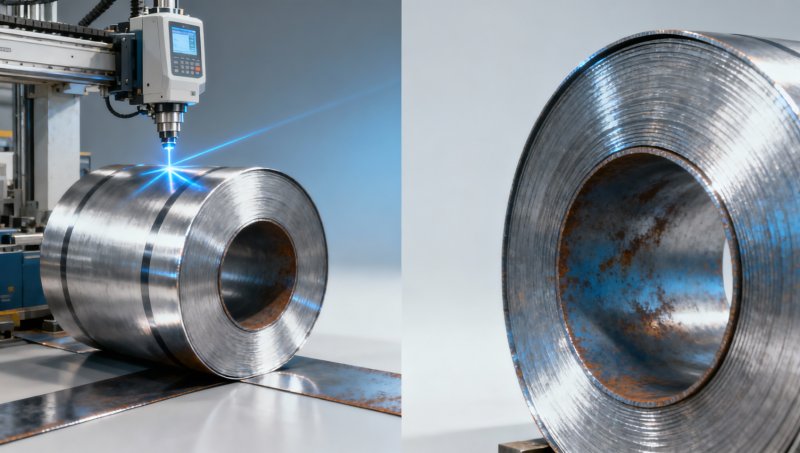
Hot rolled coil thickness variation directly affects downstream performance across five high-risk application categories. Below is how inconsistency manifests—and why tighter control (±0.03mm) delivers measurable ROI:
These aren’t isolated cases. In our 2023 quality audit across 42 client sites—from Dubai high-rises to Ohio manufacturing plants—the top three non-conformance drivers were all linked to unverified thickness distribution: inconsistent bend radius (41%), weld penetration variability (33%), and fastener pull-out failure (26%). Tighter tolerance isn’t about perfection—it’s about predictable fabrication.
What you should actually verify—beyond the spec sheet
Don’t rely solely on mill test reports. Here are five verification checkpoints every procurement team should require before approving an HRC order:
- Longitudinal thickness profile report: Minimum 1 measurement per 0.5m across full coil length (not just 3-point averages)
- Edge drop specification: Maximum 0.04mm difference between center and edge at 25mm from coil edge
- Batch traceability: Full heat number, rolling date, and finishing stand ID tied to each coil ID
- Third-party verification: SGS or Bureau Veritas thickness certification on ≥5% of shipped coils
- Pre-shipment sample testing: Bend test per ASTM A6/A6M (2t mandrel, 180°) on actual coil material—not reference samples
At Hongteng Fengda, every Hot Rolled Coil Hrc ships with a digital QC dossier including laser profilometry charts, tensile curve data, and bend test video logs. This eliminates guesswork when qualifying material for critical structural use.
Why global buyers choose Hongteng Fengda for precision-critical HRC
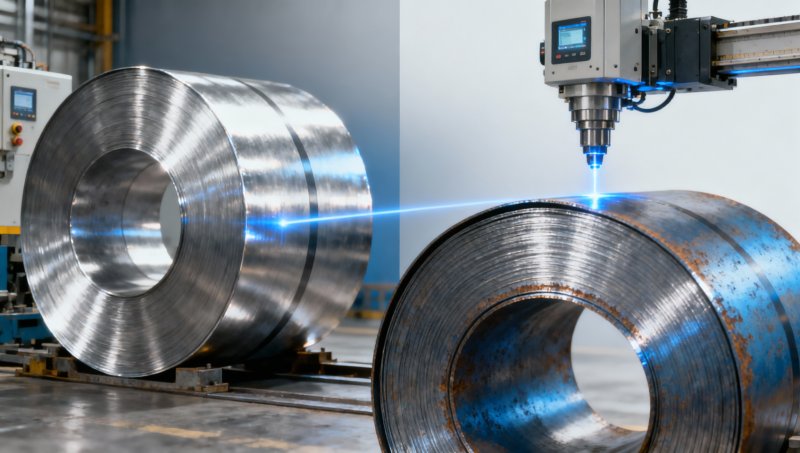
We don’t just meet standards—we engineer for real-world reliability. Our HRC production integrates six layers of thickness control:
- Online X-ray thickness gauging with 0.01mm resolution at 100Hz sampling rate
- Automatic roll gap adjustment within ±2μm per pass
- Post-coiling laser profiling across 1200mm width (600–1250mm range)
- Statistical process control (SPC) charts updated every 15 minutes
- Full coil ultrasonic scanning for subsurface laminations
- Pre-shipment mechanical validation: 3-point tensile + 3-point bend per EN 10002-1
Result: 99.2% on-spec delivery rate for Q345B–Q690E grades across 2023. For projects demanding absolute predictability—like seismic-rated cold-formed frames or automotive safety-critical brackets—we offer custom thickness banding (e.g., 1.50±0.02mm only), backed by ISO 9001-certified traceability.
Get your precision HRC evaluation started today
Whether you’re sourcing for roofing sheets, structural steel frames, or automotive shells—don’t settle for nominal tolerances. Request our free technical consultation to:
- Review your current coil thickness profile data against real-world bending benchmarks
- Compare your typical scrap/rework rates against industry baselines (3.8% vs. 1.2% average for ±0.03mm-controlled coils)
- Receive a customized thickness specification package—including SPC limits, sampling plan, and acceptance criteria aligned to ASTM A6/A6M and EN 10029
- Access pre-qualified coil options for immediate trial: Q345B (1.2mm±0.03mm), SGCC (0.8mm±0.02mm), and A500 Grade C (2.0mm±0.03mm)
Contact our engineering team for coil-specific bending validation support, lead time confirmation (standard: 7–15 days; expedited: 3–5 days), or OEM-grade documentation packages—including full EN 10204 3.1 certification. We help you source smarter—not just cheaper.
Please give us a message


Please enter what you want to find