For quality control and safety managers, selecting HRB600 steel rebar for high-rise buildings is not only a material decision but a core risk-control strategy. High-rise structures demand reinforcement with reliable strength, ductility, weldability, and compliance with strict project standards. This article examines the key safety factors behind HRB600 rebar selection, from mechanical performance and inspection requirements to supplier quality assurance, helping project teams reduce structural risks and support safer, more efficient construction outcomes.
In high-rise construction, reinforcement steel is exposed to complex load paths, vertical pressure, seismic demand, congestion at beam-column joints, and strict inspection routines. For QC and safety teams, HRB600 steel rebar for high-rise buildings must be evaluated through measurable criteria, not only price or availability.
Why HRB600 Rebar Matters in High-Rise Safety Control
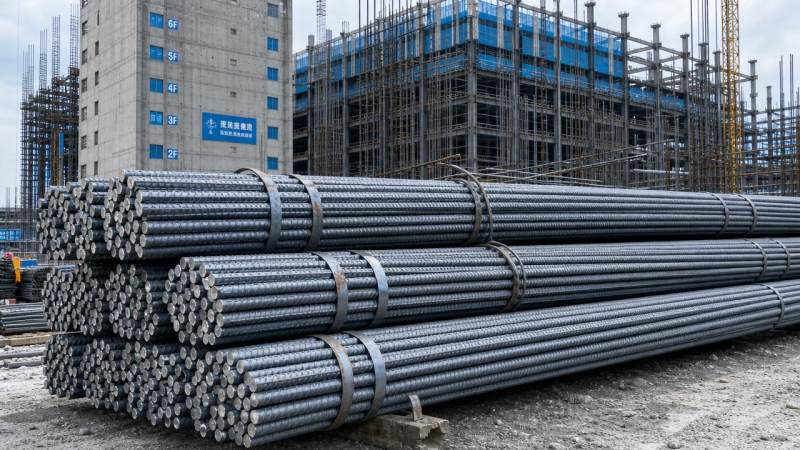
HRB600 is a high-strength hot-rolled ribbed steel bar commonly considered when designers need higher yield strength, reduced reinforcement congestion, or improved structural efficiency. In tall buildings, even a 5% to 15% reduction in bar quantity may help installation teams manage dense reinforcement zones more safely.
However, high strength alone does not guarantee safe performance. Quality control personnel need to verify elongation, bending performance, rib geometry, chemical composition, heat number traceability, and mill test certificates before the material enters critical structural areas.
Core safety value for vertical structures
For high-rise buildings above 20 floors, reinforcement reliability affects columns, shear walls, transfer beams, core tubes, and foundation rafts. These elements often operate under combined axial force, bending moment, shear force, and cyclic loading during wind or seismic events.
HRB600 steel rebar for high-rise buildings can support optimized design when it is used according to engineering calculations and applicable codes. Safety managers should confirm that substitution from lower grades is approved by the structural engineer and documented in the project quality plan.
Typical concerns for QC teams
- Whether the actual yield strength, tensile strength, and elongation match the project specification.
- Whether the rebar can pass bending and rebending tests without surface cracking.
- Whether welding or mechanical splicing procedures are compatible with the steel grade.
- Whether each bundle can be traced to a heat number, batch number, and test report.
These concerns are not administrative details. A missing heat number, unclear test report, or uncontrolled substitution can delay concrete pouring by 24 to 72 hours and increase site safety exposure during rework.
Mechanical Performance Factors QC Managers Should Verify
The first checkpoint for HRB600 steel rebar for high-rise buildings is mechanical performance. QC teams should not rely only on labels or supplier declarations; they should align inspection with contract standards, design drawings, and the project inspection and test plan.
The following table summarizes practical safety indicators often reviewed during incoming inspection and third-party testing. Exact acceptance limits should always follow the specified standard and approved engineering documents.
The key conclusion is simple: high-strength reinforcement must be tested as a performance system. Yield strength, ductility, surface quality, and dimensional tolerance should be reviewed together before installation approval.
Strength-to-ductility balance
High-rise structures need controlled deformation capacity, especially in seismic regions. If reinforcement is too brittle, the structure may lose energy dissipation capacity under repeated loading, even when the nominal strength appears adequate.
Safety managers should request tensile test curves where available, not only final numerical values. A 3-point review of yield behavior, ultimate strength, and elongation helps identify abnormal batches before they reach core wall or column zones.
Weldability and splicing control
When HRB600 rebar is connected through welding or mechanical couplers, connection quality becomes a critical safety factor. Pre-production trials, operator qualification, and sample testing should be completed before large-scale site installation.
For mechanical splices, QC teams commonly check thread length, coupler marking, torque control, exposed thread count, and tensile test results. These 5 checkpoints reduce the risk of hidden connection defects.
Inspection Workflow for High-Rise Rebar Procurement
A reliable inspection workflow helps safety teams control risk from purchasing to concrete placement. For HRB600 steel rebar for high-rise buildings, the process should be documented in 4 stages: supplier review, pre-shipment inspection, incoming inspection, and installation verification.
Stage 1: Supplier qualification
Before placing an order, buyers should assess production capacity, standard compliance, previous export experience, and quality documentation. A supplier serving ASTM, EN, JIS, and GB requirements can help reduce communication gaps in international projects.
Hongteng Fengda, as a structural steel manufacturer and exporter from China, supports global construction and industrial projects with standard specifications and customized steel solutions. Its quality control approach is relevant for buyers who need stable supply and dependable lead times.
Stage 2: Pre-shipment documentation
Pre-shipment review should include mill test certificates, packing lists, bundle tags, heat numbers, dimensional reports, and loading photos. For large projects, documentation should be submitted at least 3 to 7 days before vessel booking.
If the project uses multiple steel products, coordination becomes more important. For example, structural framing may also require cold formed profiles such as C Sections Steel for purlins, wall beams, roof trusses, brackets, or light industrial components.
These C-shaped steel sections can be supplied in galvanized coating, powder coating, or black varnish finishes, with common lengths of 6 m, 9 m, and 12 m. Typical thickness ranges from 1 mm to 12 mm, and processing may include bending, welding, punching, decoiling, and cutting.
Documents to request before shipment
- Material test certificate matching the ordered grade, diameter, and heat number.
- Dimensional inspection report for diameter, weight per meter, and rib geometry.
- Photos of bundle tags, markings, packaging condition, and loading arrangement.
- Statement of compliance with the project standard, such as GB, ASTM, EN, or JIS.
- Traceability list linking batch numbers to shipping quantities and container numbers.
This 5-document package gives QC teams a practical basis for acceptance planning. It also helps safety managers identify inconsistencies before the material reaches the project site.
Site Acceptance and Installation Risk Factors
Even properly manufactured HRB600 steel rebar for high-rise buildings can create risk if site acceptance is weak. Transport damage, mixed bundles, surface contamination, wrong storage, and incorrect cutting schedules can all affect installation quality.
For high-rise projects, site teams should create a receiving checklist that can be completed within 24 hours of delivery. Critical reinforcement should not enter fabrication until the QC engineer signs off the batch.
The table below converts common site risks into practical inspection actions. It can be adapted for project quality plans, safety briefings, or subcontractor control meetings.
The main lesson is that material acceptance must connect with site execution. A batch may be compliant on paper, but poor storage, wrong bending, or unapproved substitution can still create structural safety concerns.
Storage and traceability discipline
Rebar should be stored on supports rather than directly on wet ground. For coastal or humid sites, tarpaulin protection and ventilation are useful because trapped moisture can accelerate corrosion during long storage periods exceeding 2 to 4 weeks.
Traceability should continue after cutting and bending. Tags on fabricated bars should identify diameter, grade, drawing reference, member location, and batch information so inspectors can link installed steel to approved documents.
Concrete placement coordination
Dense reinforcement zones require coordination between bar fixers, formwork teams, MEP installers, and concrete crews. HRB600 may reduce congestion in some designs, but clear spacing, cover thickness, and lap locations still require careful verification.
Before pouring, safety managers should verify at least 6 items: bar diameter, grade, spacing, cover blocks, splice location, and cleanliness. These checks are especially important in transfer floors, core walls, and podium-to-tower transition areas.
Supplier Quality Assurance for International Projects
For overseas buyers, supplier quality assurance is a major part of risk control. HRB600 steel rebar for high-rise buildings must arrive with consistent specifications, proper packaging, and documents that can satisfy consultants, contractors, and local authorities.
A reliable steel supplier should support both technical and commercial needs: clear quotation, standard confirmation, production scheduling, inspection cooperation, export packing, and logistics coordination. Lead times often depend on order volume, port schedule, and customization requirements.
What to evaluate before placing an order
- Standard compatibility, including GB, ASTM, EN, JIS, or project-specific requirements.
- Production capacity for stable delivery across multiple shipments or construction phases.
- Inspection support, including third-party testing, pre-shipment checks, and photo documentation.
- Export experience for North America, Europe, the Middle East, and Southeast Asia.
- Ability to coordinate related structural steel products and customized components.
Hongteng Fengda supplies angle steel, channel steel, steel beams, cold formed profiles, and customized structural components. This broader product capability helps procurement teams consolidate sourcing when a project requires both reinforcement steel and structural profiles.
Practical communication points
Buyers should provide grade, diameter, length, tolerance, standard, quantity, packaging preference, destination port, and inspection requirements. A complete inquiry can shorten quotation time from several days to 24 to 48 hours in many routine cases.
If OEM processing is needed, drawings should clearly show dimensions, holes, bending positions, cutting lengths, and surface treatment requirements. For related steel profiles, tolerance such as ±1% may be discussed based on product type and standard.
Common Mistakes When Selecting HRB600 Rebar
Many procurement risks appear when teams treat HRB600 only as a stronger replacement for conventional reinforcement. In reality, HRB600 steel rebar for high-rise buildings requires engineering confirmation, process control, and a clear acceptance method.
Mistake 1: Approving substitution without design review
A higher grade does not automatically fit every structural member. Bar spacing, anchorage length, crack width control, ductility class, and seismic detailing may change when reinforcement grade changes from one level to another.
Mistake 2: Focusing only on unit price
A low unit price can be offset by re-testing, delayed delivery, documentation correction, or rejected batches. QC teams should compare total procurement risk, including inspection cost, schedule impact, and non-conformance handling time.
Mistake 3: Ignoring fabrication limits
High-strength bars may require more attention during bending, cutting, and splicing. Fabrication yards should confirm equipment capability, bending pins, operator training, and trial pieces before processing large quantities.
A 6-step safer selection path
- Confirm the design standard and member locations where HRB600 is permitted.
- Review mechanical properties, chemical composition, and test certificate format.
- Check supplier production capability and export quality control process.
- Arrange sampling, independent testing, and pre-shipment inspection where required.
- Set site acceptance rules for storage, bending, splicing, and traceability.
- Close non-conformance reports before installation in critical structural zones.
This path gives safety managers a practical structure for decision-making. It also helps procurement teams avoid conflicts between commercial urgency and structural quality requirements.
Final Recommendations for Safer High-Rise Projects
HRB600 steel rebar for high-rise buildings can support safer and more efficient construction when strength, ductility, weldability, traceability, and site execution are controlled together. The safest procurement decision is the one supported by test data, approved drawings, and disciplined inspection.
For QC and safety managers, the most important action is to establish measurable acceptance criteria before purchasing. Mechanical performance, documentation, batch traceability, and installation checks should be planned as one connected quality system.
Hongteng Fengda provides structural steel products and customized solutions for global construction, industrial, and manufacturing projects. With manufacturing capability, international standard awareness, and export service experience, the company supports buyers seeking reliable steel supply from China.
If your project requires HRB600 reinforcement, structural profiles, or coordinated steel sourcing for a high-rise development, contact Hongteng Fengda to discuss specifications, inspection needs, delivery planning, and customized solutions for your project.
Please give us a message


Please enter what you want to find