Selecting HRB600 steel rebar for bridge construction requires careful evaluation of strength, ductility, weldability, corrosion resistance, and compliance with project standards. As bridge designs demand higher load capacity and longer service life, HRB600 rebar offers technical advantages for reinforced concrete structures exposed to dynamic traffic loads and harsh environments. This article explores practical use cases, performance considerations, and procurement factors to help technical evaluators assess whether HRB600 rebar is suitable for bridge decks, piers, foundations, and other critical structural components.
For bridge owners, design institutes, EPC contractors, and steel procurement teams, the question is not only whether the rebar is strong enough. The more important issue is whether its performance profile matches the structural design, construction method, inspection plan, and service environment over 50 to 100 years.
Why HRB600 Rebar Matters in Modern Bridge Engineering
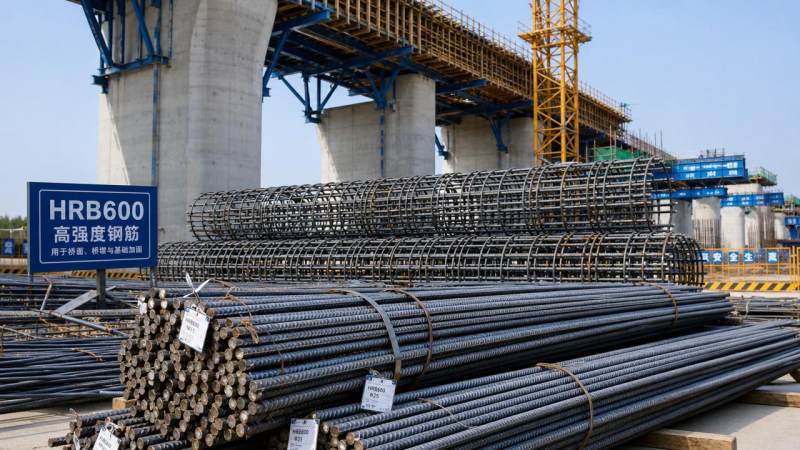
HRB600 steel rebar for bridge construction is typically considered when reinforced concrete members require higher yield strength than conventional grades. Its nominal yield strength level of 600 MPa allows engineers to optimize reinforcement layouts where permitted by code and project approval.
In bridge applications, reinforcement is exposed to repeated traffic loading, thermal cycling, shrinkage stress, and potential chloride ingress. These factors make mechanical stability and material traceability more important than simple price comparison.
Higher strength with design discipline
The main appeal of HRB600 rebar is its strength-to-steel ratio. In suitable designs, it can reduce bar quantity, congestion, or lap length pressure, especially in dense pier caps, bridge decks, and foundation cages.
However, higher strength does not automatically mean easier construction. Technical evaluators should confirm ductility class, elongation, bend performance, seismic detailing rules, and whether the design standard recognizes HRB600 in the intended structural member.
Key technical checkpoints
- Confirm yield strength, tensile strength, elongation, and bend test values against GB or project-specific requirements.
- Review bar diameter availability, usually from common bridge sizes such as 16 mm, 20 mm, 25 mm, 28 mm, and 32 mm.
- Check welding or mechanical splicing compatibility before approving shop drawings and reinforcement cage assembly.
- Assess corrosion protection measures for marine bridges, de-icing salt zones, and humid river crossings.
A practical evaluation should compare structural benefit, detailing feasibility, testing scope, and supply reliability. This approach prevents a high-strength material from creating delays during fabrication, inspection, or site installation.
Use Cases for HRB600 Steel Rebar in Bridge Construction
Different bridge components impose different demands on reinforcement. HRB600 steel rebar for bridge construction is most valuable where strength, space efficiency, crack control, and fatigue resistance must be balanced carefully.
The following table summarizes common use cases and the technical issues evaluators should review before specifying HRB600 rebar in bridge projects.
The table shows that HRB600 is not a one-size-fits-all reinforcement choice. It performs best when the design team converts strength advantages into measurable detailing, durability, and construction benefits.
Bridge decks and fatigue-sensitive zones
Bridge decks face millions of stress cycles over their service life. HRB600 steel rebar for bridge construction may support optimized reinforcement layouts, but fatigue detailing and crack control remain essential.
For decks exposed to de-icing salts, evaluators should check concrete cover, waterproofing, drainage design, and whether epoxy-coated, galvanized, or stainless reinforcement is required by the project specification.
Piers, columns, and seismic regions
In pier columns, high yield strength can be useful, but ductility is critical. For seismic bridge projects, reinforcement behavior after yielding must be verified through code requirements and material test data.
Technical evaluators should avoid approving HRB600 solely on yield strength. Elongation, bendability, rib geometry, and bar-to-concrete bond performance must be reviewed together during material qualification.
Where higher strength may reduce congestion
Pier caps, pile caps, and bearing zones often suffer from reinforcement congestion. If the design standard permits, HRB600 may help reduce bar counts by 10% to 20% in selected members.
The actual reduction depends on safety factors, bar diameter, anchorage rules, and serviceability limits. A revised calculation should always precede procurement, bending schedules, and site approval.
Performance Criteria Technical Evaluators Should Verify
When reviewing HRB600 steel rebar for bridge construction, technical teams should establish a checklist covering mechanical properties, dimensional tolerance, chemical composition, surface quality, and documentation.
A supplier evaluation should include at least 6 inspection points: mill certificates, heat number traceability, tensile tests, bend tests, dimensional measurement, and packaging condition before shipment.
Mechanical and dimensional requirements
The basic mechanical review usually includes yield strength, tensile strength, elongation after fracture, and bending performance. For bridge projects, consistency across multiple heats can be as important as peak test values.
Dimensional control affects weight calculation, bond strength, and fabrication accuracy. Bar diameter, rib height, rib spacing, and theoretical weight should be checked according to the specified standard.
- Request mill test certificates for each heat or batch, not only a general quality statement.
- Define acceptable diameter tolerance and theoretical weight deviation before contract signing.
- Confirm bending schedule feasibility for common diameters from 12 mm to 40 mm.
- Specify bundle labels, heat numbers, and traceability marks for site inspection.
Weldability, splicing, and fabrication planning
Not every bridge detail should rely on welding. If welded joints are planned, carbon equivalent, preheating requirements, welding procedure qualification, and post-weld inspection must be evaluated.
Mechanical couplers are often preferred for larger bars, especially in pile cages and pier columns. They can reduce lap length, improve alignment, and simplify quality inspection at critical joints.
Bridge construction frequently uses multiple steel categories beyond rebar. Temporary works, brackets, purlins, and supporting frames may require channel sections with weldability and corrosion protection.
For such auxiliary structures, Hongteng Fengda supplies Metal Channel in materials including Q195, Q235B, Q345B, duplex grades, and stainless options such as 304 and 316.
Typical channel parameters include 1.5 mm to 25 mm thickness, 80 mm to 160 mm height, and 6 m to 12 m length, with customized lengths available for project packaging.
Related steel coordination on bridge sites
Coordinating rebar, structural sections, brackets, and temporary frames under one documentation system reduces procurement errors. It also helps contractors align delivery schedules across 2 to 4 construction stages.
For international buyers, standards such as ASTM, EN, JIS, BS, DIN, and GB/T should be clarified early. This avoids mismatches between design documents, inspection procedures, and customs documentation.
Procurement Strategy and Quality Control for Global Projects
Sourcing HRB600 steel rebar for bridge construction is a technical procurement task, not a commodity purchase. Price, availability, compliance, logistics, and inspection readiness should be assessed together.
Hongteng Fengda supports global construction and industrial buyers with structural steel supply, customized components, standard specifications, OEM solutions, and quality control aligned with major international standards.
The following procurement matrix helps technical evaluators compare suppliers and reduce risks before approving purchase orders for bridge reinforcement or related structural steel packages.
The key conclusion is that reliable supply depends on controlled details. A technically strong rebar grade can still fail procurement expectations if documentation, packing, or delivery timing is weak.
Inspection before shipment
Pre-shipment inspection is especially useful for overseas bridge projects. It can verify quantity, diameter, surface condition, bundle labels, certificate consistency, and loading condition before cargo leaves port.
For large bridge packages, buyers may divide inspection into 3 stages: production verification, finished material sampling, and container or vessel loading supervision. This reduces disputes after arrival.
Logistics and site sequencing
Rebar should arrive according to the construction sequence, not simply as one large shipment. Deck bars, pile cage bars, pier bars, and couplers often follow different installation timelines.
For export orders, technical evaluators should coordinate packing lists with bar marks, bundle weights, and storage zones. Clear sequencing can save several handling steps during site unloading.
Common Misjudgments When Specifying HRB600 Rebar
HRB600 steel rebar for bridge construction can deliver meaningful benefits, but common misjudgments may reduce its value. Most problems occur when material selection is separated from structural detailing.
Mistake 1: Treating yield strength as the only decision factor
A 600 MPa yield grade is attractive, yet bridges also require ductility, bond reliability, fatigue performance, and corrosion strategy. These issues determine long-term serviceability and inspection outcomes.
Mistake 2: Ignoring constructability
If reduced bar quantity creates excessive spacing or anchorage difficulty, the design may not be practical. Site teams must be able to bend, place, tie, splice, and inspect reinforcement efficiently.
Mistake 3: Delaying supplier qualification
Supplier qualification should start before final procurement. A 7 to 15 day document review period is common when projects require certificates, sample testing, and technical clarification.
- Define the design standard, grade, diameter range, and testing requirements.
- Request certificates, sample data, and quality control procedures from the supplier.
- Confirm fabrication needs such as bending, cutting, couplers, or welding restrictions.
- Align packaging, shipping documents, and inspection points before production starts.
This 4-step approach gives evaluators a structured basis for approval. It also makes commercial negotiation more accurate because technical risks are identified before order confirmation.
How Hongteng Fengda Supports Technical Buyers
Hongteng Fengda is a structural steel manufacturer and exporter from China, serving construction, industrial, and manufacturing projects across North America, Europe, the Middle East, and Southeast Asia.
The company supplies angle steel, channel steel, steel beams, cold formed profiles, customized components, and related structural steel solutions under standards such as ASTM, EN, JIS, and GB.
What technical evaluators can request
- Grade comparison support for HRB600 rebar and related bridge reinforcement requirements.
- Mill certificate review, dimensional verification, and export documentation coordination.
- Customized structural steel components for temporary works, brackets, frames, and project-specific assemblies.
- Stable production planning for phased deliveries, mixed steel packages, and repeat procurement.
For bridge projects, the greatest value comes from connecting engineering requirements with manufacturing control. This reduces sourcing uncertainty and helps buyers maintain predictable project schedules.
HRB600 steel rebar for bridge construction is suitable when high strength, durability planning, and code compliance are evaluated together. It can support bridge decks, piers, foundations, and congested reinforcement zones when properly specified.
Technical evaluators should focus on mechanical properties, ductility, corrosion exposure, splicing method, documentation, and supplier reliability. These factors determine whether HRB600 rebar delivers practical value beyond nominal strength.
If your project requires bridge reinforcement review, structural steel coordination, or export-ready steel supply from China, contact Hongteng Fengda to discuss specifications, delivery plans, and customized solutions.
Please give us a message


Please enter what you want to find