Choosing the correct H-beam size is one of the most important steps in structural steel coordination. A beam that looks acceptable on paper can still create fit-up problems on site if flange width, web thickness, section depth, length tolerance, or connection details are not aligned with the real installation conditions. These mistakes often lead to delayed erection, site cutting, welding corrections, bolt misalignment, or costly replacement. In steel construction, where schedules depend on sequence and precision, understanding common H-beam size errors helps reduce rework, improve fabrication accuracy, and maintain safer, more predictable project delivery.
H-beam sizing basics and why fit-up problems happen
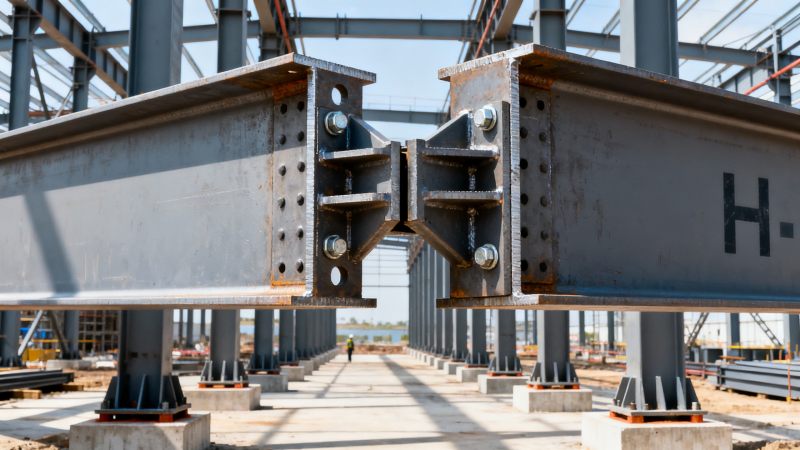
An H-beam is defined by several dimensions, not only by overall depth. In practice, the section depth, flange width, flange thickness, web thickness, root radius, straightness, camber, length, and hole layout all influence whether the member fits correctly during erection. Site fit-up issues usually happen when one of these variables is assumed rather than checked against the approved structural drawings, fabrication drawings, and connection design.
The most common misunderstanding is treating one beam designation as universally interchangeable across standards. ASTM, EN, JIS, and GB systems may contain sections that appear similar in nominal size but differ in actual geometry and mass. Even a small difference in flange width or web thickness can affect end plate alignment, bolt edge distance, coping details, or seating at supports. For structural steel projects with multiple suppliers or international sourcing, this is a major source of mismatch.
Fit-up is also affected by practical site realities. Columns may be slightly out of plumb within tolerance, concrete embeds may shift, and connected members may carry accumulated dimensional variation. When the selected H-beam size leaves no installation allowance, the result is conflict in the field. That is why beam selection should never be separated from tolerance planning and connection review.
Current industry concerns around H-beam specification control
In today’s steel supply chain, H-beam specification control has become more sensitive because projects increasingly combine global procurement, BIM coordination, prefabrication, and compressed installation schedules. A small error in section selection can affect several downstream activities at once.
Reliable steel manufacturers address these risks through stricter dimensional inspection, clearer section data, and early drawing coordination. For global structural steel supply, consistency in material grade, manufacturing tolerance, and documentation is just as important as the strength design itself.
Common H-beam size mistakes that affect site installation
Several recurring mistakes explain most site fit-up problems involving an H-beam. Each one appears minor at procurement stage but becomes expensive during erection.
1. Confusing nominal designation with actual dimensions
A beam may be ordered based on a familiar section name without checking full dimensional data. If flange width or web thickness differs from the connection design, bolt holes, stiffeners, clip angles, and end plates may no longer align. This is especially common when converting between regional standards.
2. Ignoring tolerance stack-up
The beam itself may be within tolerance, yet still fail to fit because connected parts also carry allowable deviation. Length, straightness, hole position, plate thickness, and base condition can accumulate. A tight node with no erection allowance is vulnerable even when every single item passes inspection.
3. Overlooking flange thickness in bolted connections
Flange thickness affects bolt grip length, washer seating, end plate design, and weld preparation. If an alternate H-beam has a thicker or thinner flange than specified, the connection may need different bolt lengths or revised detailing.
4. Selecting section depth without checking surrounding interfaces
The overall depth of the beam influences slab penetration, deck support, clearance for MEP systems, and connection elevation. A deeper section may improve structural capacity but cause clashes with roofing lines, wall framing, or service zones.
5. Missing length conditions at supports and splices
A beam cut to theoretical drawing length may not fit the real support condition if bearing gaps, shim allowances, thermal movement, or splice plate thickness are not considered. Length issues are among the fastest ways to stop installation progress on site.
In related framing systems, secondary members also require the same level of dimensional control. For example, Z-beam sections used for purlins, wall beams, lightweight roof systems, brackets, and mechanical support frames must match thickness, edge condition, and length requirements precisely. Available in materials such as Q235B, Q345B, S275, S355, A36, and A572, with thickness from 6-25mm, length from 2~12m or customized, and tolerance around ±1%, these profiles show how even light structural members depend on accurate manufacturing for smooth assembly. Options such as perforated or galvanized coated finishes, plus CE, SGS, BV, and ISO compliance, are especially useful where repeatable installation quality matters.
Where H-beam sizing errors usually appear in real projects
Not every steel application is equally sensitive to size variation. The following scenarios often expose H-beam specification mistakes early and clearly.
These cases show that H-beam fit-up is not only a design issue. It is a coordination issue involving engineering, detailing, fabrication, inspection, logistics, and field installation.
Practical steps to prevent H-beam fit-up mistakes
Preventing site problems starts long before the steel arrives. A disciplined review process can greatly reduce the chance of H-beam mismatch.
- Verify full section geometry, not only beam designation or weight per meter.
- Check standard system carefully when sourcing internationally, especially ASTM, EN, JIS, and GB conversions.
- Review beam size together with connection details, bolt lengths, weld access, and plate thickness.
- Allow for erection tolerance and accumulated dimensional variation at critical nodes.
- Confirm cut length logic at supports, splices, and bearing seats before fabrication release.
- Request dimensional inspection records for flange width, web thickness, straightness, and hole position.
- Use trial assembly or digital fit-check for high-risk structural steel packages.
A capable structural steel supplier can support this process by offering stable production, standard-compliant manufacturing, and clear technical communication. For export projects, it is valuable to work with a producer that understands customized sections, international quality requirements, and dependable lead times. That reduces sourcing risk and improves the chance that each H-beam will arrive ready for installation rather than correction.
Next-step actions for better H-beam coordination
When reviewing an upcoming steel package, start with the highest-risk members and ask a simple question: does the selected H-beam match the actual connection and site condition in full dimension, tolerance, and standard system? Build a review checklist around section geometry, support conditions, fabrication tolerance, and installation clearance. Then compare procurement data, shop drawings, and erection requirements before production begins.
For projects involving global supply, customized fabrication, or mixed structural systems, early technical alignment delivers the greatest value. Clear documentation, consistent quality control, and manufacturer support can prevent avoidable fit-up issues and keep steel erection on schedule. A well-specified H-beam is more than a material item; it is a key part of efficient structural execution.
Please give us a message


Please enter what you want to find