Understanding h shaped steel beam span and stability is essential for engineers, contractors, and buyers comparing structural options for building projects. This guide explains the key factors that influence load capacity, support conditions, and safe design performance, helping information-focused readers make more informed decisions when selecting reliable structural steel solutions.
What Readers Usually Want to Know First About H Shaped Steel Beam Performance
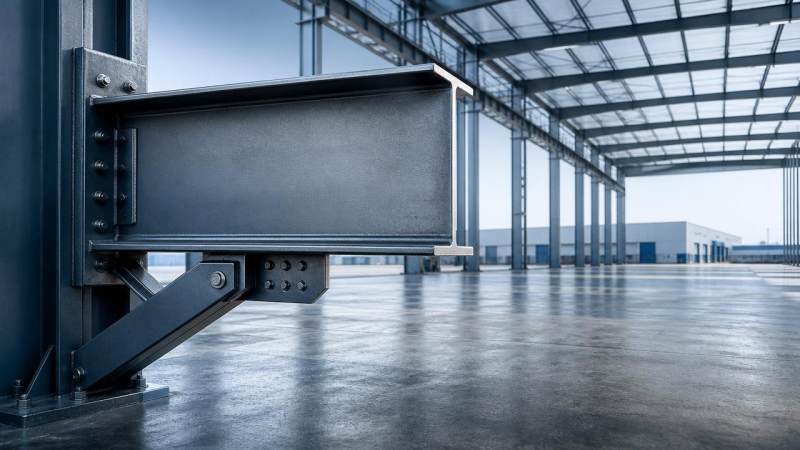
When people search for h shaped steel beam span and stability basics, they usually want a practical answer: how far can the beam span safely, and what makes it stable enough in real structures?
The short answer is that span capacity depends on section size, steel grade, loading type, support conditions, lateral restraint, and serviceability limits such as deflection, not just beam depth alone.
In other words, there is no single universal span number for every h shaped steel beam. A beam that works well in one warehouse or platform may fail in another layout.
For information-focused readers, the most useful approach is to understand the decision factors behind beam selection. That helps you compare options intelligently before requesting engineering calculations or supplier quotations.
Why H Shaped Steel Beam Sections Are Common in Structural Projects
An h shaped steel beam is widely used because its flange and web arrangement provides efficient resistance to bending and shear while keeping material use relatively economical for many spans.
The wider flanges give the section strong bending performance, especially for floor beams, roof framing, mezzanines, industrial support systems, and portal frame structures requiring reliable load transfer.
Compared with less efficient shapes, the h shaped steel beam often offers a better balance between strength, fabrication convenience, and compatibility with standard structural connection methods.
That said, a good section is only part of the answer. Span and stability still depend heavily on how the beam is supported, braced, loaded, and connected to surrounding members.
What Actually Determines the Span of an H Shaped Steel Beam
The most important point for non-specialist readers is that span is not decided by beam label alone. Engineers evaluate the complete structural situation before confirming a safe allowable span.
First, the magnitude of the load matters. Dead loads from slabs, roofing, finishes, equipment, and self-weight combine with live loads from people, storage, vehicles, or machinery.
Second, the way the load is applied changes beam behavior. Uniform loads across the span produce different bending patterns from concentrated point loads or moving equipment loads.
Third, support conditions have a major effect. A simply supported beam behaves differently from a continuous beam, fixed-end beam, or cantilever arrangement with the same section size.
Fourth, the unbraced length strongly affects stability. If the compression flange is not laterally restrained, the beam may be limited by lateral torsional buckling before reaching full bending strength.
Fifth, serviceability criteria can control the design. Even if the beam has enough strength, too much deflection or vibration may make it unsuitable for floors, walkways, or sensitive equipment areas.
Finally, local code requirements must be followed. International projects often reference ASTM, EN, JIS, or GB standards, and the design rules used can influence final section selection.
Strength Is Not the Same as Stability
Many buyers assume that a stronger steel section automatically means a safer beam. In reality, a beam can have high material strength yet still face stability problems under certain conditions.
Strength refers to the beam’s ability to resist bending, shear, bearing, and local stresses without exceeding design limits. Stability concerns how the member behaves as a shape under load.
A common example is lateral torsional buckling. When the compression flange is free to move sideways or twist, the beam may buckle before the steel reaches its full yield capacity.
This is why two beams with the same material grade can perform very differently if one has proper floor deck restraint or purlin bracing while the other remains laterally unsupported.
For practical comparison, readers should treat strength and stability as linked but separate checks. A good design must satisfy both, along with deflection and connection requirements.
How Support Conditions Change Span Capacity in Real Projects
Support conditions are often underestimated by buyers during early selection. Yet they can significantly increase or reduce the practical span of an h shaped steel beam in service.
A simply supported beam has high positive bending in the middle of the span and usually larger deflection than a continuous beam carrying similar loading over multiple supports.
A continuous beam can distribute moments more efficiently, sometimes allowing a lighter section. However, that benefit comes with more complex analysis and different connection detailing requirements.
Cantilever beams are more demanding because negative bending and deflection can become critical quickly. This means a section that works over a simple span may be inadequate as a cantilever.
Column stiffness and seat details also matter. A support that appears rigid in concept may behave more flexibly in construction, which affects actual load transfer and beam response.
Why Deflection Limits Often Control Beam Selection
In many practical buildings, the governing issue is not ultimate failure but excessive movement. Deflection can damage finishes, create ponding risk, affect doors, or cause an uncomfortable floor feel.
Common design practice uses deflection limits based on span ratios, but the acceptable limit depends on the use of the structure and what the beam supports.
For example, a beam carrying brittle finishes or partitions may need a stricter deflection limit than a beam supporting open industrial space with fewer sensitivity concerns.
That is why buyers comparing only weight per meter or section depth may miss the real issue. A cheaper beam may require replacement if serviceability performance is not acceptable.
In project discussions, asking for both strength adequacy and deflection compliance is a more useful screening method than asking only for maximum span figures.
What Engineers Check When Evaluating Beam Stability
Stability evaluation typically includes the unbraced compression flange length, load position relative to the shear center, moment gradient, web slenderness, flange slenderness, and torsional resistance.
If loads are applied above the beam, they can increase destabilizing effects. If the beam is restrained by decking, secondary members, or bracing systems, stability may improve significantly.
Connection behavior also matters. End plates, stiffeners, seat angles, and welded details can change how forces enter the beam and how much restraint is realistically provided.
For long spans or heavily loaded industrial applications, engineers may also review vibration, dynamic effects, fatigue exposure, and the interaction between the beam and surrounding frame.
This broader evaluation is one reason responsible structural steel suppliers provide section data and standard compliance, while final beam design should remain project-specific.
Typical Situations Where H Shaped Steel Beam Selection Goes Wrong
One common mistake is selecting a section from a chart without checking actual loading assumptions. Generic span tables may be based on lighter loads than your project requires.
Another mistake is ignoring lateral restraint. A beam that performs well with composite slab restraint may be unsafe if used in an open roof frame with long unbraced length.
Some buyers also focus too much on initial steel tonnage. Reducing section size can increase fabrication complexity, bracing needs, or long-term service problems, which may erase cost savings.
Connection simplification can create problems as well. If support details are weaker than assumed in design, the installed beam may not behave like the original structural model.
Finally, imported material should match the required standard, chemical composition, mechanical properties, dimensional tolerance, and traceability needed for the target market.
How Buyers and Contractors Can Make Better Early-Stage Decisions
If you are comparing structural options before full engineering, begin with the project function: warehouse, factory, platform, mezzanine, commercial floor, equipment support, or long-span roof.
Then define the basic design inputs clearly: span length, spacing, load types, estimated magnitudes, support layout, expected restraint, corrosion environment, and applicable design standard.
With those inputs, you can request more meaningful supplier support and avoid vague questions such as “What is the span of this beam size?” without project context.
It is also useful to compare alternatives using total project value, not only section weight. Fabrication ease, shipping efficiency, lead time, and installation speed can affect the final choice.
For international sourcing, manufacturers with stable production and compliance with ASTM, EN, JIS, and GB standards can reduce procurement risk and improve consistency across batches.
Material Selection in Broader Industrial Projects
In many industrial facilities, h shaped steel beam systems work alongside piping, mechanical supports, platforms, and corrosion-sensitive process equipment, so material selection is often coordinated across systems.
For example, projects in petroleum, chemical processing, power, biotechnology, foodstuff, and shipbuilding may combine structural carbon steel framing with corrosion-resistant stainless components in adjacent areas.
Where fluid handling or aggressive environments are involved, buyers may also evaluate products such as 316 Stainless steel pipe for sections requiring improved corrosion resistance and high-temperature stability.
That product category is widely used in petroleum, construction, electric power, nuclear, energy, machinery, boiler fields, paper making, and other sectors needing dependable mechanical properties and dimensional range.
Typical specifications may include wall thickness from 1mm to 150mm, outer diameter from 6mm to 2500mm, and lengths such as 4000mm, 5800mm, 6000mm, or 12000mm.
International buyers often also check recognized standards such as ASTM A213, ASTM A312, ASTM A269, EN10216, JIS G3459, JIS G3463, and related DIN, BS, GOST, or GB specifications.
Although piping and beam selection are separate engineering tasks, this comparison shows how project teams often balance structural efficiency, corrosion demands, and standard compliance across multiple material packages.
What to Ask a Structural Steel Supplier Before Finalizing a Beam Choice
Start by confirming manufacturing standard, available section range, steel grade, dimensional tolerances, and whether mill test certificates are provided with traceable batch information.
Ask whether the supplier can support custom lengths, cutting, drilling, welding preparation, surface treatment, and export packing suited to the destination port and project schedule.
For large or recurring orders, it is helpful to review production capacity, quality control procedures, inspection workflow, and experience serving your target region or required standard system.
If the project involves customized structural components, clarify which design responsibilities belong to the supplier and which remain with the project engineer or fabrication contractor.
A reliable supplier should help reduce sourcing uncertainty, but should not replace formal structural design review where safety-critical span and stability decisions are concerned.
A Practical Way to Think About H Shaped Steel Beam Span and Stability
The most useful takeaway is that span is not a catalog number. It is the result of section properties interacting with load, restraint, support condition, deflection limits, and code-based design checks.
For that reason, the best early-stage question is not “What is the maximum span?” but “Under my actual project conditions, what section can safely satisfy strength, stability, and serviceability requirements?”
That shift in thinking helps engineers, contractors, and buyers compare options more accurately and avoid decisions based on incomplete assumptions or oversimplified tables.
When sourced from a dependable structural steel manufacturer, the right beam selection can improve construction efficiency, control risk, and support long-term structural performance.
In summary, understanding h shaped steel beam basics means focusing on real design factors, especially lateral stability and deflection, rather than relying on section size alone. That is how better decisions are made.
Please give us a message


Please enter what you want to find