H beams are essential structural steel sections known for their high load-bearing capacity, efficient shape, and wide use in construction and industrial projects. Whether you are comparing sizes, evaluating loads, or exploring typical applications, understanding how h beams perform can help you choose the right solution for strength, cost control, and project reliability.
What are h beams and why are they widely used?
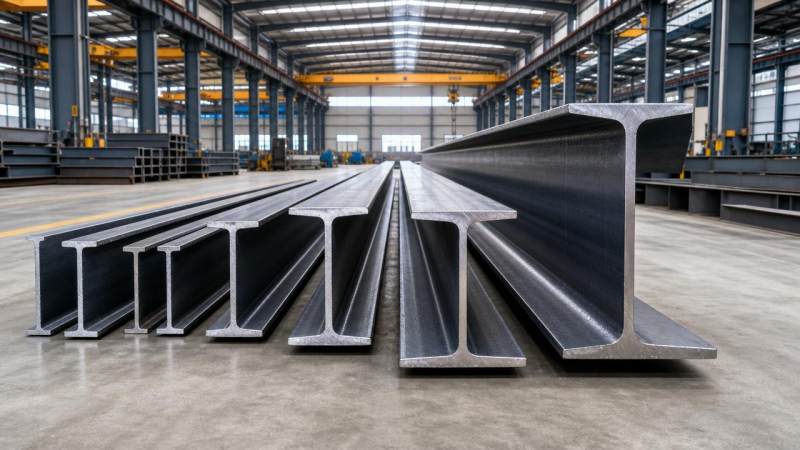
H beams are structural steel members with a cross-section shaped like the letter H. Their wider flanges, straight profile, and balanced geometry help them resist bending and carry heavy loads more efficiently than many lighter sections.
In practical terms, h beams are common in steel frame buildings, factory structures, bridges, equipment platforms, warehouse columns, mezzanines, and support systems where strength and dimensional stability are critical.
For information researchers, the main challenge is not simply knowing what h beams are. The real question is how to compare sizes, understand load capacity, and match the section to actual project conditions without overbuying or underdesigning.
- Wide flanges improve load distribution and make h beams suitable for both vertical and horizontal structural roles.
- Their section shape delivers a strong strength-to-weight balance, which helps control steel consumption in many building frames.
- They are available under multiple standards such as ASTM, EN, JIS, and GB, which matters for export sourcing and design compatibility.
H beams vs I beams: what is the practical difference?
Although the terms are sometimes used loosely, h beams generally have wider flanges and a more uniform section than traditional I beams. This often gives h beams better suitability for heavy-duty structures, columns, and long-span framing.
The difference affects fabrication, joint design, and the way loads are transferred. Buyers comparing drawings should always confirm whether the project requires a specific standard section or accepts an equivalent alternative.
How do h beam sizes affect loads and structural performance?
When engineers evaluate h beams, they do not look at one number alone. Load performance depends on section depth, flange width, web thickness, flange thickness, steel grade, unsupported length, connection method, and service conditions.
A deeper beam usually improves bending resistance. A thicker web can help with shear performance. Wider or thicker flanges often improve resistance to bending and local buckling. Material grade also matters because yield strength influences design capacity.
The table below gives a practical framework for understanding how common section variables influence h beams in real procurement and design discussions.
This comparison shows why h beams cannot be selected only by approximate size labels. A section that works well in a warehouse roof frame may not be suitable for a machine platform or a multi-story column under the same span conditions.
Why load calculations should not rely on size alone
Many buyers ask for “the load of one h beam size,” but actual safe load depends on design code assumptions, support conditions, distributed versus point loads, deflection limits, and safety factors. This is why shop quotations should be coordinated with structural drawings or engineering requirements.
For export projects, it is also important to match the requested standard section list to the local design basis. Equivalent dimensions under different standards may not always be interchangeable without review.
Which applications are most suitable for h beams?
H beams are selected where high structural demand, longer spans, or heavier service loads require efficient steel performance. They are especially valuable when project teams want reliable capacity without excessive section complexity.
The table below helps compare typical h beams applications by function, load pattern, and decision focus.
In many projects, h beams work together with secondary members such as purlins, channels, angles, and cold formed profiles. For lighter wall beams, brackets, roof framing, or auxiliary supports, buyers may also compare complementary sections like Metal Channel where the structural demand is different.
Application-specific judgment points
- For factory buildings, verify whether the beam will support roofing only or additional suspended equipment and maintenance loads.
- For platforms, review vibration sensitivity, concentrated loads, and local reinforcement around connection points.
- For export steel frames, confirm whether galvanizing, shop priming, or other corrosion-control measures are required before shipment.
How should buyers compare h beams, channels, and other structural sections?
A common sourcing mistake is to compare sections by price per ton only. In reality, the best choice depends on structural role, fabrication method, installation efficiency, and the cost of failure or redesign.
The following comparison is useful when buyers are deciding whether h beams are necessary or whether a lighter section can support part of the system more economically.
For projects that combine heavy frames with lighter enclosure members, a mixed-section strategy often improves cost efficiency. Primary h beams carry the major loads, while channels or formed steel handle non-primary structural tasks.
As an example, U channel steel used in construction, wall beams, brackets, lightweight roof systems, and mechanical supports may be supplied in grades such as Q195, Q235, Q345B, Duplex, or stainless options like 201, 202, 304, and 316, with thickness from 1.5mm to 25mm and common lengths from 6m to 12m depending on project needs.
What should you check before purchasing h beams?
For information researchers moving toward supplier evaluation, the purchasing stage is where many risks appear. The steel section may be correct on paper, yet project delays, mismatched standards, and inconsistent tolerances can still create costly problems.
A practical procurement checklist
- Confirm the required standard and section designation. ASTM, EN, JIS, and GB profiles are not always directly identical.
- Verify steel grade and test documentation. Yield strength, chemical composition, and traceability matter for compliance-driven projects.
- Review dimensional tolerance and straightness. Fabrication fit-up problems often begin with inconsistent section accuracy.
- Check surface condition and coating needs. Indoor dry structures and exposed outdoor installations require different corrosion strategies.
- Ask about lead time, mill scheduling, and packing for export. Delivery reliability can be just as important as material price.
For related secondary steel items, buyers may also need to examine technical details such as thickness tolerance of +/-0.02mm, height tolerance of +/-2mm, standard coverage including AISI, ASTM, DIN, JIS, BS, and GB/T, and whether galvanized finishes are hot-dip or hot-blown when selecting Metal Channel for supporting roles.
Why supplier capability matters as much as the beam itself
In global sourcing, a dependable structural steel supplier should do more than quote weight and unit price. It should help verify standards, coordinate sizes with drawings, support OEM requirements, and reduce the risk of inconsistent production batches.
Hongteng Fengda serves global construction, industrial, and manufacturing projects with structural steel products including steel beams, channel steel, angle steel, cold formed profiles, and customized steel components. With modern manufacturing facilities and strict quality control, the company supports buyers who need stable production capacity, consistent quality, and dependable lead times.
How do standards, coatings, and compliance influence sourcing decisions?
Compliance is often the hidden factor that changes a seemingly simple steel purchase into a multi-step approval process. This is especially true when h beams are specified for public buildings, industrial facilities, or export projects with third-party inspection requirements.
- ASTM, EN, JIS, and GB standards may differ in dimensional series, grade naming, and testing expectations.
- Galvanized or coated steel may be required where corrosion exposure is significant, especially in outdoor, marine, or humid conditions.
- Project teams should clarify whether mill test certificates, third-party inspection, or destination-market documents are needed before production starts.
This early clarification reduces rework and avoids disputes over whether the delivered h beams match not only the drawings but also the contractual documentation.
FAQ: common questions about h beams
How do I choose the right h beam size?
Start with the structural function: column, main beam, transfer member, or platform support. Then check span, load type, connection method, steel grade, and allowable deflection. A supplier can help match sections to drawings, but final structural suitability should follow the project design basis.
Are h beams always better than channels or lighter profiles?
No. H beams are better for major load-bearing roles, but not every part of a structure needs that capacity. Secondary members such as purlins, wall beams, brackets, and lightweight roof framing are often more economical with channels or formed sections.
What affects the price of h beams most?
Price is influenced by steel grade, section weight, required standard, order quantity, coating, processing requirements, inspection needs, and shipping destination. In many cases, a lower unit price is offset by longer delivery, weaker documentation support, or higher downstream fabrication cost.
What is a common mistake when sourcing h beams internationally?
One frequent mistake is assuming that similar-looking sections under different standards are fully interchangeable. Another is confirming price before confirming the exact grade, tolerances, certificates, and packing method. Both issues can cause serious delays after fabrication begins.
Why choose us for structural steel support and export coordination?
If you are evaluating h beams for a building, industrial frame, or manufacturing project, the most useful supplier is one that helps you move from uncertainty to a clear, workable specification. Hongteng Fengda focuses on structural steel manufacturing and export from China, serving buyers across North America, Europe, the Middle East, and Southeast Asia.
We can support you with parameter confirmation, section selection, steel grade matching, OEM customization, delivery schedule review, export packing discussion, and certification-related communication based on your project documents. This is especially valuable when your project includes both primary h beams and secondary structural products under one sourcing plan.
If you are comparing sizes, checking loads, or deciding between h beams and supporting sections, contact us with your drawings, required standards, quantity, coating needs, and target delivery window. We can help you review the specification, discuss practical options, and provide a quotation aligned with your project scope.
Please give us a message


Please enter what you want to find