H-Beam Steel in Industrial Buildings: Practical Use Cases
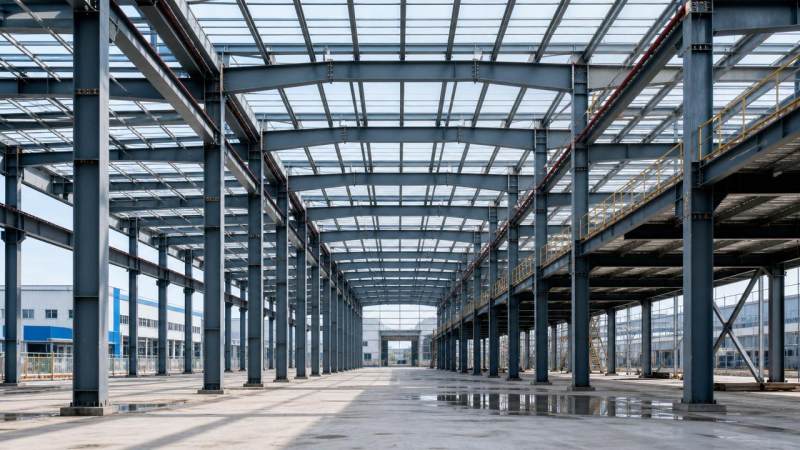
H-beam steel plays a critical role in industrial buildings where strength, span capacity, and construction efficiency directly affect project outcomes.
Its wide flanges and balanced section make it a practical choice for factories, warehouses, logistics hubs, and equipment platforms.
In real projects, the value of H-beam steel is not only structural strength.
It also supports faster installation, cleaner load paths, and better control of material use across large industrial footprints.
That matters when schedule pressure, budget limits, and procurement reliability all sit on the same critical path.
For industrial buildings, every steel decision affects fabrication, transport, erection, and long-term maintenance.
This is why H-beam steel remains one of the most common framing materials in demanding construction environments.
The sections below focus on practical use cases, planning concerns, and sourcing points that influence project results.
Why H-Beam Steel Fits Industrial Structures So Well
H-beam steel is designed for efficient load transfer.
Its geometry helps resist bending and supports longer spans without excessive section weight.
In industrial buildings, that translates into fewer interior columns and more usable floor area.
Clear space is often a bigger advantage than people expect.
It improves equipment layout, forklift movement, storage planning, and future line modifications.
Another strength is fabrication consistency.
Standardized H-beam steel sections simplify detailing, connection design, and shop processing.
That helps reduce avoidable errors before materials even arrive on site.
- High load capacity for columns and primary rafters
- Better span performance in wide industrial bays
- Faster field assembly with predictable section sizes
- Lower risk of overdesign compared with less efficient profiles
Practical Use Cases of H-Beam Steel in Industrial Buildings
The most common use case is the main structural frame.
Factory buildings often rely on H-beam steel columns and beams to carry roof loads, crane loads, and lateral forces.
This framing system performs especially well in plants with heavy machinery or high operating vibration.
1. Factory Production Halls
Production halls need strength, open space, and adaptable layouts.
H-beam steel supports overhead services, suspended equipment, and future capacity upgrades with fewer structural changes.
When manufacturing lines evolve, flexible framing becomes a real operational benefit.
2. Warehouses and Distribution Centers
Warehouses prioritize storage density and movement efficiency.
Using H-beam steel for portal frames or multi-bay structures helps create wider spans and cleaner rack layouts.
That can improve aisle planning and reduce obstructions in loading zones.
3. Mezzanines and Equipment Platforms
Secondary industrial levels often carry concentrated loads.
H-beam steel works well in mezzanines, process platforms, and maintenance walkways where strength and stiffness must stay balanced.
It also supports easier connection with stairs, grating, and service equipment.
4. Crane-Supported Buildings
In workshops with overhead cranes, dynamic loads become a major design factor.
H-beam steel columns and runway support members provide the capacity needed for repetitive lifting operations.
Good detailing here reduces vibration issues, alignment problems, and maintenance downtime later.
Key Planning Factors Before Choosing H-Beam Steel
Selecting H-beam steel is not only about section size.
Project teams need to review loads, spans, corrosion exposure, fabrication limits, and transport conditions together.
This early coordination usually prevents expensive site revisions.
Span and Load Conditions
Wide spans can reduce columns, but they also affect beam depth and total steel tonnage.
The right H-beam steel option depends on live loads, roof systems, wind exposure, and any suspended equipment.
Connection and Fabrication Strategy
Bolted and welded connections influence schedule and erection risk.
When details are standardized early, H-beam steel fabrication becomes faster and more predictable.
This matters even more on export projects with fixed shipping windows.
Corrosion Protection
Industrial buildings often face moisture, chemicals, or coastal air.
That means the steel frame needs a realistic protection plan, not a generic coating note.
In enclosure systems and support accessories, materials such as Gi Coil are often used where corrosion resistance and service life matter.
Galvanized steel with grades like DX51D+Z or S350GD+Z can help prevent moisture from reaching the steel structure.
How H-Beam Steel Helps Control Cost and Schedule
Cost control in industrial construction is rarely about unit price alone.
The better question is how H-beam steel affects the full delivery chain.
A well-matched section can reduce fabrication waste, ease transport planning, and shorten erection time.
That creates savings beyond material procurement.
- Fewer members can mean fewer connections and less field labor
- Stable section supply reduces redesign caused by substitutions
- Pre-fabrication improves installation speed on tight schedules
- Reliable dimensional control lowers fit-up issues on site
This is where supplier capability becomes part of project planning.
A structural steel manufacturer with modern production and strict quality control can reduce sourcing risk before fabrication begins.
Consistent compliance with ASTM, EN, JIS, and GB standards also makes technical coordination smoother across international teams.
Common Risks When Using H-Beam Steel and How to Avoid Them
Even a strong framing material can underperform if planning gaps are ignored.
Most project problems come from coordination, not from H-beam steel itself.
Mismatch Between Design and Fabrication
Late changes to spans, openings, or equipment loads can trigger costly revisions.
The fix is simple in principle.
Freeze key loading data early and confirm fabrication drawings against actual site interfaces.
Underestimating Corrosive Conditions
A dry inland warehouse and a coastal processing plant should not use the same protection assumptions.
Review coatings, drainage details, and enclosed steel areas before procurement starts.
Supplier Instability
Unstable lead times can break an industrial schedule fast.
Choose a supplier that can provide standard specifications, OEM support, and traceable quality records.
That reduces the chance of last-minute substitutions or incomplete shipments.
What to Check When Sourcing H-Beam Steel for Industrial Projects
When sourcing H-beam steel, practical checks matter more than polished quotations.
A good review process keeps technical and commercial decisions aligned.
- Confirm applicable standards, grades, and dimensional tolerances
- Check production capacity against the required delivery window
- Review fabrication scope, connection details, and marking requirements
- Align packing, container loading, and port schedules early
- Request quality documents that match project approval needs
For global buyers, this process also lowers communication friction.
A Chinese structural steel manufacturer with export experience can support these steps more effectively.
Hongteng Fengda supplies steel beams, angle steel, channel steel, cold formed profiles, and customized structural components for international projects.
Its focus on stable production, consistent quality, and dependable lead times helps reduce sourcing risk across industrial applications.
That kind of reliability becomes especially important when H-beam steel is on the project critical path.
Final Takeaway
H-beam steel remains one of the most practical framing solutions for industrial buildings.
It supports long spans, reliable load performance, and efficient construction across factories, warehouses, and equipment platforms.
The best results come from matching H-beam steel selection with real load conditions, corrosion exposure, fabrication strategy, and supplier capability.
When these factors are handled early, teams can control cost, protect schedule, and avoid preventable sourcing issues.
If an industrial project needs dependable structural steel support, start by reviewing span requirements, operating conditions, and delivery risks together.
That approach turns H-beam steel from a material choice into a smarter project solution.
Please give us a message


Please enter what you want to find