Choosing the correct H-beam size is critical for project safety, cost control, and construction efficiency. For project managers and engineering leaders, understanding H-beam dimensions, section properties, and load requirements helps reduce sourcing risks and avoid specification errors. This guide explains how to read H-beam sizes and select the right section for structural, industrial, and fabrication applications.
In practical procurement, an H-beam is not selected by depth alone. Section height, flange width, web thickness, flange thickness, steel grade, length tolerance, and applicable standards all affect performance, fabrication, and total installed cost. A mismatch of even 10-20 mm in section geometry can create connection conflicts, increase welding time, or require redesign on site.
For project-driven buyers, the goal is not simply to order a beam that is “strong enough.” The right H-beam should satisfy structural demand, meet ASTM, EN, JIS, or GB requirements, fit transportation and installation constraints, and arrive on schedule with consistent quality. That is especially important in multi-country sourcing, where terminology and size series may vary between mills and standards.
How H-Beam Sizes Are Written and What the Numbers Mean
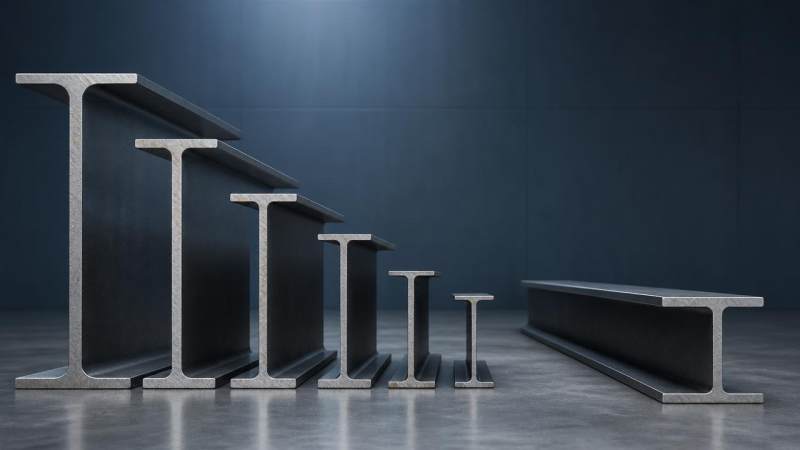
H-beam size descriptions usually combine 4 core dimensions: section height, flange width, web thickness, and flange thickness. Depending on the market, they may be shown in millimeters, inches, or as a nominal section name linked to a standard table. For project managers, reading these values correctly is the first step in preventing procurement errors.
Basic section dimensions
A common metric expression may look like 300 × 300 × 10 × 15 mm. In this format, 300 mm is the overall section height, 300 mm is the flange width, 10 mm is the web thickness, and 15 mm is the flange thickness. These four values directly influence bending resistance, shear capacity, connection design, and total weight per meter.
In many projects, buyers also review root radius, toe radius, and straightness tolerance. While these details are often secondary during early estimating, they become important when the H-beam must fit bolted end plates, stiffeners, splice details, or CNC fabrication requirements. A small dimensional deviation can affect hundreds of repeated members in factory-built structures.
Key terms often included in beam schedules
- Section depth: overall vertical height of the beam
- Flange width: overall width across the flanges
- Web thickness: thickness of the central vertical plate
- Flange thickness: thickness of the top and bottom flanges
- Unit weight: kg/m or lb/ft, critical for logistics and lifting plans
- Section properties: Ix, Iy, section modulus, and radius of gyration
The table below shows how project teams typically interpret H-beam dimensions during review, pricing, and construction planning.
For most engineering teams, section height and unit weight drive early decisions, but flange width and thickness become equally important once the design reaches detailing and connection review. This is why a complete section table should always be checked before placing a purchase order.
Differences between H-beams and I-beams
Although the terms are sometimes used interchangeably in trade discussions, H-beams usually have wider flanges and a more balanced section shape than many I-beams. This geometry can provide better load distribution and improved suitability for columns, transfer members, and heavy industrial frames. In procurement, the distinction matters because substitution is not always acceptable without structural confirmation.
If the project drawing specifies an H-beam, the supplier should confirm the exact standard series, such as JIS, EN, ASTM, or GB. A nominally similar section from another system may differ in flange thickness by 2-6 mm or in weight by several kilograms per meter, which can impact both design verification and pricing.
How to Select the Right H-Beam Section for Your Project
Selecting the right H-beam starts with load and span, but good project decisions also consider deflection limits, support conditions, corrosion exposure, fabrication method, and supply chain reliability. In many industrial and building projects, an oversized beam increases steel tonnage and transportation cost, while an undersized beam can trigger redesign, rework, and schedule delay.
Step 1: Define load case, span, and service condition
A beam supporting a 6 m platform with moderate equipment loads will require a very different section than a 12 m warehouse girder carrying roof, wind, and maintenance loads. Project teams should confirm dead load, live load, point load locations, vibration sensitivity, and permissible deflection before asking for quotations. Without this information, price comparisons between suppliers are often misleading.
At this stage, it is also useful to define whether the member works primarily in bending, compression, or combined actions. H-beams are commonly used as columns, crane runway supports, mezzanine beams, equipment frames, and heavy rack structures. The correct section depends on the actual structural role, not only on overall size.
Minimum information a supplier should receive
- Project location and design standard
- Required steel grade and corrosion protection method
- Member application: beam, column, truss element, or support frame
- Span length, load type, and connection preference
- Required quantity, cut length, and delivery schedule
Step 2: Check section properties, not only dimensions
Two H-beams may appear close in external dimensions but differ significantly in section modulus, moment of inertia, and mass. For structural selection, section modulus is often critical for bending strength, while moment of inertia strongly affects deflection control. In long-span applications, deflection can govern the final choice even when strength appears adequate.
As a practical rule, engineering teams should review at least 4 technical items before approval: section modulus, moment of inertia, web/flange thickness, and steel grade. This basic check reduces the chance of choosing a section that meets tonnage targets but fails detailing or serviceability requirements.
The comparison table below illustrates how different project conditions can influence H-beam selection priorities.
The key takeaway is that the “best” H-beam is context-specific. For some projects, reducing deflection by one section size can save installation adjustment later. For others, choosing a more available standard section can shorten procurement by 1-3 weeks and lower freight complexity.
Step 3: Match the beam to fabrication and coating requirements
Project managers often focus on structural adequacy first, but fabrication compatibility is equally important. If the H-beam will be drilled, welded, cut, or combined with plates and channels, dimensional consistency and weldability should be checked in advance. This is especially relevant for modular plants, machinery supports, and export steel packages with pre-assembled components.
In corrosive environments, the H-beam may be paired with galvanized sheet or cladding systems for enclosure and secondary protection. In such projects, buyers sometimes source related materials from one partner to simplify logistics. For example, roofing, walling, or equipment covers may be coordinated through Galvanised Sheet Steel Suppliers, with common grades such as DX51D, SGCC, S250GD, or S350GD, thickness ranges from 0.12 mm to 6.00 mm, and widths from 600 mm to 1500 mm depending on the application.
This type of bundled sourcing does not replace section design, but it can help reduce interface risk between primary structural steel and enclosure materials. For industrial, agricultural, energy, and construction applications, it is useful when procurement teams want fewer suppliers, clearer documentation, and more predictable delivery sequencing.
Common Risks When Ordering H-Beams Internationally
Global sourcing offers cost and capacity advantages, but H-beam procurement can fail when section naming, tolerances, and standards are not aligned. A quote that looks competitive on paper may hide differences in steel grade, test documentation, cutting allowance, or theoretical versus actual weight. These issues can affect not only cost, but also installation sequence and site productivity.
Standard mismatch and section substitution
One common problem is assuming that a beam from one standard is fully interchangeable with another. In reality, ASTM, EN, JIS, and GB series may have similar nominal sizes but different flange proportions, thickness ranges, and sectional properties. If substitution is proposed, the engineering team should verify at least 3 points: capacity equivalence, connection compatibility, and weight impact.
Length tolerance, camber, and straightness issues
For fabricated structures, dimensional control is often as important as material strength. Cut length tolerances such as ±2 mm to ±5 mm may be acceptable for one project but too loose for another. Straightness, twist, and camber should be reviewed when members are long, exposed, or assembled in repetitive modules. Poor control here can slow erection and increase field correction work.
Practical risk-control checklist
- Confirm the exact section designation and standard series
- Request mill test certificates and dimensional inspection records
- Clarify whether quoted weight is theoretical or measured shipment weight
- Verify cut lengths, end preparation, marking, and packing method
- Align Incoterms, lead time, and partial shipment rules before production
- Review coating or surface condition if outdoor storage exceeds 30-60 days
For many project leaders, these six checks are enough to avoid the majority of avoidable supply disputes. They also help compare suppliers on total delivery reliability rather than only on unit price per ton.
A Smarter Procurement Approach for Project Managers
The most effective H-beam procurement process combines engineering review with supplier qualification. Instead of asking only for a beam price, buyers should request a complete offer package that covers section availability, steel grade, test documentation, tolerance control, fabrication support, and delivery schedule. This approach is especially useful for projects that involve 50 tons, 500 tons, or recurring batches across several shipment windows.
What to evaluate beyond the quote
A dependable structural steel supplier should be able to support standard and customized requirements, provide clear communication on production capacity, and work under internationally recognized standards. For project execution, stable lead times often matter as much as nominal price. A 2-week delay in steel arrival can affect civil handover, equipment installation, and subcontractor coordination across the entire jobsite.
Hongteng Fengda operates as a structural steel manufacturer and exporter from China, supplying angle steel, channel steel, steel beams, cold formed steel profiles, and customized structural steel components for global construction and industrial projects. For buyers managing cross-border procurement, this type of manufacturing base can support both standard sections and OEM requirements while aligning with ASTM, EN, JIS, and GB related needs.
Recommended supplier evaluation criteria
- Can the supplier provide the exact H-beam series required?
- Do they support cut-to-length, drilling, or welded assembly if needed?
- Are MTCs, inspection reports, and packing details available before shipment?
- Can they coordinate related steel items for one project package?
- Is the lead time realistic for the required tonnage and destination?
Choosing the correct H-beam size is ultimately a balance of structural performance, fabrication practicality, and procurement reliability. When dimensions are read correctly and section properties are checked against real project conditions, teams can reduce overdesign, avoid connection conflicts, and control delivered steel cost more effectively.
If you are sourcing H-beams for buildings, industrial frames, machinery supports, or export fabrication projects, a professional supplier can help align section selection, standards compliance, and delivery planning from the start. Contact Hongteng Fengda to discuss your drawings, required beam sizes, and project schedule, or request a customized structural steel solution for your next order.
Please give us a message


Please enter what you want to find