Choosing between an H beam I beam is not just a matter of shape—it directly affects load performance, installation efficiency, material cost, and long-term project safety. For project managers handling structural steel procurement or construction planning, understanding how these beams differ in flange design, load direction, span capability, and application suitability can help reduce sourcing risks and avoid costly design mismatches. This guide explains the key differences in practical terms, helping you select the right steel beam for commercial buildings, industrial structures, bridges, and customized engineering projects.
What Does H Beam I Beam Mean in Project Selection?
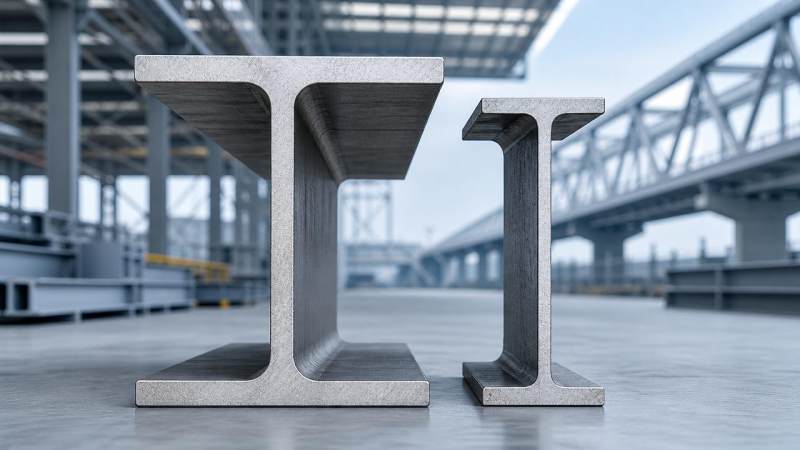
In daily procurement discussions, H beam I beam often appears as one combined search term, but the two sections are not identical. Both are structural steel members used to resist bending, transfer loads, and support frames.
The main difference lies in geometry. An H beam usually has wider, more parallel flanges and a thicker web. An I beam normally has narrower flanges, sometimes with tapered inner surfaces depending on the standard.
For a project manager, the question is not which beam is generally stronger. The better question is which section matches the span, load direction, connection method, budget, and site installation plan.
Key terms buyers should confirm early
- Flange width and thickness, because they influence lateral stability, bolted connections, and resistance to bending under vertical loads.
- Web thickness and depth, because these affect shear performance and the overall load path in columns, beams, and trusses.
- Material grade and standard, such as ASTM, EN, JIS, or GB, because substitution without review may create compliance problems.
- Fabrication requirements, including cutting, drilling, welding, galvanizing, or surface treatment before shipment.
Shape Differences: Why Flange and Web Design Matter
The shape of an H beam I beam determines how efficiently steel is distributed around the neutral axis. This is why two beams with similar weight may perform differently in the same structure.
An H beam has a section that looks closer to a capital H. Its wider flanges make it useful where compression, bending, or column behavior must be controlled.
An I beam has a taller and narrower profile in many specifications. It can be efficient for long members carrying vertical bending loads where lateral restraint is properly designed.
The following comparison helps procurement teams discuss H beam I beam requirements with engineers, suppliers, and site contractors before issuing a purchase order.
This comparison does not replace structural calculation, but it helps clarify why H beam I beam selection should begin with geometry, not only price per ton.
Load Direction: Which Beam Handles Your Structural Risk?
Load direction is one of the most important decision points. A beam that works well in vertical bending may not be ideal for torsion, compression, or repeated lateral forces.
H beam I beam selection should therefore reflect the real operating environment. Industrial buildings, bridges, equipment platforms, and warehouses often face different load combinations.
Vertical loads
For floor systems, roof supports, and mezzanine beams, vertical loads usually dominate. I beams can be economical when spans are moderate and lateral support is designed correctly.
Compression and column loads
For columns or vertical members, H beams are often preferred because the wider flanges improve stability around both principal axes. This can reduce buckling risk in heavy frames.
Lateral and dynamic loads
Bridges, crane-supporting structures, and industrial equipment frames may experience lateral forces, vibration, or moving loads. In these cases, section modulus, bracing, and connection design must be reviewed together.
- If the member mainly carries vertical bending, compare section modulus, deflection limit, and weight efficiency.
- If the member acts as a column, check slenderness ratio, flange width, and end restraint conditions.
- If moving loads are involved, coordinate H beam I beam selection with fatigue, welding quality, and inspection requirements.
Application Scenarios: Where H Beam I Beam Choices Differ
Project managers rarely buy beams in isolation. They buy steel for a complete structure, where delivery sequence, fabrication tolerance, and installation speed affect the final schedule.
In commercial buildings, I beams may be selected for floor beams or roof framing where load paths are predictable. H beams are common for main frames and columns.
In industrial structures, H beams often provide advantages for equipment platforms, crane areas, and heavy-duty support frames. Their flange geometry allows stronger joint detailing.
In bridges and infrastructure projects, selection depends on span, corrosion exposure, fatigue conditions, and inspection access. The correct H beam I beam choice must follow engineering documents.
The table below summarizes common selection logic for different steel project environments, especially when buyers must balance cost, safety, and delivery.
A practical selection plan separates main load-bearing members from secondary members. This avoids overspending on every beam while still protecting critical structural positions.
Procurement Checklist for H Beam I Beam Orders
A common procurement risk is ordering by section name alone. Different markets may use different naming systems, rolling tolerances, and material grades for similar-looking sections.
Before confirming an H beam I beam order, project managers should align the technical drawing, bill of materials, and supplier quotation. Small mismatches can delay customs, fabrication, or site assembly.
- Confirm the standard and grade, such as ASTM, EN, JIS, or GB, and avoid mixing grades without engineering approval.
- Check dimensions, theoretical weight, straightness tolerance, and length tolerance against the project drawing.
- Review surface requirements, including black finish, primer, galvanizing, or other corrosion protection methods.
- Clarify fabrication work, such as cutting, drilling, punching, welding, marking, bundling, and packing.
- Verify delivery schedule, loading method, container limits, and documentation needed for import clearance.
For projects involving lifting, hoisting, temporary installation, or accessory sourcing, buyers may also coordinate auxiliary steel products such as 0.7mm 0.8mm 1.2mm 1.6mm 1.8mm 2mm diameter Galvanized Steel Wire Rope. Specifications include 6X7+FC, 6X19+IWR, 8x19S+FC, tensile strength from 1470Mpa to 1960Mpa, and zinc coating options for different corrosion conditions.
Although wire rope is not a substitute for structural beams, including related installation materials in early procurement planning can reduce separate sourcing steps and improve site coordination.
Cost Control: When Is a Heavier Beam Worth It?
The cheapest H beam I beam option is not always the lowest-cost option for the project. Weight, fabrication complexity, shipping, rework risk, and installation labor all affect total cost.
An H beam may have a higher material cost in some cases, but it can reduce connection complexity or improve stability. An I beam may save weight when the load path is simple.
Cost factors that should be reviewed together
- Material weight per meter, because even small differences become important in large-volume structural steel orders.
- Fabrication time, because drilling, coping, welding, and plate assembly can cost more than the steel section itself.
- Installation difficulty, because heavier beams may require stronger cranes, longer lifting time, and more site coordination.
- Risk of redesign, because choosing the wrong profile may require engineering review, replacement material, or schedule recovery.
The best value often comes from a balanced beam schedule: stronger H beams where stability and connections matter, and efficient I beams where vertical bending dominates.
Standards, Compliance, and Documentation Buyers Should Request
International steel projects often require traceable documentation. For H beam I beam procurement, compliance is not only about passing inspection; it supports financing, insurance, and owner acceptance.
Hongteng Fengda supplies structural steel according to major international standards including ASTM, EN, JIS, and GB, depending on buyer requirements and project specifications.
Use the following documentation checklist when comparing quotations from different structural steel suppliers.
Clear documentation makes H beam I beam procurement easier to audit. It also reduces disputes when multiple contractors, designers, and logistics teams are involved.
Common Mistakes When Comparing H Beam I Beam Options
Many project delays begin with simple assumptions. A beam that looks similar on a drawing may differ in flange width, grade, tolerance, or availability in the export market.
Mistake 1: Buying only by lowest price
A low quotation may exclude cutting, drilling, coating, inspection, export packing, or documentation. Compare H beam I beam offers using the same technical and service scope.
Mistake 2: Ignoring connection details
Connections can determine whether a selected section is practical. Wider H beam flanges may simplify bolting and welding, while I beams may require closer detailing.
Mistake 3: Treating standards as interchangeable
ASTM, EN, JIS, and GB sections may differ in dimension, grade naming, and tolerance rules. Substitution should be reviewed before procurement, not after delivery.
FAQ: Practical Questions About H Beam I Beam Procurement
Is an H beam always stronger than an I beam?
Not always. Strength depends on section size, steel grade, span, bracing, and load direction. H beams often perform well in columns and heavy frames, while I beams can be efficient for vertical bending.
Which beam is better for long spans?
Long-span selection requires calculation of bending moment, deflection, lateral torsional buckling, and service load. Both H beam I beam options may work if properly sized and braced.
What should I send to a supplier for accurate quotation?
Send drawings, steel grade, section sizes, length, quantity, standard, surface treatment, fabrication details, delivery destination, and required documents. This prevents vague quotations and hidden cost differences.
Can H beam I beam sections be customized?
Yes, customization may include cutting, drilling, welding, cold formed profiles, bundled packing, and OEM structural steel components. Feasibility depends on drawings, tolerances, and order volume.
Why Choose Hongteng Fengda for Structural Steel Supply?
Hongteng Fengda is a structural steel manufacturer and exporter from China, serving construction, industrial, and manufacturing projects across North America, Europe, the Middle East, and Southeast Asia.
We supply steel beams, angle steel, channel steel, cold formed steel profiles, and customized structural components. Standard specifications and OEM solutions are available according to project requirements.
For H beam I beam projects, our team can support parameter confirmation, grade comparison, standard matching, fabrication planning, coating requirements, packing method, and delivery schedule communication.
If you are preparing a commercial building, industrial platform, bridge component, or customized engineering order, contact Hongteng Fengda with your drawings and bill of materials. We can discuss product selection, lead time, certification requirements, sample support, and quotation details based on your actual project conditions.
Please give us a message


Please enter what you want to find