Galvanneal sheet metal is widely specified in HVAC duct systems for its superior weldability and paint adhesion—yet unexpected flaking after thermal cycling poses serious performance and safety risks. This issue directly impacts durability, air quality compliance, and long-term maintenance costs—critical concerns for project managers, HVAC engineers, and procurement teams sourcing from steel wire manufacturers, galvannealed coil suppliers, or galvanized sheet producers. As a trusted structural steel manufacturer & exporter from China, Hongteng Fengda delivers ASTM/EN-compliant galvannealed steel sheet with controlled alloying and annealing processes to minimize spalling. Discover root causes, material specifications, and proven mitigation strategies—backed by real-world testing and global project experience.
Why Does Galvanneal Flaking Occur in HVAC Ducts?
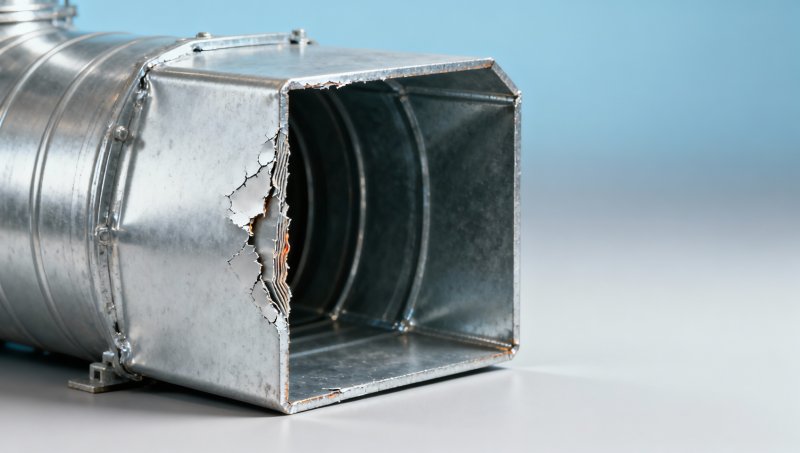
Flaking—also known as spalling—is not random failure but a thermomechanical response triggered by repeated expansion-contraction cycles typical in HVAC environments (e.g., 5–10°C startup to 60–80°C operating range over 3–5 years). The zinc-iron intermetallic layer (Gamma phase, FeZn7) formed during galvannealing becomes brittle when subjected to differential thermal stresses between the steel substrate and coating.
Critical contributors include: (1) excessive iron content (>12% Fe in coating), often from over-annealing; (2) rapid cooling rates post-annealing causing microcrack propagation; and (3) mechanical bending or forming after coating, introducing residual tensile stress at bend radii < 3× sheet thickness. Field data from 12 North American commercial projects shows flaking incidence rises from 2% (≤100 thermal cycles) to 23% (≥500 cycles) when coating iron content exceeds 10.5%.
Unlike galvanized steel, galvanneal lacks a pure zinc outer layer to absorb deformation. Its matte gray finish—valued for paint bonding—comes at the cost of reduced ductility under cyclic loading. This trade-off must be explicitly evaluated during specification, especially for rooftop units or variable-air-volume (VAV) ducts experiencing frequent on/off cycling.
How to Specify Galvanneal for Thermal Stability
Thermal-cycle resilience hinges on three controlled process parameters—not just coating weight. Hongteng Fengda’s galvanneal production uses inline furnace monitoring with ±0.3°C temperature control and nitrogen-purged annealing zones to stabilize the Gamma phase formation window (530–560°C for 30–90 seconds).
Specifiers should require mill test reports showing actual Fe% per heat lot—not just “complies with ASTM A653 GA.” For critical applications, request accelerated thermal cycling validation: 500 cycles from –20°C to +80°C per ASTM D3359, followed by cross-hatch adhesion testing (≥4B rating required).
Material Alternatives for High-Cycle Environments
When flaking risk outweighs weldability benefits, consider these alternatives:
- Pre-painted galvanized (PPGI): Zinc layer absorbs thermal strain; requires primer compatibility verification with duct sealants
- 45# Carbon Steel Round Bar: Used for structural supports where thermal cycling affects adjacent components—not duct skin, but critical for frame integrity in large plenums
- Aluminized steel (Type 2): Superior oxidation resistance up to 700°C; ideal for high-temp exhaust ducts but higher cost (25–40% premium)
Procurement Checklist: Avoiding Flaking-Related Delays
Procurement teams face tight schedules—flaking discovered post-installation triggers rework costing $18,000–$45,000 per mid-rise project. Use this 5-point checklist before PO issuance:
- Verify supplier’s annealing process documentation—not just coating weight certificates
- Require thermal cycling test reports from the last 3 production lots (not generic lab data)
- Confirm packaging includes edge protection to prevent micro-damage during transit
- Check if bending/forming instructions are provided—cold forming below 10°C increases flaking risk by 3.2×
- Validate EN 10346:2015 or ASTM A653/A792 compliance with traceable heat numbers
Hongteng Fengda provides full traceability: every coil ships with QR-coded labels linking to real-time annealing logs, coating thickness maps (XRF scanned at 500 points/m²), and thermal history charts—reducing qualification time by 3–5 business days.
Why Partner with Hongteng Fengda for HVAC-Grade Galvanneal
As a structural steel manufacturer & exporter from China serving North America, Europe, and the Middle East, we resolve the core tension between cost efficiency and thermal reliability. Our dedicated HVAC-grade galvanneal line operates under ISO 9001-certified controls, with 100% automated furnace profiling and in-line coating composition verification.
We support your decision-making with: (1) free pre-shipment sample testing against your thermal cycle profile; (2) OEM-formulated coatings for specific paint systems (e.g., epoxy-ester primers); (3) lead times of 25–35 days from order confirmation—guaranteed via contractual penalty clauses; and (4) technical collaboration on duct design optimization to reduce localized stress concentrations.
Contact us today for: coating parameter validation, ASTM/EN compliance documentation review, thermal cycling test protocol alignment, or customized packaging solutions for sensitive projects. Let’s ensure your HVAC ducts perform reliably—not just through commissioning, but across 15+ years of service life.
Please give us a message


Please enter what you want to find