Cutting galvanized steel pipe onsite often accelerates rusting—compromising durability, safety, and long-term ROI. As a trusted structural steel manufacturer and exporter from China, Hongteng Fengda explains the science behind zinc layer damage, exposure risks, and why proper handling matters for galvanized steel pipe, hot dip galvanized steel, and ASTM-compliant structural steel beams. Whether you’re a project manager, procurement specialist, or quality control officer, understanding this common pitfall helps prevent costly rework, ensures compliance with EN/ASTM standards, and supports smarter decisions across steel roofing cost planning, structural steel fabrication, and stainless steel supplier selection.
Why Onsite Cutting Breaks the Zinc Barrier
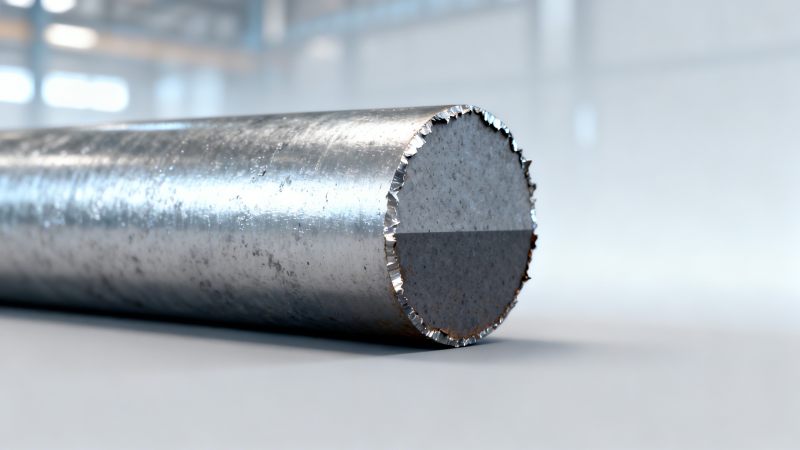
Hot-dip galvanizing forms a metallurgically bonded zinc-iron alloy layer (typically 45–85 µm thick) that acts as both a physical barrier and cathodic protector. When cut onsite using angle grinders, plasma torches, or abrasive saws, the localized heat and mechanical abrasion remove up to 100% of the zinc coating at the cut edge—and critically, damage the adjacent 2–5 mm zone where the zinc layer is thermally degraded or micro-cracked.
Unlike factory-cut galvanized pipes—where edges are re-coated via post-fabrication galvanizing or zinc-rich paint—onsite cuts expose bare carbon steel directly to moisture, chlorides, and oxygen. Field conditions often accelerate corrosion: humidity >60%, ambient temperatures between 10℃–35℃, and airborne salts (especially near coastal or industrial sites) increase electrochemical activity by 3–5× compared to controlled indoor environments.
This isn’t theoretical: accelerated salt-spray testing (ASTM B117) shows unsealed cut ends of ASTM A53 Grade B galvanized pipe develop red rust in as little as 72 hours—versus 1,200+ hours for fully intact, factory-galvanized sections. The result? Premature pitting, reduced load-bearing capacity, and non-compliance with EN ISO 1461’s requirement for “continuous, defect-free zinc coverage” on all surfaces.
How to Protect Cut Edges—3 Verified Methods
Preventing accelerated corrosion demands proactive, standards-aligned edge protection—not just visual inspection. Here’s what works, ranked by field reliability and compliance readiness:
- Zinc-rich cold galvanizing compound: Applied within 2 hours of cutting, provides cathodic protection with ≥95% Zn content. Validated for ASTM A780 repair; requires 24-hour cure before exposure.
- Thermal spray zinc (TSZ): Delivers 100–200 µm pure zinc layer onsite; meets EN ISO 2063 Class 1 requirements but needs certified operators and compressed-air equipment.
- Factory pre-cut & pre-sealed components: Pipes cut to exact lengths with edges sealed via automated zinc-dip or electrophoretic lacquer—eliminates field risk entirely. Lead time: 10–15 days vs. same-day onsite cutting.
Note: Paint-only coatings (e.g., epoxy or alkyd) offer zero cathodic protection and fail rapidly under mechanical stress or UV exposure. They’re acceptable only as topcoats over zinc-rich primers—not standalone solutions.
Galvanized Pipe vs. Carbon Steel Alternatives: A Procurement Comparison
When evaluating total lifecycle cost—not just unit price—the choice between galvanized pipe and alternative carbon steel grades hinges on installation context, maintenance access, and design life. Below is a comparative analysis aligned with ASTM, EN, and GB standards:
For structural handrails, staircases, or fencing exposed to weather, galvanized pipe remains optimal—if edge integrity is maintained. For high-strength internal framing or machining applications (e.g., hydraulic cylinder rods), 45# Carbon Steel Round Bar offers superior wear resistance and tensile performance—but requires full corrosion management strategy.
Why Hongteng Fengda Delivers Risk-Managed Structural Steel
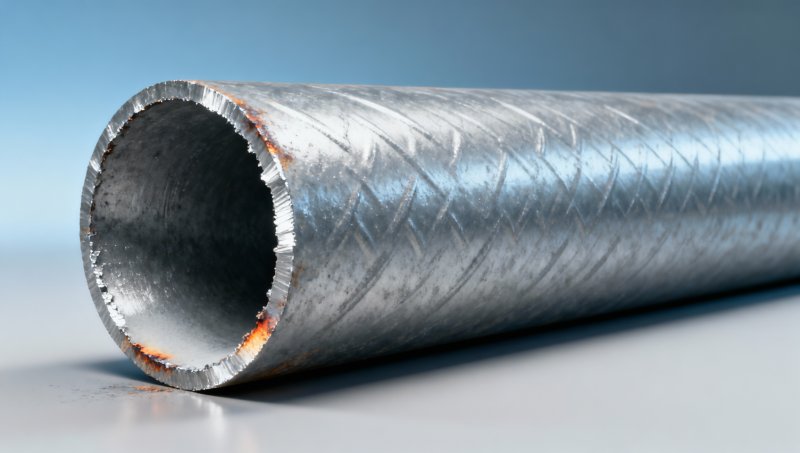
As a structural steel manufacturer and exporter from China serving North America, Europe, and the Middle East, Hongteng Fengda embeds corrosion control into every stage—not just as an afterthought. Our integrated approach includes:
- Pre-cut & pre-sealed galvanized components: All pipes cut to project-spec lengths with edges treated via ASTM A780-compliant zinc-rich sealant—verified by third-party adhesion and salt-spray testing.
- Multi-standard certification: Products certified to ASTM, EN, JIS, and GB simultaneously—reducing approval delays for cross-border projects.
- Lead-time transparency: Standard delivery windows: 12–18 days for stock sizes (A53, S355JR, Q345); 25–35 days for custom hot-dip galvanized orders—including edge sealing verification reports.
- OEM engineering support: In-house technical team assists with material substitution analysis, weldability guidance (e.g., for 45# round bar), and corrosion modeling per ISO 9223 environmental categories.
We don’t just supply steel—we de-risk your structural integrity. From initial specification review to final documentation handover, our process ensures compliance, predictability, and long-term asset value.
Next Steps: Secure Your Corrosion-Resistant Supply Chain
Don’t let onsite cutting compromise your project’s durability, safety approvals, or lifetime cost. Contact Hongteng Fengda today to:
- Request ASTM A780-compliant edge protection verification reports for your next galvanized pipe order;
- Compare lead times and pricing for pre-cut vs. standard-length galvanized pipe (A53, A106, S355JR);
- Discuss technical integration of 45# Carbon Steel Round Bar into high-wear structural applications;
- Obtain EN/ASTM-certified mill test reports (MTRs) and zinc coating thickness validation data prior to shipment.
Our export team responds to RFQs within 4 business hours—with full traceability, batch-level quality documentation, and flexible Incoterms (FOB, CIF, DAP). Let’s build structures that last—not just install them fast.
Please give us a message


Please enter what you want to find