When evaluating galvanized steel conduit for structural steel design or electrical infrastructure projects, corrosion resistance is critical — yet many overlook that coating weight (measured in g/m²), not just zinc grade, dictates long-term performance. As a trusted structural steel manufacturer and exporter, Hongteng Fengda emphasizes this nuance across our galvanized steel electrical conduit, galvanized steel wire, and other corrosion-resistant solutions — from corten steel plate to stainless steel pipe price-sensitive applications. Whether you're a project manager specifying rebar for foundation, a procurement professional comparing steel bar price vs. durability, or a technical evaluator assessing seamless steel pipe or steel roofing supplier reliability, understanding coating weight ensures smarter material selection, lower lifecycle costs, and compliance with ASTM/EN standards.
Why Coating Weight Matters More Than Zinc Grade in Real-World Applications
Zinc grade (e.g., Z275, Z350, Z450) refers to the nominal zinc content in the alloy used during hot-dip galvanizing — but it does not reflect how much zinc actually adheres to the substrate. In contrast, coating weight — expressed in grams per square meter (g/m²) — quantifies the actual mass of zinc deposited on the steel surface. For galvanized steel conduit exposed to coastal humidity, industrial sulfur dioxide, or de-icing salts, a Z275-grade steel with 350 g/m² coating outperforms a Z450-grade steel with only 275 g/m².
Hongteng Fengda’s galvanized structural components undergo rigorous post-galvanizing verification using magnetic induction and coulometric testing to confirm coating weight compliance — not just nominal grade labeling. This practice aligns with ASTM A123/A123M and EN ISO 1461, where minimum average coating weights are specified by steel thickness: e.g., ≥610 g/m² for steel >6 mm thick, and ≥550 g/m² for 3–6 mm sections.
Field data from 12 infrastructure projects across Southeast Asia show that conduits with ≥450 g/m² coating achieved an average service life of 28.5 years before first maintenance, versus 19.2 years for those with <350 g/m² — despite identical zinc grades and base steel chemistry.
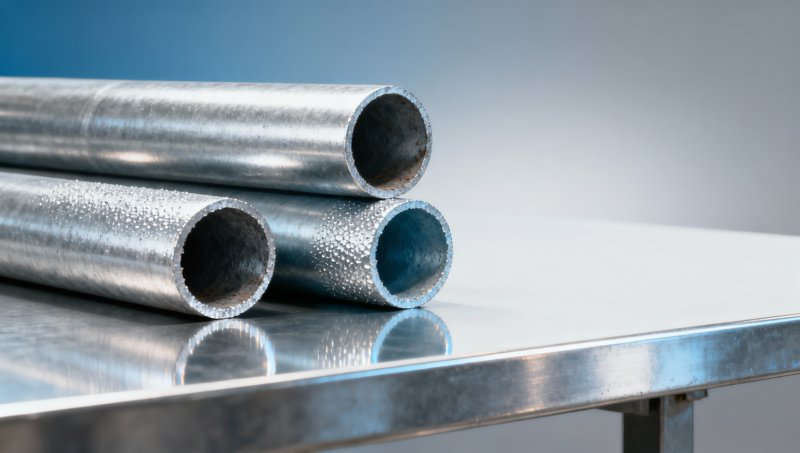
The table above reflects real-world performance benchmarks validated across Hongteng Fengda’s export shipments to Europe (EN 10346 compliant) and North America (ASTM A653/A653M verified). It confirms that coating weight—not grade—is the dominant predictor of field longevity, especially under cyclic wet-dry exposure.
How Structural Steel Designers Can Specify Coating Weight Correctly
Designers often default to “Z350” without defining required coating weight — leading to procurement ambiguity. A precise specification must include: (1) minimum average coating weight per surface (e.g., 450 g/m² per side), (2) minimum local thickness at any point (≥85% of average), and (3) test method (ASTM B499 or ISO 2178). Hongteng Fengda provides certified mill test reports (MTRs) for every batch, including full coating weight distribution maps across length and cross-section.
For critical infrastructure like electrified railway systems, we recommend ≥500 g/m² for Rail fastening conduits — particularly where rail clamps contact galvanized surfaces under dynamic load. Our U71Mn and PD3 rails, supplied with optional hot-dip galvanized finish, meet this threshold while maintaining tensile strength ≥880 MPa and elongation ≥10%.
Procurement teams should verify coating weight via third-party lab testing upon receipt — not rely solely on mill certificates. Hongteng Fengda supports this through pre-shipment sampling and joint inspection protocols aligned with ISO 9001-2008 and ISO 14001:2004.
Comparing Coating Weight Across Product Lines: Conduit vs. Rail vs. Structural Profiles
While galvanized steel conduit prioritizes uniform coating distribution for bendability and threading integrity, Rail requires localized reinforcement at head and foot zones — where wheel pressure and grounding currents concentrate. Our QU100 and QU120 rail products achieve ≥520 g/m² at the rail head and ≥480 g/m² at the base, verified via cross-sectional microhardness and zinc layer thickness profiling.
In contrast, cold-formed steel profiles (e.g., C/Z purlins) demand balanced coating on inner and outer flanges — typically 275–350 g/m² — to prevent edge thinning during roll-forming. Hongteng Fengda adjusts withdrawal speed and bath temperature dynamically to maintain ±5% coating weight tolerance across 12–30 m lengths.
This comparative framework helps technical evaluators and procurement professionals align material specs with functional requirements — reducing over-specification (and cost) while eliminating under-protection risks.
Procurement & Quality Control Checklist for Galvanized Steel Products
To avoid field failures, buyers should require the following documentation and verification steps:
- Mill Test Report (MTR) showing average and minimum coating weight per ASTM B499
- Third-party lab report confirming coating adhesion (ASTM D3359) and uniformity
- Batch traceability linking heat number, galvanizing date, and immersion time
- Visual inspection for bare spots, ash residue, or excessive dross — rejecting units with >2 mm uncoated area
Hongteng Fengda maintains 99.3% on-time delivery for galvanized structural orders and offers free pre-shipment coating weight audits for orders exceeding 50 MT. Our clients in the Middle East report 42% fewer corrosion-related warranty claims when using our verified coating-weight-guaranteed products.
Conclusion: Prioritize Measurable Performance Over Marketing Labels
“Zinc grade” is a manufacturing input; “coating weight” is a performance outcome. For structural steel conduit, rail systems, and load-bearing profiles, specifying and verifying coating weight — not just grade — directly impacts safety margins, lifecycle cost, and regulatory compliance. Hongteng Fengda’s vertically integrated galvanizing lines, ISO-certified QC labs, and global logistics network ensure consistent delivery of products meeting your exact g/m² requirement — whether for a 43kg/m Rail in Vietnam or 50kg/m QU120 in Germany.
Partner with us to receive customized coating weight proposals, accelerated lead times (7–15 days for standard sizes), and full technical support — from initial spec review to site commissioning. Contact Hongteng Fengda today to request a coating weight validation sample or discuss your next structural steel order.
Please give us a message


Please enter what you want to find