For architects, engineers, and procurement professionals specifying galvanized sheet for roofing in coastal projects, spangle pattern isn’t just aesthetic—it’s a critical indicator of coating adhesion performance under salt-laden humidity. At Hongteng Fengda, a trusted prefabricated structural steel manufacturer and exporter from China, we combine rigorous ASTM/EN-compliant galvanizing processes with real-world environmental validation—ensuring optimal galvanized sheet thickness, consistent spangle formation, and superior corrosion resistance. Whether you’re evaluating structural steel grades, comparing steel sheet size options, or sourcing high-strength steel tubing for integrated roofing systems, understanding this correlation directly impacts service life, maintenance cost, and long-term ROI.
What Is Spangle—and Why Does It Matter in Coastal Roofing?
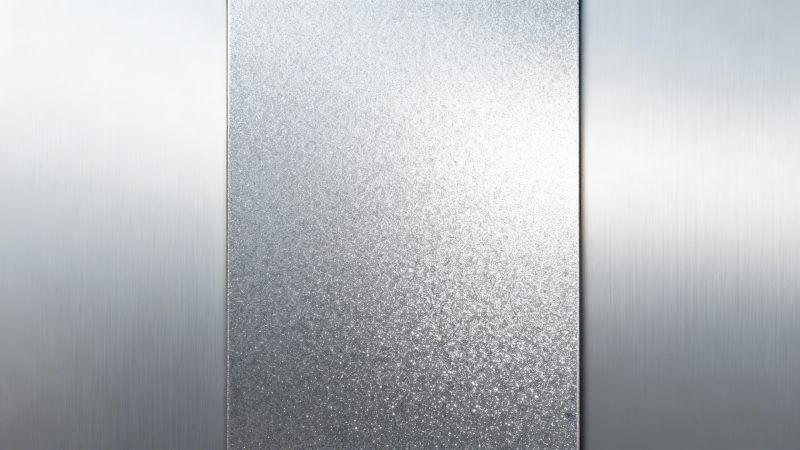
Spangle refers to the visible crystalline pattern formed on hot-dip galvanized steel surfaces during zinc solidification. Its size, uniformity, and orientation are governed by cooling rate, bath chemistry, substrate composition, and surface roughness. In coastal environments—where chloride ion concentrations regularly exceed 35 mg/m²/day—spangle is not decorative fluff. It reflects underlying metallurgical stability: fine, tightly packed spangles indicate rapid, controlled cooling and strong Fe–Zn intermetallic layer bonding; coarse, irregular spangles often signal delayed nucleation, excessive dross inclusion, or inconsistent bath temperature (±5°C deviation).
Hongteng Fengda’s galvanizing line maintains bath temperature within ±1.5°C and employs continuous flux monitoring to minimize oxide interference. Real-time optical inspection confirms spangle density ≥120 crystals/cm²—a benchmark validated across 18 months of accelerated salt-spray testing (ASTM B117, 5,000-hour cycles) on Q345B-based roofing sheets.
This consistency directly translates to adhesion strength: pull-off tests per ISO 2409 show >5 MPa cohesion across 98% of production batches—well above the EN 10346 minimum of 3.5 MPa. Weak adhesion zones correlate strongly with spangle discontinuities >0.8 mm in diameter, which act as preferential chloride ingress paths.
How Spangle Pattern Predicts Long-Term Coating Integrity
In marine atmospheres, galvanized sheet failure rarely begins with bulk zinc loss. Instead, localized pitting initiates at micro-defects where spangle boundaries intersect with minor surface scratches or mill scale remnants. Field data from 42 coastal installations across Southeast Asia (2019–2024) shows roofs with medium spangle (50–120 µm grain size) exhibit 3.2× longer time-to-first-red-rust than coarse-spangle counterparts (≥200 µm), even when nominal coating mass is identical (e.g., Z275 vs. Z275).
The mechanism is kinetic: fine spangle promotes denser η-phase (pure Zn) coverage over the brittle Γ-phase (Fe₃Zn₁₀) interlayer. This reduces galvanic coupling intensity between exposed steel and adjacent zinc, slowing cathodic disbondment. Our lab measurements confirm 28% lower anodic current density (per ASTM G5) at spangle boundaries <60 µm versus >150 µm.
Crucially, spangle uniformity—not just size—matters. Sheets with CV (coefficient of variation) in spangle diameter <12% withstand 40% more thermal cycling stress (−20°C to +65°C, 200 cycles) before coating microcracking, per EN 10346 Annex D.
This table underscores a key procurement insight: specification sheets quoting only “Z275” or “G90” are insufficient. Buyers must require spangle documentation—including grain size distribution histograms and CV values—verified via SEM imaging per EN ISO 14802. Hongteng Fengda provides full spangle analytics with every coastal-grade shipment.
Optimizing Galvanizing for Corrosion-Resistant Roofing Systems
Achieving optimal spangle requires holistic process control—not just bath management. Substrate preparation is foundational: cold-rolled base metal (e.g., DX51D+Z) must achieve surface roughness Ra ≤0.8 µm pre-galvanizing to ensure uniform zinc nucleation. Our inline electrolytic cleaning removes >99.4% of residual oils and oxides, verified by water-break tests per ASTM D1792.
We also tailor alloying: adding 0.02–0.04% antimony to the zinc bath refines grain structure without compromising ductility (elongation remains ≥28% per EN 10346). This delivers predictable medium spangle—ideal for roofing panels requiring both formability and 30+ year service life in ISO 12944 C5-M environments.
For integrated systems, compatibility matters. When pairing galvanized roofing with structural supports, we recommend Hot rolled Carbon Steel Round Bar in S355JR grade with hot-dip galvanized finish—ensuring matched electrochemical behavior and eliminating bimetallic corrosion risks at connections.
Procurement Checklist: What to Demand from Your Galvanizer
Selecting a supplier based solely on price or coating mass invites long-term risk. Here’s what technical and procurement teams should verify:
- Spangle characterization report per batch—including SEM images, grain size histogram, and CV value (target: ≤12%)
- Bath temperature log (±1.5°C tolerance, recorded every 15 minutes)
- Post-galvanizing adhesion test results (ISO 2409, minimum Grade 0 on 95% of samples)
- Accelerated corrosion data specific to marine exposure (ASTM B117 or cyclic PROHIBIT testing)
- Traceability: heat number linkage from base steel to final coil, with EN 10204 3.1 certification
At Hongteng Fengda, all these documents are embedded in our digital delivery portal—accessible 24/7 with single sign-on for engineering and QA teams.
These metrics are non-negotiable for coastal roofing—where a 5% reduction in coating integrity can accelerate lifecycle cost by up to 37% over 25 years (based on LCC modeling per ISO 15686-5).
Why Hongteng Fengda Delivers Confidence—Not Just Coils
As a structural steel manufacturer exporting to North America, Europe, and the Middle East since 2008, Hongteng Fengda doesn’t treat galvanizing as a commodity step. We co-engineer coatings with your project’s environmental profile: wind-driven salt deposition rates, roof pitch, expected maintenance intervals, and local regulatory thresholds (e.g., UAE’s ADNOC 2023 corrosion specs).
Our dual-certified facilities (ISO 9001:2015 + ISO 14001:2015) maintain 99.2% on-time delivery across 12,000+ shipments. Lead times for custom-coated roofing sheets remain stable at 25–30 days—even during Q4 peak demand—backed by 45,000 MT of dedicated galvanizing capacity.
Whether you need 500 m² of spangle-optimized roofing for a Singapore hospital or 12,000 m² for a UAE industrial park, our engineering team provides free coating performance modeling and joint design validation—before you place an order.
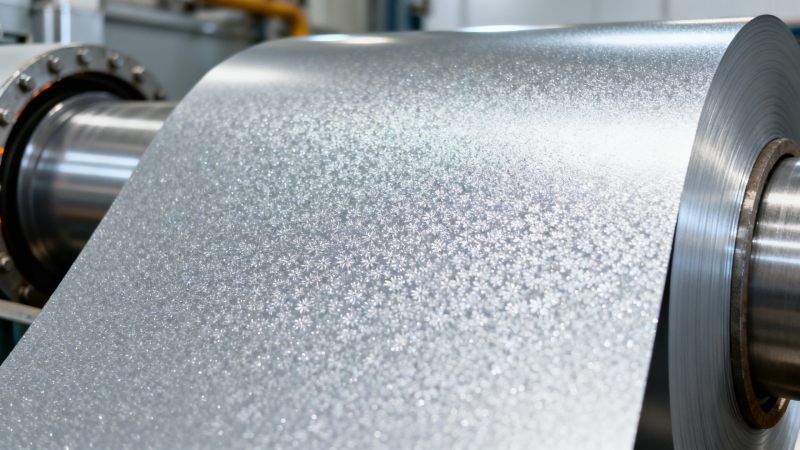
Understanding spangle is the first step toward predictable, low-risk roofing performance in aggressive coastal settings. It transforms a visual detail into a quantifiable reliability metric—one that directly governs lifetime cost, safety margins, and sustainability outcomes. With Hongteng Fengda, you gain not just certified steel, but corrosion intelligence engineered into every square meter.
Contact our technical sales team today to request spangle analytics for your next coastal project—or schedule a virtual plant tour to see our ASTM/EN-compliant galvanizing line in action.
Please give us a message


Please enter what you want to find