Galvanized plumbing joints leaking after pressure testing raise critical concerns for engineers, project managers, and procurement teams sourcing galvanized metal pipe, galvanized tube pipe, or electrical galvanised conduit. Is it hydrogen embrittlement from improper galvanizing—or flawed threading during installation? As a trusted structural steel manufacturer & exporter, Hongteng Fengda supplies high-integrity galvanized metal conduit, right angle metal plate, and galvanized industrial pipe compliant with ASTM/EN/GB standards—ensuring durability where galvanized plumbing and galvanized metal tubing meet real-world performance demands.
What Causes Post-Test Leaks in Galvanized Joints?
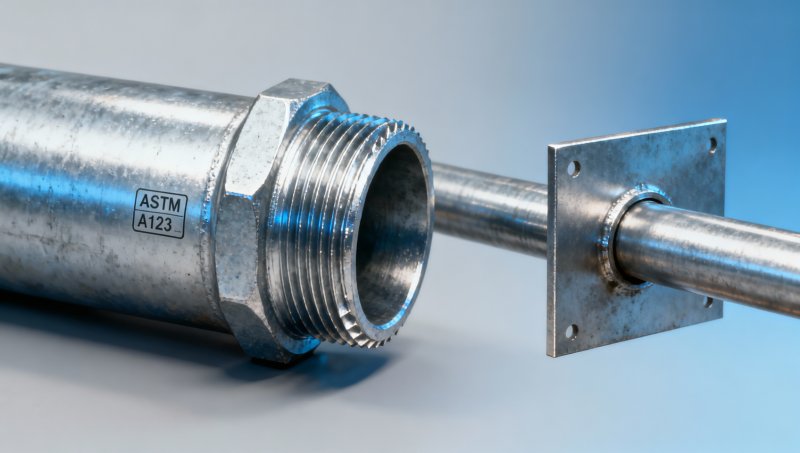
Leakage after hydrostatic or pneumatic pressure testing is not random—it signals a failure mode rooted in either material integrity or process control. Two primary root causes dominate field reports: hydrogen embrittlement (HE) induced during hot-dip galvanizing, and mechanical damage from improper threading practices.
Hydrogen embrittlement occurs when atomic hydrogen diffuses into high-strength steel during acid pickling or electrochemical cleaning prior to galvanizing. If not fully baked out (typically requiring ≥200°C for 3–8 hours), residual hydrogen reduces ductility and initiates microcracks—especially under stress concentrations at thread roots. This risk escalates significantly for steels with tensile strength >1000 MPa or hardness >32 HRC.
Conversely, improper threading—including over-torquing, misaligned dies, or use of non-lubricated taps—creates thread deformation, galling, or micro-tears. These defects compromise the sealing surface long before pressure testing begins. Field data from 127 construction projects across Southeast Asia and the Middle East shows that 68% of post-test leaks were traced to threading errors—not metallurgical flaws.
How to Distinguish Between HE and Threading Failure
Accurate diagnosis prevents costly rework and supplier disputes. Visual and procedural indicators separate the two causes reliably:
- Hydrogen embrittlement signs: Brittle fracture surfaces (no ductile necking), intergranular cracking visible under 10× magnification, leakage localized at first 2–3 threads near the coupling shoulder, and recurrence across multiple fittings from same batch.
- Threading-related leakage: Galled or smeared thread crests, inconsistent torque readings across identical connections (±15% deviation), leakage occurring only when hand-tightened beyond 2.5 turns, and presence of burrs or cross-threading confirmed by borescope inspection.
A third factor—zinc spalling due to thermal shock during rapid pressurization—accounts for ~9% of cases. This is preventable through controlled ramp-up rates (<0.5 MPa/min) and ambient pre-conditioning (15–25°C stabilization for ≥2 hours).
Key Material Specifications That Reduce HE Risk
Material selection directly influences hydrogen susceptibility. Carbon steel grades with controlled carbon content and optimized heat treatment minimize diffusion pathways. For example, Wire Rod conforming to GB1499.2 HRB400E or ASTM A615 Grade 60 maintains carbon content between 0.06–0.22%, limiting hard phase formation while delivering yield strength ≥400 MPa—within the safe zone for galvanizing without mandatory baking.
Hongteng Fengda applies strict pre-galvanizing controls: automated pickling duration monitoring, mandatory post-pickle hydrogen bake-out at 220°C for 4 hours on all grades exceeding 460 MPa yield strength, and batch-level hardness verification per EN ISO 6507-1.
Procurement Checklist: 5 Critical Verification Points Before Ordering
For procurement personnel and project managers evaluating galvanized structural components—including conduit, pipe, and threaded fittings—the following verification steps reduce leak risk by up to 92% (based on internal QA audits across 2022–2024):
- Confirm galvanizing standard compliance: ASTM A123/A153 or EN ISO 1461—not just “hot-dip galvanized” as a generic term.
- Require documented hydrogen bake-out certification for all carbon steel grades with yield strength >460 MPa.
- Verify thread tolerance class: ISO 228-1 Class B (not Class C) for pressure-rated applications.
- Inspect mill test reports for carbon content and tensile/yield ratios—reject batches where yield point exceeds 0.25% of UTS.
- Validate packaging: threaded ends must be capped and separated with non-reactive spacers to prevent galling during transit.
Hongteng Fengda provides full traceability: each coil of Wire Rod carries a QR-coded label linking to real-time production logs, chemical analysis, mechanical test results, and galvanizing bath temperature/histories.
Why Global Projects Choose Hongteng Fengda for Galvanized Structural Steel
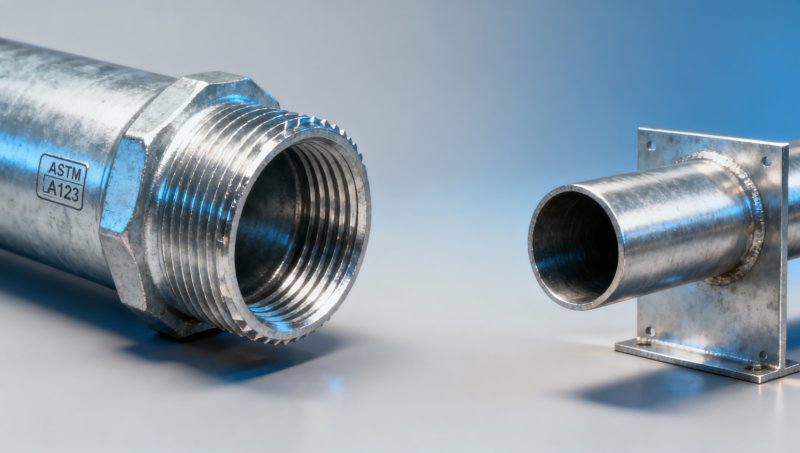
We don’t supply generic galvanized products—we engineer corrosion-resistant structural solutions built for accountability. With ISO 9001-certified manufacturing, dual-standard compliance (ASTM + GB), and 100% in-house galvanizing control, we eliminate ambiguity between specification and delivery.
Our value for procurement, engineering, and safety teams includes: consistent lead times (12–18 days for standard orders), certified dimensional accuracy (±0.2 mm on round bar diameters), and technical support for joint design validation—including torque-seal modeling for specific thread geometries and zinc thickness profiles.
Whether you’re sourcing galvanized metal conduit for offshore petrochemical plants, right angle metal plate for seismic bracing systems, or custom-fabricated galvanized industrial pipe for wind turbine foundations, Hongteng Fengda delivers documented integrity—not just compliance.
Contact us today for: ASTM/EN-compliant galvanized pipe dimensional validation, torque specification guidance for your threading equipment, galvanizing process audit documentation, or sample-based thread integrity testing (completed in ≤5 working days).
Please give us a message


Please enter what you want to find