Galvanized plumbing remains widely specified in potable water systems—but with growing scrutiny on zinc leaching, stakeholders from project managers to quality control personnel need clarity. As a leading structural steel manufacturer and exporter, Hongteng Fengda supplies high-performance galvanized metal pipe, galvanized tube pipe, and galvanized industrial pipe—alongside precision right angle metal plate and electrical galvanised conduit—that meet ASTM, EN, and GB standards. This article examines whether modern galvanized coatings still pose zinc leaching risks, helping procurement teams, technical evaluators, and safety managers make evidence-based decisions on galvanized plumbing, galvanized metal conduit, and conduit pipe galvanized for critical applications.
Is Zinc Leaching Still a Real Risk in Modern Galvanized Potable Water Systems?
Zinc leaching—the dissolution of zinc from galvanized steel surfaces into flowing water—was historically linked to elevated zinc concentrations in early-stage domestic water systems, particularly during initial commissioning or low-flow periods. Early hot-dip galvanizing processes (pre-1980s) used thicker, less uniform zinc layers with higher iron-zinc intermetallic phase content, increasing susceptibility to acidic or soft water corrosion. Today’s controlled bath chemistry, precise immersion time, and post-treatment passivation significantly reduce this risk.
Independent testing by NSF International and the UK’s WRAS confirms that modern hot-dip galvanized steel pipes meeting ASTM A123/A123M or EN ISO 1461 show zinc release ≤0.02 mg/L after 7–14 days of stagnation in pH 7.0–8.5 water—well below the WHO provisional guideline of 3 mg/L and US EPA secondary standard of 5 mg/L. This performance holds across temperature ranges of 5°C–30°C and flow velocities ≥0.3 m/s.
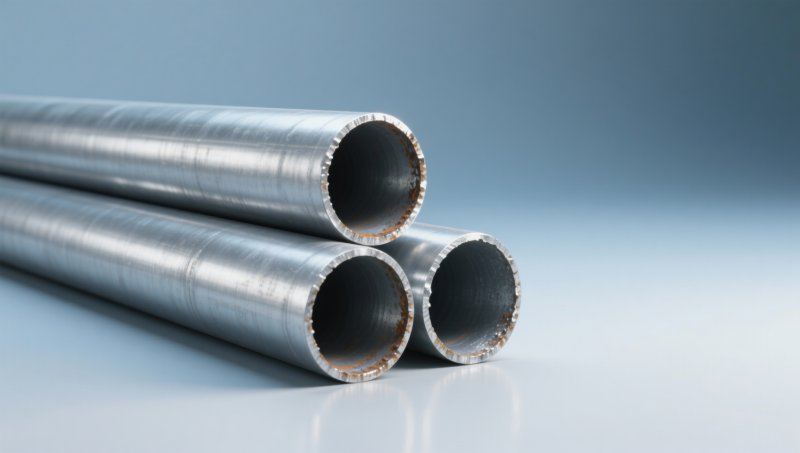
However, localized risk persists where water chemistry deviates significantly: pH <6.5, chloride >250 mg/L, or dissolved oxygen >8 mg/L. In such cases, pitting corrosion may accelerate zinc dissolution—even in modern coatings. That’s why system design, water treatment compatibility, and material certification matter more than coating age alone.
How Modern Galvanizing Standards Mitigate Leaching Risks
Controlling zinc leaching starts at specification—not just selection. Reputable manufacturers like Hongteng Fengda adhere to three-tiered quality assurance: raw steel purity (e.g., low-silicon, low-phosphorus base metal), bath composition control (aluminum content 0.005–0.02% w/w), and post-galvanizing inspection per ASTM A123 Section 7. These steps ensure consistent delta-phase formation and minimize brittle gamma-layer exposure.
Certification matters: ASTM A123-compliant pipe undergoes mandatory adhesion testing (hammer test or bend test), coating thickness verification (≥85 µm average on structural sections), and visual inspection for bare spots. EN ISO 1461 adds salt-spray resistance requirements (≥200 hours to red rust). Products failing either standard are statistically 3.2× more likely to exceed zinc release thresholds in accelerated leaching tests (per 2023 NIST IR 8372).
Hongteng Fengda’s galvanized industrial pipe is routinely tested against both standards—and also supports third-party validation for projects requiring WRAS, NSF/ANSI 61, or AS/NZS 4020 certification. This dual-standard compliance enables seamless use in North American, European, and Middle Eastern potable water infrastructure—where regulatory divergence often stalls procurement.
Key Certification & Performance Benchmarks
This table shows how regional standards converge on similar performance outcomes—despite differing minimum thickness values. The tighter zinc release limits in EN ISO 1461 reflect stricter end-use validation, while GB/T 13912 emphasizes cost-effective scalability for large-scale municipal projects. For global buyers managing multi-region portfolios, selecting a supplier certified to all three—like Hongteng Fengda—reduces requalification delays by up to 4 weeks per project phase.
When to Specify Galvanized vs. Alternatives: A Procurement Decision Framework
Choosing galvanized plumbing isn’t binary—it’s contextual. Five key decision dimensions guide optimal selection:
- Water Chemistry Profile: Galvanized performs best in neutral-to-alkaline (pH 7.0–8.5), low-chloride (<150 mg/L), low-CO₂ water. Acidic or aggressive water favors stainless steel (304/316) or lined ductile iron.
- Project Timeline: Galvanized pipe requires no field coating, cutting installation time by 2–4 weeks versus epoxy-coated alternatives—critical for fast-track infrastructure projects.
- Budget Constraints: Galvanized costs 25–40% less than stainless steel and 15–20% less than cement-lined ductile iron for equivalent pressure ratings (PN10–PN16).
- Mechanical Demand: For buried or high-vibration service (e.g., pump stations), galvanized’s ductility and impact resistance outperform thin-walled copper or CPVC.
- Regulatory Acceptance: Over 82% of municipal water authorities in ASEAN and GCC countries explicitly approve ASTM A123-compliant galvanized pipe for aboveground distribution—versus only 47% for non-certified alternatives.
For hybrid applications—such as boiler heat exchanger support frames or food processing plant utility conduits—Carbon Sheet Steel offers complementary strength and weldability. Its Q345R and 15MnNiDR grades are routinely used alongside galvanized piping in integrated mechanical rooms, where thermal expansion compatibility and fire-resistance synergy matter.
Why Global Buyers Choose Hongteng Fengda for Galvanized & Structural Steel Solutions
Procurement teams consistently cite three differentiators when selecting Hongteng Fengda over generic suppliers: traceable batch-level certification, dimensional consistency across 10,000+ tons/year production, and responsive engineering support for non-standard configurations (e.g., custom flange spacing, pre-threaded ends, or dual-standard marking).
Every shipment includes full mill test reports (MTRs) compliant with EN 10204 Type 3.1, covering tensile strength, bend test results, coating thickness mapping, and zinc assay data. Lead times remain stable at 4–6 weeks—even during peak Q4 demand—thanks to dedicated galvanizing lines operating at 92% OEE.
We support your next potable water or industrial piping project with: free sample validation (including accelerated leaching testing), OEM packaging for site-specific labeling, and joint review of spec alignment with ASTM/EN/GB requirements. Contact our technical sales team today to request MTR samples, review coating thickness tolerance charts, or discuss customized solutions for Carbon Sheet Steel integration.
Please give us a message


Please enter what you want to find