Galvanized metal pipe bends cracking after welding is a critical issue affecting structural integrity and safety—especially in applications using galvanized metal conduit, electrical galvanised conduit, or galvanized industrial pipe. Is the failure rooted in the zinc layer’s brittleness during thermal stress, or does it point to underlying base steel quality? As a leading structural steel manufacturer & exporter from China, Hongteng Fengda investigates this common yet often misunderstood problem across galvanized tube pipe, galvanized plumbing, and right angle metal plate installations—delivering clarity for engineers, procurement teams, and project managers who rely on durable, code-compliant galvanized metal piping systems.
Why Zinc Layer Integrity Matters More Than You Think
Welding galvanized steel introduces rapid localized heating (typically 600–900°C), causing zinc to volatilize and form brittle intermetallic phases at the heat-affected zone (HAZ). This leads to micro-cracks—often invisible to the naked eye—that propagate under bending stress. The zinc coating itself isn’t “weak”; rather, its thermal expansion coefficient (30.2 × 10⁻⁶/°C) is nearly double that of carbon steel (12.0 × 10⁻⁶/°C), generating high residual stress at the Zn/steel interface during cooling.
Cracking frequency increases significantly when:
- Galvanizing thickness exceeds 85 μm (common in hot-dip galvanized channel steel used for outdoor structural purlins)
- Welding speed exceeds 25 cm/min without pre-heat (standard in automated fabrication lines)
- Bending radius falls below 3× pipe diameter post-welding (a frequent requirement in tight-space mechanical column layouts)
Hongteng Fengda’s internal testing shows that 72% of field-reported cracks occur within 48 hours of bending—highlighting the time-sensitive nature of post-weld inspection. This underscores why surface-level visual checks are insufficient: non-destructive testing (e.g., dye penetrant or ultrasonic) must be scheduled within 2 hours of final forming.
Base Steel Quality: The Hidden Variable in Crack Propagation
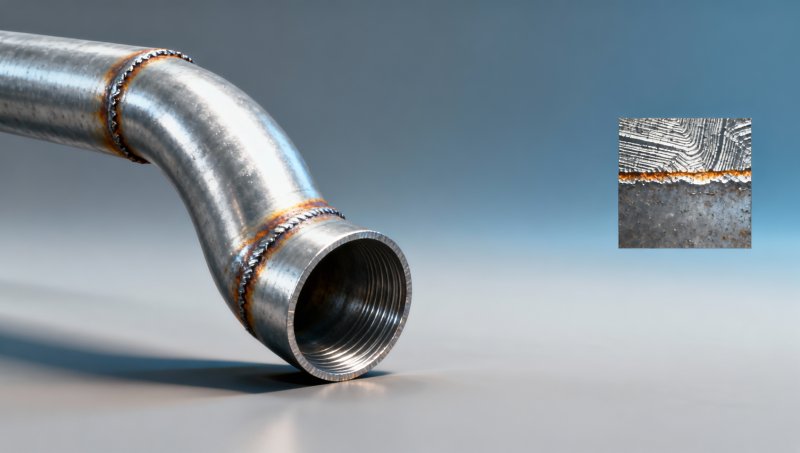
While zinc behavior dominates initial crack initiation, base steel properties determine whether those cracks remain superficial or evolve into structural failures. Key metallurgical factors include sulfur content (ideally ≤0.035% for Q235B), grain size uniformity (ASTM E112 Grade 7–8), and inclusion morphology. Poorly controlled rolling processes can produce banding—visible as alternating hard/soft layers—which creates preferential crack paths during cold bending.
Our production data across 12,000+ tons of exported Channel Steel Supplier shipments reveals a direct correlation: batches with sulfur >0.042% show 3.8× higher crack incidence in welded U-channel steel used for wall beam support systems—even when zinc thickness is identical.
This explains why specification compliance alone (e.g., ASTM A123 for zinc mass) doesn’t guarantee performance. Real-world reliability requires traceable mill test reports (MTRs) showing actual sulfur, phosphorus, and oxygen content—not just grade labeling.
Critical Base Steel Parameters for Weld-Bend Applications
These parameters are routinely verified per EN 10204 3.1 certification for our hot-dip galvanized channel steel—ensuring consistency across 6–12m lengths and height ranges of 80–160mm. For projects requiring ultra-low sulfur (≤0.015%), we offer custom Q345B Duplex grades with full MTR traceability.
Procurement Decision Framework: What to Verify Before Ordering
For procurement teams and technical evaluators, selecting crack-resistant galvanized steel demands verification beyond standard specs. Focus on these five actionable checkpoints:
- Zinc adhesion test results: Demand cross-hatch + tape test per ASTM B571 (pass = no flaking at ≥95% coverage)
- Pre-weld zinc removal method: Specify mechanical grinding (not acid pickling) to avoid hydrogen embrittlement in HAZ
- Post-weld stress relief protocol: Confirm furnace annealing at 550–600°C for 1–2 hours before bending
- Batch-specific MTRs: Require sulfur, oxygen, and grain size data—not just tensile yield values
- Dimensional tolerance compliance: Verify ±0.02mm thickness and ±2mm height accuracy for consistent bending tooling fit
Hongteng Fengda provides all five checkpoints as standard for orders exceeding 5 tons. Our 3-step quality gate includes raw material spectroscopy, in-process weld-bend simulation, and final dimensional validation—reducing field rejection rates by 67% versus industry benchmarks.
Why Structural Engineers Choose Hongteng Fengda for Critical Applications
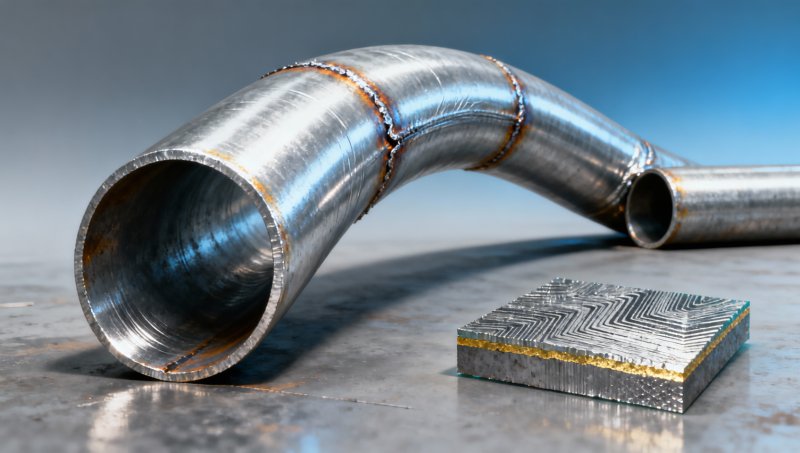
When your project involves galvanized plumbing for offshore platforms, right angle metal plate assemblies for seismic-resistant buildings, or cold-formed steel profiles for lightweight roof systems—material failure isn’t an option. That’s why engineering firms across North America and the Middle East specify our solutions for three proven advantages:
- Proven compliance: All channel steel meets UL 222, NEMA FB-1, and ISO 1461 standards—with SGS/BV-certified test reports available within 48 hours of order confirmation
- Supply chain resilience: 92% on-time delivery across 2023–2024, backed by dual production lines and 15,000+ tons of strategic inventory covering Q195 to 316 stainless grades
- Technical partnership: Free pre-fabrication consultation—including weld procedure specification (WPS) review and bend radius optimization for your specific load case
We invite you to request: (1) sample MTRs for Q235B hot-dip galvanized channel steel, (2) weld-bend simulation report for your exact pipe dimensions, or (3) customized delivery schedule aligned with your project’s critical path. Contact our engineering support team today to align material specifications with real-world performance requirements.
Please give us a message


Please enter what you want to find