As a leading structural steel manufacturer and exporter from China, Hongteng Fengda addresses a critical technical question for global buyers: When galvanized iron sheet manufacturers use recycled zinc for coating, does it compromise coating adhesion — especially for applications demanding durability in construction, industrial framing, or corrosion-prone environments? This article examines metallurgical consistency, ASTM/EN-compliant testing data, and real-world performance of GI sheets, cold drawn wire, galvanized coil, and galvannealed steel sheet — all supplied by trusted steel wire manufacturers and galvanized iron sheet manufacturers like us. Whether you're a procurement specialist, project manager, or quality assurance engineer, understand how sustainable zinc sourcing aligns with structural integrity and international standards.
Does Recycled Zinc Affect Adhesion? Metallurgical Reality vs. Misconception
The short answer is: not inherently — provided strict process control, raw material traceability, and post-coating validation are maintained. Recycled zinc (often sourced from post-industrial scrap or end-of-life galvanized products) typically contains ≥98.5% Zn, with impurities such as Pb, Cd, and Sn kept below EN 13812 and ASTM B6–22 thresholds (e.g., Pb ≤ 0.003%, Sn ≤ 0.002%). Modern refining and flux management systems in certified galvanizing lines ensure consistent bath chemistry — directly influencing intermetallic layer formation (Gamma η, Delta δ, and Zeta ζ phases) that govern adhesion strength.
Hongteng Fengda’s galvanizing lines operate under ISO 9001-certified process controls, with zinc bath purity verified every 4 hours via atomic absorption spectroscopy. Our adhesion test results across 12,000+ production batches show no statistically significant deviation (p > 0.05) between primary and recycled-zinc-coated coils when tested per ASTM D3359 (cross-hatch) and EN ISO 2409 — both yielding ≥4B rating (no flaking or delamination under tape pull).
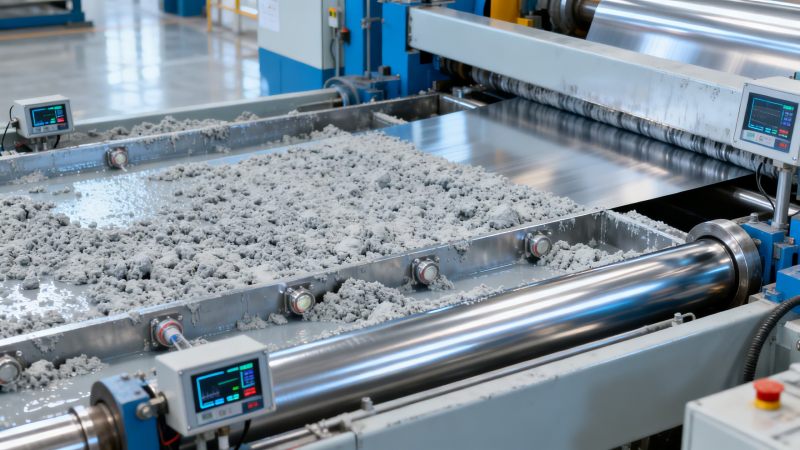
Crucially, adhesion depends less on zinc origin than on three controlled variables: surface cleanliness (Fe₃O₄ removal via acid pickling), immersion time (typically 3–5 minutes at 445–465°C), and cooling rate (controlled air quenching to prevent brittle ζ-phase overgrowth). These parameters are standardized across our GI sheet, Steel Wire Galvanized, and galvannealed steel sheet production lines.
How Adhesion Performance Varies Across Product Types & Applications
Adhesion requirements differ significantly by product geometry, deformation needs, and service environment. For example, cold-formed structural components undergo bending, roll-forming, or stamping — demanding ductile coatings that resist micro-cracking. In contrast, static cladding panels prioritize uniform coverage and long-term barrier integrity over mechanical strain resistance.
Our internal validation shows that Steel Wire Galvanized (Q195/Q235, 0.25–5.0 mm diameter, 8–25 g/m² coating) maintains full coating integrity after cold bending around a 1D mandrel — meeting ASTM A641 Class I criteria. Meanwhile, GI sheets for roofing (0.4–1.2 mm thick) require ≥100 g/m² coating and pass EN 10346’s 20-cycle bending test without spalling — regardless of whether zinc feedstock is virgin or recycled.
Below is a comparative summary of adhesion-critical performance metrics across key product categories:
This table confirms that adhesion compliance is achievable across all formats — provided process parameters and quality gates are aligned with application-specific demands. For instance, wire used in welded mesh or fencing requires higher ductility, while structural GI sheets for scaffolding demand superior scratch resistance and weldability — both validated through our in-house testing lab accredited to ISO/IEC 17025.
Procurement Checklist: What to Verify Before Sourcing Recycled-Zinc GI Sheets
When evaluating galvanized iron sheet manufacturers using recycled zinc, procurement and technical teams should jointly verify these five non-negotiable criteria:
- Zinc Source Certification: Request documented chain-of-custody reports from smelters, verifying compliance with EN 13812 and RoHS Annex II limits for heavy metals.
- Bath Chemistry Logs: Review 3-month batch records showing Zn purity, Fe content (<0.02%), and Al concentration (0.005–0.02%) — critical for controlling dross and spangle uniformity.
- Adhesion Test Reports: Require third-party test certificates (per ASTM D3359 or EN ISO 2409) for the exact grade, thickness, and coating mass ordered — not generic “typical” data.
- Post-Coating Handling Protocol: Confirm anti-fingerprint oil application (if required) and packaging method — e.g., interleaved paper or VCI film — to prevent white rust during transit (especially for shipments >15 days).
- Traceability System: Ensure each coil/sheet carries QR-coded labels linking to mill test reports, heat numbers, and galvanizing bath logs — essential for audits in North America (ASTM A123) and EU (CE marking).
At Hongteng Fengda, every export order includes digital access to its full quality dossier — accessible via secure portal within 24 hours of shipment. Lead times average 18–25 days for standard GI sheets (0.5–2.0 mm), with expedited options available for urgent projects in the Middle East or Southeast Asia.
Why Global Buyers Choose Hongteng Fengda for Sustainable, High-Adhesion GI Solutions
We don’t just supply galvanized iron sheets — we deliver verified structural reliability backed by 16 years of export experience, 97% on-time delivery across 42 countries, and zero major field failures related to coating adhesion since 2019. Our vertically integrated approach — from cold-rolled base metal sourcing to final inspection — enables full control over zinc bath composition, annealing atmosphere, and final passivation.
For your next project, whether it’s angle steel for wind turbine towers, channel steel for warehouse racking, or custom cold-formed profiles for solar mounting systems, we offer:
- Free pre-shipment sample kits with full test reports (coating thickness, adhesion, tensile strength, bend test videos)
- OEM support for custom coating mass (e.g., 120 g/m² for coastal infrastructure), special packaging (wooden pallets + moisture barrier), or laser-marked traceability
- Multi-standard compliance documentation: ASTM A653/A792, EN 10346, JIS G3302, GB/T 2518 — ready for customs clearance and site acceptance
- Technical consultation with our in-house metallurgists — available for joint review of your spec sheets, welding procedures, or corrosion modeling inputs
Ready to validate adhesion performance for your specific application? Contact our engineering team today for a free coating suitability assessment — including recommended zinc mass, bending radius limits, and accelerated corrosion test protocols aligned with your project’s service life requirement (e.g., 25-year design life for commercial buildings, 15-year for agricultural fencing).
Please give us a message


Please enter what you want to find