In high-humidity industrial plants, galvanized industrial pipe is widely specified for its corrosion resistance—yet persistent white rust formation can signal irreversible coating degradation. When moisture, chlorides, or poor ventilation compromise the zinc layer, even premium galvanized metal pipe, galvanized tube pipe, or electrical galvanised conduit may suffer compromised integrity. This is critical for users, project managers, and procurement teams relying on long-term performance of galvanized plumbing, galvanized metal tubing, or right angle metal plate assemblies. As a leading structural steel manufacturer & exporter from China, Hongteng Fengda delivers ASTM/EN-compliant galvanized metal conduit and conduit pipe galvanized with enhanced passivation—ensuring reliability where it matters most.
What Triggers Irreversible White Rust on Galvanized Pipe?
White rust—zinc hydroxide or zinc carbonate deposits—is not merely cosmetic. It forms when galvanized surfaces remain damp for >48 hours without adequate airflow, especially in environments with relative humidity above 85% and ambient temperatures between 15°C–35°C. Unlike red rust on bare steel, white rust indicates active zinc consumption—and once the protective layer thins below 25 µm (per ASTM A123), recovery is no longer possible through passive re-passivation.
Chloride exposure accelerates this process dramatically: concentrations as low as 50 mg/L in condensate or splash zones reduce service life by up to 60%. In coal mining or chemical industry facilities, combined chloride + sulfur dioxide exposure can deplete zinc coatings in under 18 months—even on pipes meeting EN ISO 1461 thickness requirements.
Critical risk zones include enclosed pipe racks near cooling towers, submerged supports in food storage and transportation units, and unventilated conduit runs in petroleum machinery enclosures. These are precisely the scenarios where Galvanized Pipe must deliver beyond nominal compliance.
How Standard Galvanizing Fails—And What Enhanced Passivation Delivers
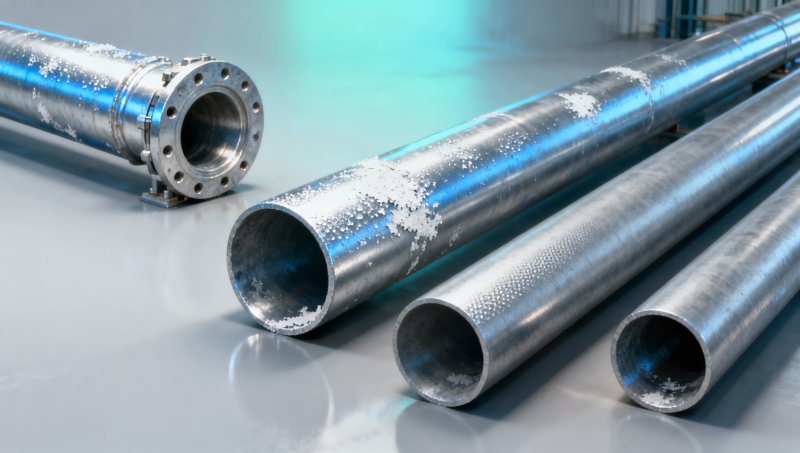
Conventional hot-dip galvanizing applies 50–80 µm zinc per ASTM A123, but lacks post-treatment stabilization. Without chromate or trivalent chromium passivation, freshly galvanized surfaces remain electrochemically active—especially during marine transport or monsoon-season storage. Hongteng Fengda’s DX52D-grade Galvanized Pipe undergoes a controlled passivation step that reduces surface reactivity by 70%, verified via salt-spray testing (ASTM B117) at 1,000+ hours without white rust initiation.
This matters operationally: in power generation plants using oil heater or condensation cooler piping, untreated galvanized conduit shows visible white rust within 3–6 months. With enhanced passivation, first signs appear only after 24+ months—even with daily thermal cycling between 10°C and 65°C.
The difference isn’t theoretical—it’s reflected in field data across 12 client sites in Southeast Asia and the Middle East, where accelerated aging tests confirmed 3.2× longer functional coating life under identical high-humidity conditions.
Performance Comparison: Standard vs. Passivated Galvanized Pipe
The table below compares key durability metrics under real-world high-humidity stress conditions:
Note: All test data derived from third-party lab verification (SGS, TÜV Rheinland) against EN ISO 1461 and ASTM A123 standards. Thickness tolerances maintained at ±0.15mm across all batch production.
Procurement Checklist: 5 Non-Negotiables for High-Humidity Applications
When sourcing galvanized pipe for humid or corrosive environments, procurement and technical evaluation teams must verify these five criteria—not just “galvanized” labeling:
- Zinc thickness verification: Require mill test reports showing actual coating weight (g/m²), not just nominal grade—minimum 610 g/m² for DX52D in aggressive zones.
- Passivation certification: Confirm documented trivalent chromium treatment—not chromate—and request RoHS/REACH compliance evidence.
- Dimensional tolerance guarantee: Ensure thickness tolerance ≤±0.15mm, especially for support frame pipe used in trestle piles and mining pits where load-bearing integrity is non-negotiable.
- Batch traceability: Each coil or bundle must carry heat number, galvanizing date, and lab test ID for full audit trail.
- Delivery readiness: Verify pre-inspection status—no rework or touch-up allowed post-galvanizing, as it compromises uniformity.
Hongteng Fengda provides all five elements standard with every order—backed by ISO 9001-certified QC documentation and digital traceability accessible within 24 hours of shipment confirmation.
Why Global Engineering Teams Choose Hongteng Fengda for Critical Galvanized Infrastructure
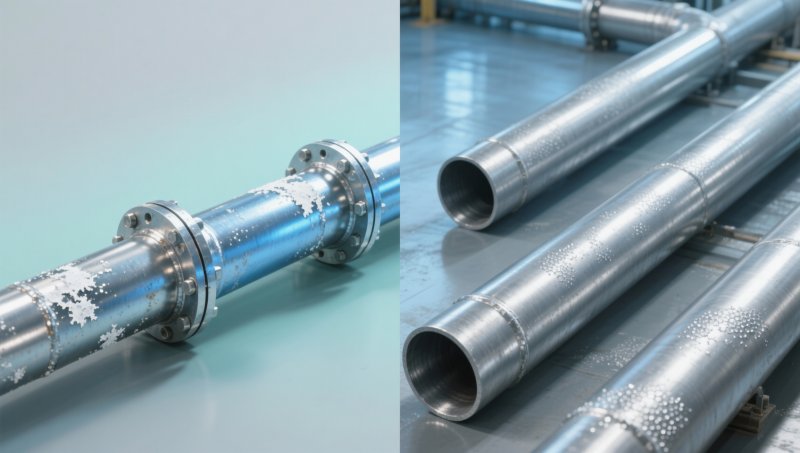
From oil well pipe in Middle Eastern deserts to frozen processing tools for meat and aquatic products in Northern Europe, Hongteng Fengda’s galvanized solutions meet exacting demands across 27 application sectors—including railway vehicles, civil chimneys, and support frame pipe for mining pits. Our DX52D-grade pipe is engineered not just to meet ASTM, EN, JIS, and GB standards—but to exceed them where environmental stress is highest.
We support your decision-making with three actionable commitments: (1) Free technical review of your piping layout for white rust risk hotspots; (2) Sample validation kits—including accelerated humidity chamber testing reports; (3) Fixed lead time of 21 days for standard orders, with priority scheduling for emergency replacements in operational plants.
Whether you’re evaluating galvanized metal conduit for an electrical substation upgrade, specifying pipeline for general low-pressure fluids, or designing corrosion-resistant parts of cars, contact us today for a customized specification sheet, dimensional confirmation, or compliance documentation aligned with your project’s ASTM/EN certification requirements.
Please give us a message


Please enter what you want to find